Surviving a long layover means minimizing noise, cold, and the risk of theft while maximizing your savings. If your layover is 6 hours or more, sleeping at the airport is often a cheaper and more practical option than an expensive hotel.
1. 🥇 The Gold Standard: The Best Airports for Sleeping
Some airports are intentionally designed to be “sleep-friendly” and offer special rest zones.
| Airport (Code) | Location | Sleep-Friendly Advantages |
| Singapore Changi (SIN) | Singapore | Often hailed as the best. Features relaxation zones with comfortable recliners, cinemas, gardens, and is incredibly quiet and secure. |
| Doha Hamad (DOH) | Qatar | Offers specialized Quiet Rooms separated by gender with long, comfortable loungers and dim lighting. |
| Munich (MUC) | Germany | Offers NapCabs—small cabins (for a fee) perfect for private rest, equipped with beds. Also features quiet seating zones. |
| Seoul Incheon (ICN) | South Korea | Has specialized rest zones and massage areas. Extremely clean and orderly. |
| Helsinki (HEL) | Finland | Known for its GoSleep Pods (sleeping capsules for a fee), which provide absolute privacy. |
2. 🛋️ Strategy for Finding the Perfect Spot (The Free Option)
If you don’t have access to sleep pods or paid lounges, look for these free spots:
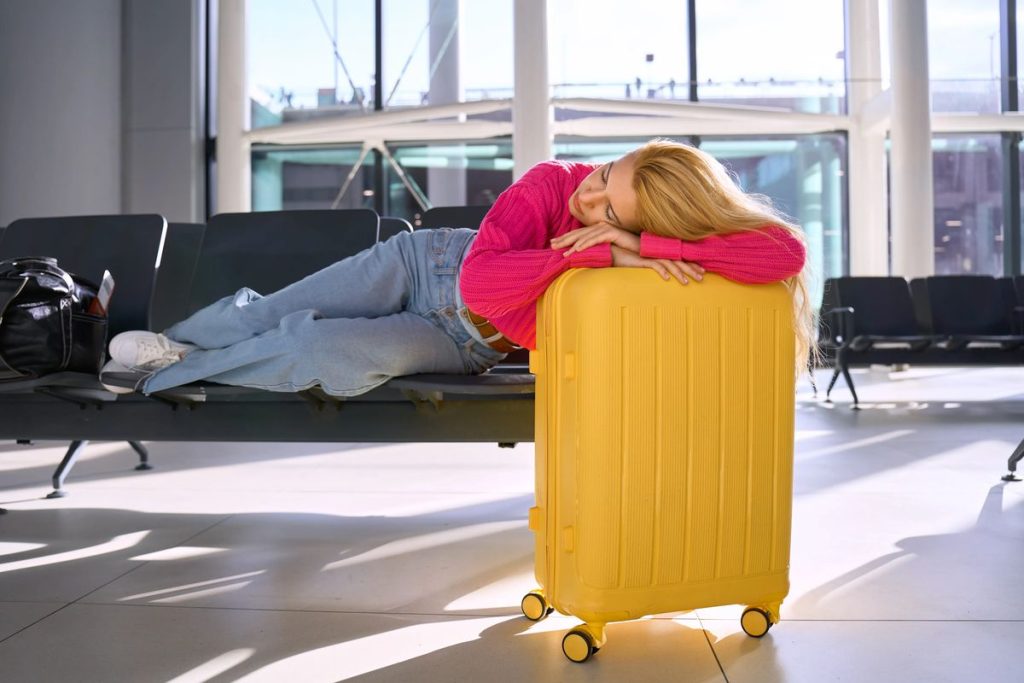
- Search for Armrest-Free Zones: This is your primary goal. Look for long, metal, or plastic benches without armrests so you can stretch out fully.
- Quiet (and Dark) Corners:
- Chapels/Prayer Rooms: These are often soundproofed and quieter.
- Zones Far from Main Gates: These areas experience the most calm after the final night flights depart.
- Family or Prayer Rooms: These spots are often equipped with soft benches or couches.
- The Floor Plan: If you are truly desperate, look for carpeted areas in transit halls or at the very ends of long corridors. The floor is cold, but it’s better than sitting upright.
3. 🛡️ Safety and Protection Against the Cold
Safety and comfort are just as important as saving money.
A. Securing Belongings
- Keep Everything Close: Never leave valuables (phone, passport, wallet) in your backpack. Keep them in an inner jacket pocket or a small pouch secured to your body.
- Strap Around Body: Loop the strap of your larger backpack or suitcase around your arm or leg so nobody can silently walk off with it.
- Position: Sleep with your backpack as a pillow or between yourself and a wall. Always sleep in well-lit areas with cameras, near other sleeping travelers.
B. The Survival Gear (Sleep Kit)
- 1. Earplugs/ANC Headphones: An absolute necessity. They eliminate the noise of announcements, cleaning vehicles, and maintenance work.
- 2. Eye Mask: Blocks out harsh overhead lights.
- 3. Travel Pillow (Neck Pillow): Provides neck support and prevents stiffness.
- 4. Blanket/Scarf: Airports are known for powerful air conditioning. Use a thick scarf or a light travel blanket.
4. ⏰ Alarm Planning and Waking Up
- Dual Alarms: Set two independent alarms (phone and watch/second phone) 15 minutes apart. Fatigue can cause you to miss a single alarm.
- Gate Check: Immediately upon waking up, check the airline/airport app. Gates often change, especially overnight.
- Freshen Up: Immediately go to the restroom, wash your face and brush your teeth, change your shirt, and drink a large glass of water. This instantly re-energizes you.