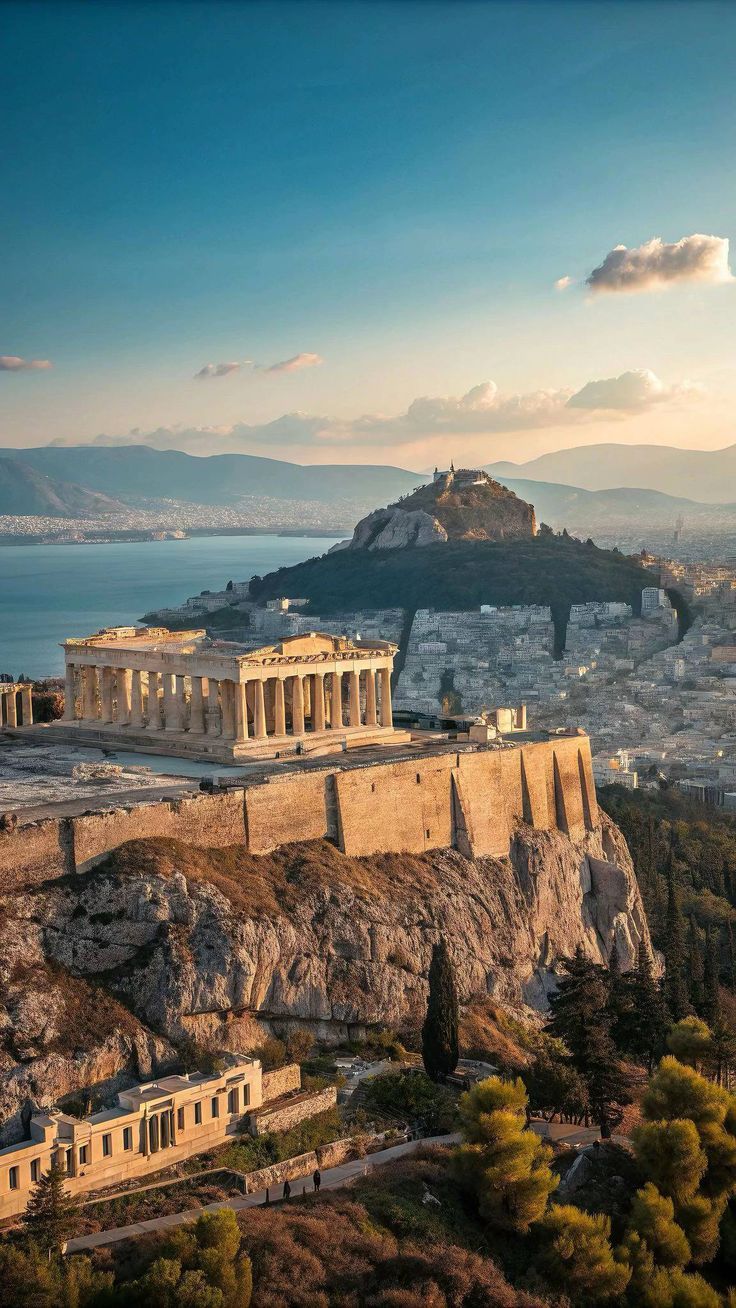
There are cities you visit for a holiday. And then there is Athens.
Athens is not just another European capital; it is a living museum where five thousand years of history slumber beneath every new layer of concrete. It is the birthplace of democracy, philosophy, the Olympic Games, and dramatic arts. It is the place where Socrates posed his provocative questions and Pericles shaped the Western world.
Why should you visit this cradle of civilization now? Because after years of economic turbulence, Athens is emerging as a dynamic, modern city that honors its past while enthusiastically looking to the future.
Dive with us into a comprehensive guide that goes beyond the Acropolis, revealing the best neighborhoods for lodging, the ideal months to visit, and the taste of street food you’ll instantly fall in love with.
I. ⏳ The Historical Heart: From Myth to Modern Metropolis
To understand Athens is to understand its epic, often turbulent history.
The Era of the Golden Acropolis (5th Century BC)
Athens experienced its Golden Age in the 5th century BC under the leadership of Pericles. Most of the iconic landmarks we admire today were built during this time.
- The Birth of Democracy: Athens was the first city to experiment with the rule of the people (Dēmos = people, Kratos = rule). This idea was born on Pnyx Hill, where the Athenian assembly gathered.
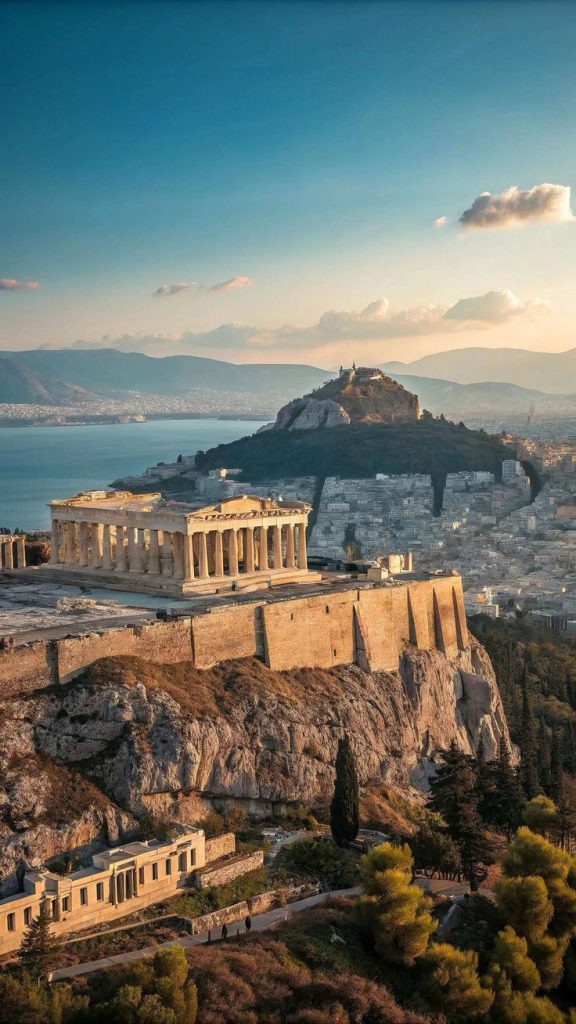
- The Parthenon: It is not just a temple dedicated to the goddess Athena Parthenos (Virgin Athena); it is a triumph of classical architecture and a symbol of the immortal Greek genius. Its Doric style and optical corrections remain an architectural mystery today.
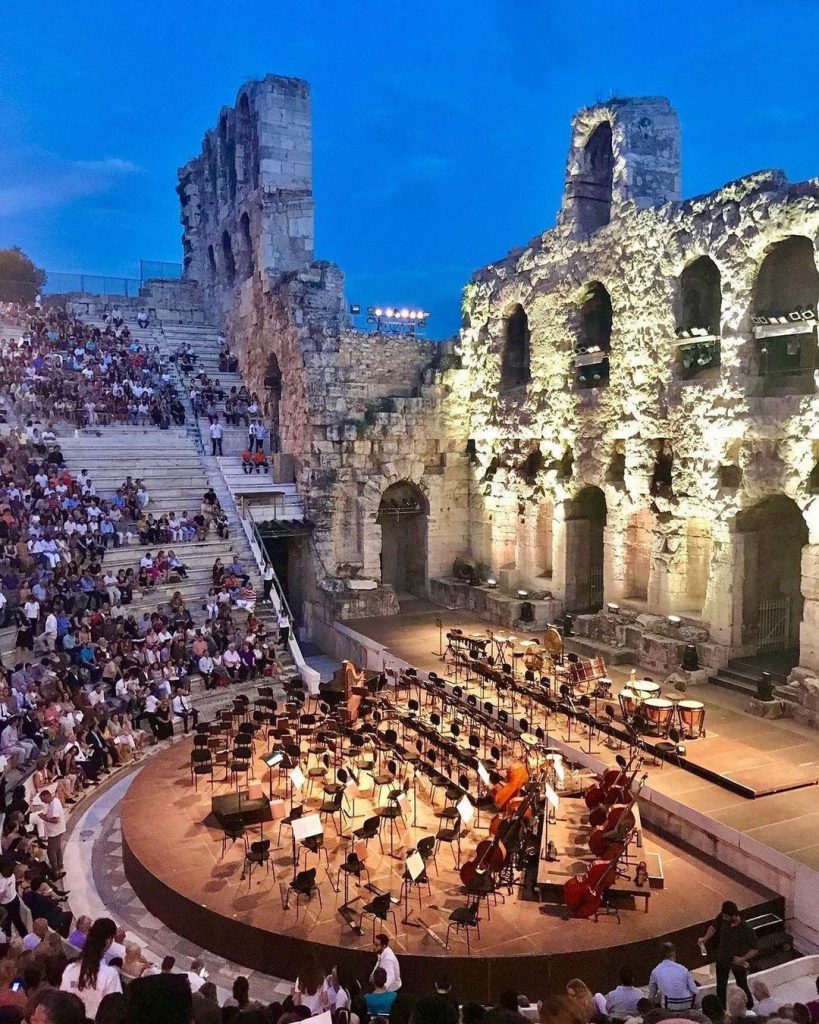
- Philosophy and Drama: Ancient Athens was home to Plato and Socrates, and it was here that tragedies and comedies (e.g., Sophocles, Aristophanes) flourished in theaters like the Theatre of Dionysus.
Roman, Byzantine, and Ottoman Rule
The Golden Age was followed by various rulers who left their mark.
- Roman Agora and Hadrian’s Arch: Although the Romans militarily conquered Athens, they admired its culture. Emperor Hadrian, a lover of Greek culture, commissioned the extensive Temple of Olympian Zeus (Olympieion) and his famous arch.
- Byzantine and Ottoman Periods: During the Byzantine rule, the Parthenon was converted into a church, and later (under the Ottomans) into a mosque. The long period of Ottoman rule (1458–1821) was a time of stagnation. The city suffered damage, particularly during the Morean War in the 17th century, when the Parthenon was severely damaged by an explosion.
- 1834 – Capital City: After gaining independence in 1830, Athens was declared the capital of modern Greece, and its contemporary reconstruction began.
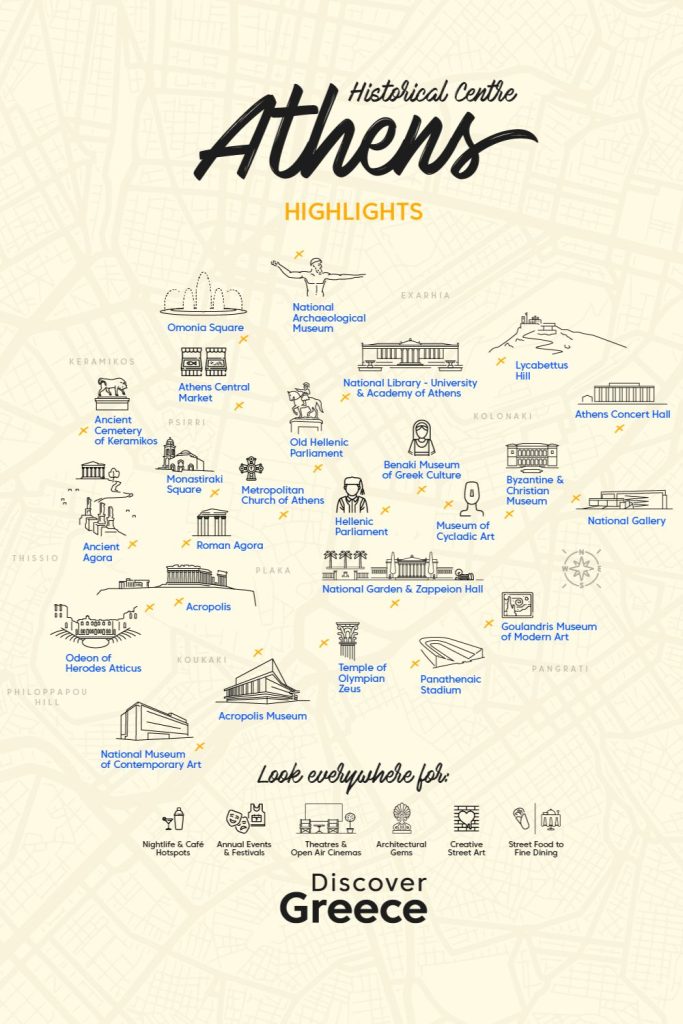
II. 🗺️ Top 10 Places You Must See
When visiting Athens, don’t just look up at the hills, but also down, where the real life unfolds in restaurants and markets.
1. The Acropolis and Parthenon (Essential)
- Tip: Buy a combined ticket online, which is valid for 5 days and includes the Ancient Agora, Roman Agora, Temple of Olympian Zeus, and Kerameikos. This saves you time and money. Visit the Parthenon first thing in the morning (they open at 8:00 AM) or just before sunset to avoid crowds and extreme heat.
2. The Acropolis Museum (A Modern Gem)
At the foot of the Acropolis stands a modern museum that serves as a dignified home for artifacts from the hill. The top floor is designed to match the orientation of the Parthenon, with views towards it. Don’t forget to look at the transparent glass floor, which reveals archaeological excavations directly beneath the museum.
3. The Ancient Agora
This was the heart of ancient Athenian life—the marketplace, political center, and forum. Debates were held here, elections took place, and Socrates walked these grounds.
- The Temple of Hephaestus: One of the best-preserved Greek temples in existence.
4. Plaka and Anafiotika (The Soul of the Atmosphere)
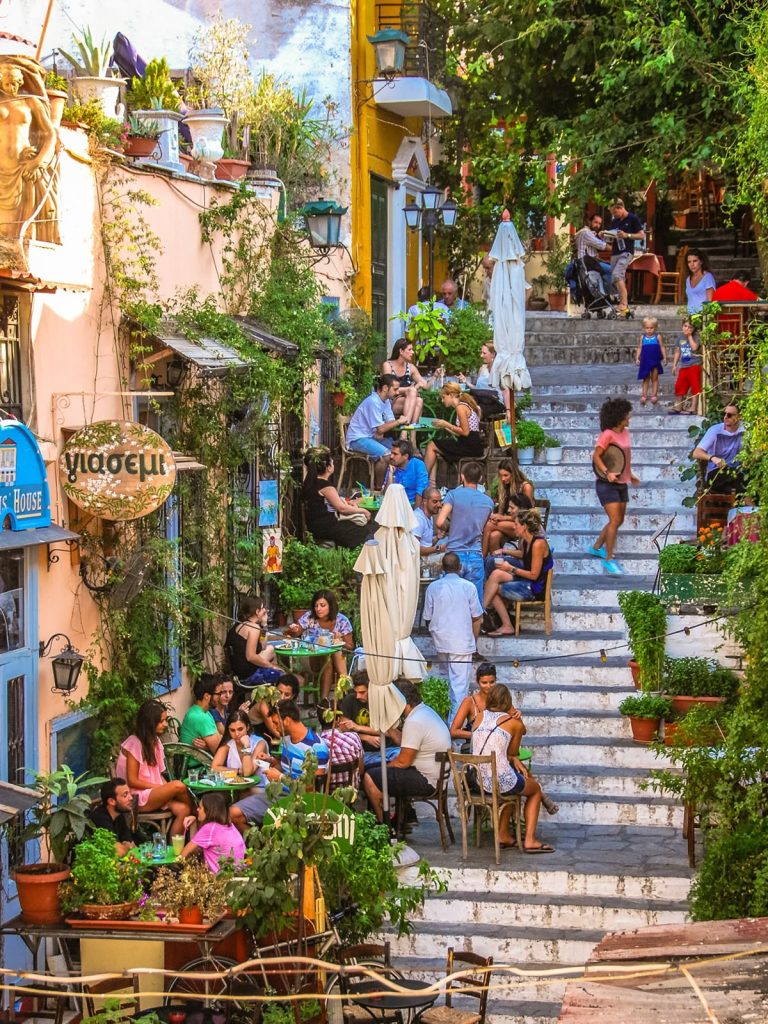
- Plaka: The oldest and most picturesque district right beneath the Acropolis. Narrow, winding streets, tavernas, and souvenirs. Yes, it’s touristy, but its charm is undeniable.
- Anafiotika: A small, hidden oasis directly above Plaka. It was built in the 19th century by workers from the island of Anafi, who replicated Cycladic architecture here—white houses and blue shutters. It’s an escape from the metropolis and a perfect spot for Instagram.
5. Lycabettus Hill
The highest point in Athens. You can reach it on foot or by funicular from Kolonaki. The panoramic view of the entire city—from the Acropolis, over the Piraeus port, to the Aegean Sea—is absolutely breathtaking at sunset.
6. The National Archaeological Museum
The Acropolis is just the beginning. In this museum, you will find the most significant artifacts from all over Greece—the golden Mycenaean Mask of Agamemnon, the statue of Poseidon/Zeus from Artemision, and extensive collections of pottery and frescoes. A must-see for anyone interested in ancient art.
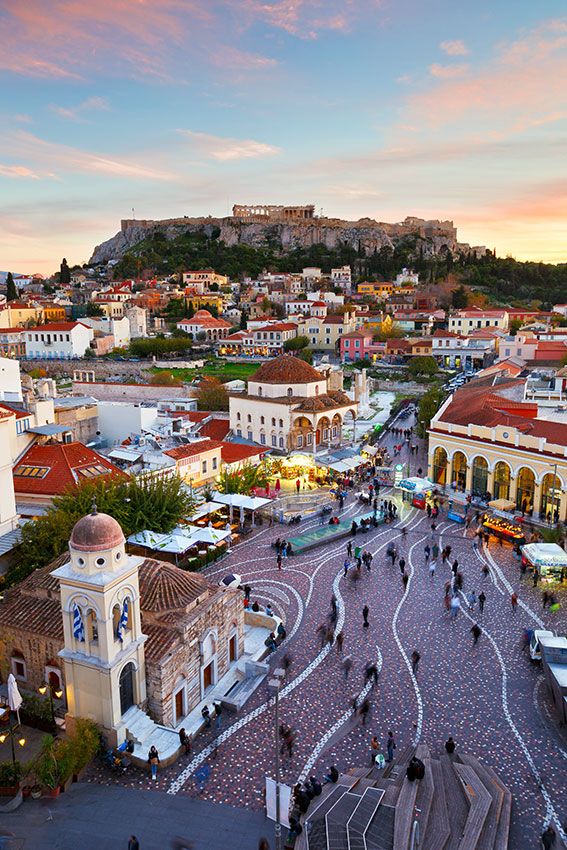
7. Monastiraki and the Flea Market
A bustling square and market district. The flea market (open mainly on Sundays) is a kaleidoscope of antiques, vinyl records, clothing, and curiosities. It’s chaotic, loud, full of life and smells—the true face of modern Athens.
8. Panathenaic Stadium (Kallimarmaro)
The only stadium in the world built entirely of white marble (Kallimarmaro). It hosted the first modern Olympic Games in 1896 and is now open to visitors who can run a lap on the legendary track.
III. ☀️ Practical Tips: When and How to Travel
Ideal Temperatures and Best Time to Go
Athens has a typical Mediterranean climate, meaning hot and dry summers.
| Season | Period | Average Air Temperature | Our Advice |
| Spring | March – May | 18C – 25C | PEAK SHOULDER SEASON. Ideal for sightseeing and hiking. Nature is in bloom. |
| Autumn | September – October | 24C – 30C | PEAK SHOULDER SEASON. The sea is warm, fewer tourists than in summer. |
| Summer | June – August | 30C – 35C | AVOID. Extremely hot, monuments overcrowded. Only suitable for late-night walks and early mornings. |
| Winter | December – February | 10C – 15C | Low prices, almost no tourists. Ideal for museums and culture. |
Personal Recommendation: Choose May or September/Early October. You will avoid the worst heat, and the sea on the Athenian Riviera will still be pleasant.
Getting Around the City
Athens is surprisingly compact. Most of the main historical sites (Acropolis, Agora, Plaka) can be covered on foot.
- Metro: Modern, efficient, and safe. Line M3 connects the airport to the city center. At many stations, you will see display cases with archaeological finds discovered during construction.
- Tram: Ideal for a trip to the Athenian Riviera (districts like Glyfada, Vouliagmeni).
- Bus and Trolleybus: Cover the entire network.
- Taxis and Uber/Beat: Are available and relatively inexpensive. Always insist on the use of the meter.
IV. 🍽️ The Taste of Athens: A Gastronomic Adventure
Greek cuisine is more than just Moussaka and Gyros.
Street Food and Fast Bites
- Souvlaki/Gyros: The classic. Look for authentic grills where the meat (pork, chicken, lamb) is grilled right in front of your eyes. Try pitta me gyros (with fries, tzatziki, onion, and tomato).
- Koulouri: Sesame bread in a ring shape. Perfect and cheap breakfast from street vendors.
- Loukoumades: Small Greek doughnuts, traditionally drizzled with honey and sprinkled with cinnamon. Modern versions with chocolate and ice cream are irresistible (e.g., Lukumades in the center).
Traditional Tavernas and Modern Cuisine
- Taverna Klimataria (Psiri): A classic, yet somewhat hidden taverna with traditional music, where you can taste authentic Greek dishes like Moussaka, Pastitsio, or Lamb Kleftiko.
- Rooftop Restaurants: Athens is famous for its rooftop restaurants with incredible views of the illuminated Acropolis. Higher price, but the experience is unforgettable (e.g., A for Athens Bar, Electra Palace Rooftop Restaurant).
- Coffee: “Coffee Culture” reigns supreme in Athens. Traditional Greek coffee is popular, but young people love Freddo Espresso (cold espresso with a whisk) or Freddo Cappuccino (cold cappuccino).
V. 🛌 Where to Stay: Choosing Your Neighborhood
The choice of neighborhood fundamentally influences your Athenian experience.
1. Plaka and Anafiotika (Closest to the Monuments)
- Pros: You are within walking distance of everything. Beautiful, historic atmosphere, night walks under the Acropolis.
- Cons: Highest prices, most tourists, noise. Mostly boutique hotels and guesthouses.
- Hotel Tips (For couples/luxury): Electra Palace Athens, AthensWas Design Hotel.
2. Monastiraki and Psiri (Hipster and Lively)
- Pros: Central, close to transport and markets. Psiri is the center of nightlife, street art, and trendy bars.
- Cons: Can be noisy, especially at night.
- Hotel Tips (For young people/atmosphere): A for Athens, smaller apartments in Psiri.
3. Kolonaki (Luxurious and Fashionable)
- Pros: The most luxurious district. Elegant boutiques, galleries, and cafes. Quieter, calmer. Near Lycabettus.
- Cons: Further from the main historical sites (though still within good walking distance/metro).
4. Koukaki (Family-Friendly and Local)
- Pros: Close to the Acropolis (walking distance), but has a calmer, authentic Athenian atmosphere. Great for families and digital nomads. Excellent value.
- Hotel Tips (For families/longer stays): Herodion Hotel (close to the Acropolis, good access).

VI. ✨ Athens Differently: Tips and Hidden Gems
For those who have already seen the Parthenon and are looking for more.
- The Athenian Riviera: Just a 30-minute tram ride from the center. Athens has beautiful beaches! Visit Glyfada or the thermal lake Vouliagmeni, with a year-round temperature of 22C.
- Hymettus Mountain: A nature reserve just outside the city. It offers amazing hiking, pine forests, and caves. Ideal if you need an escape from the city bustle.
- Exarcheia Square: The heart of alternative, bohemian, and anarchist culture. Full of bookstores, street art, and authentic cafes. Visit with respect and accept that it is a controversial but vibrant part of the city.
- Changing of the Guard (Syntagma): A fun and popular spectacle in front of the Parliament building in Syntagma Square. The changing of the guards (Evzones) in their traditional uniforms takes place every hour, with the biggest ceremony on Sunday at 11:00 AM.

Athens is a city of contrasts: chaos, traffic, and noise mingle here with silent ruins, philosophical tranquility, and sea breeze. Prepare for the city not always to be perfect, but its historical depth and vibrant energy will completely absorb you.
It’s a place where you only have to turn your head to see two different epochs. Athens is not waiting for you. It is challenging you.
Dear fellow travelers, if my articles have helped you or inspired your journeys, you can support me in a very simple way. If you book your flights, hotels, or tickets through the links below, I will receive a small commission from the sale. This costs you absolutely nothing extra (the prices remain exactly the same for you), but it truly helps me take my children on our next adventure and write the next detailed travel guide.
Here are the services I personally use on our travels and that you can rely on:
-
 Flights: I prefer to compare prices using Kiwi.com : last minute flights : https://kiwi.tpk.lv/8NQF6GkN or through the global search engine Aviasales : https://aviasales.tpk.lv/gKYbo853 .
 -
 Accommodation: 90% of our stays are booked traditionally through Booking.com : https://booking.tpk.lv/cLbuaDaA. If we are traveling to Asia, Agoda : https://agoda.tpk.lv/OwlTkUi6 often offers better prices and deals.
 -
 Experiences & Tickets: To avoid standing for hours in ticket queues for landmarks with my children, I buy them in advance via GetYourGuide : https://getyourguide.tpk.lv/V6GC2pLm or through [Viator : https://viator.tpk.lv/jKVITxSH .
 -
 Car Rental: When we need a car on our journeys, I compare rental prices through QEEQ : Diamond Membership : https://qeeq.tpk.lv/1YoVmDCm ,
 -
 Internet Abroad: To have mobile data immediately upon arrival and avoid hunting for local SIM cards, I use a digital eSIM via Airalo : https://airalo.tpk.lv/YGyayoZj .
Thank you for every single click and booking; I deeply appreciate it!