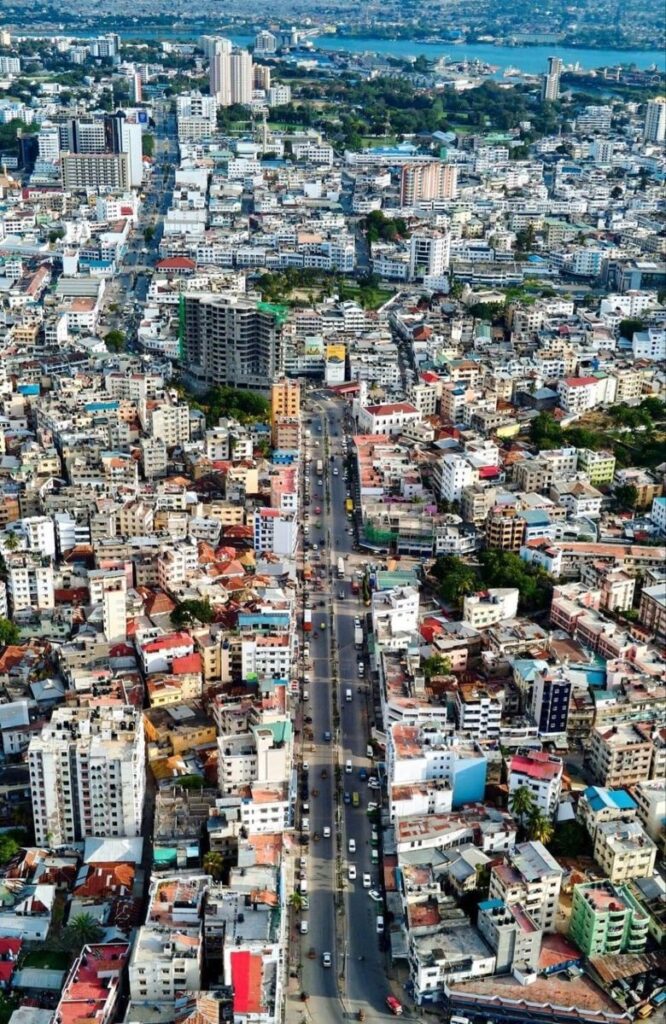
Mombasa is Kenya’s oldest and second-largest city, serving as a critical port and a cultural melting pot on the country’s Indian Ocean coast. For centuries, Mombasa was a key trading hub on the East African route, resulting in a rich, vibrant blend of African, Arab, Asian, and Portuguese influences.
This coastal city is defined by its deep history, stunning white-sand beaches, and distinct Swahili culture (a fusion of Bantu and Arab traditions). Mombasa offers a fascinating juxtaposition between the historic, winding alleys of its Old Town and the modern, resort-lined shores of its beaches.
I. 🏰 History in the Old Town
Mombasa’s history stretches back over a thousand years, visible today in its ancient core.
1. Fort Jesus (Forte Jesus de Mombaça)
This massive fort, built by the Portuguese in 1593, is Mombasa’s most significant landmark and a UNESCO World Heritage site. Its changing architecture reflects the constant struggle for control between the Portuguese, Omani Arabs, and British forces.
- Visiting: Explore the old barracks, cannons, and the museum inside to learn about the coastal trade routes and cultural exchanges.
2. Old Town
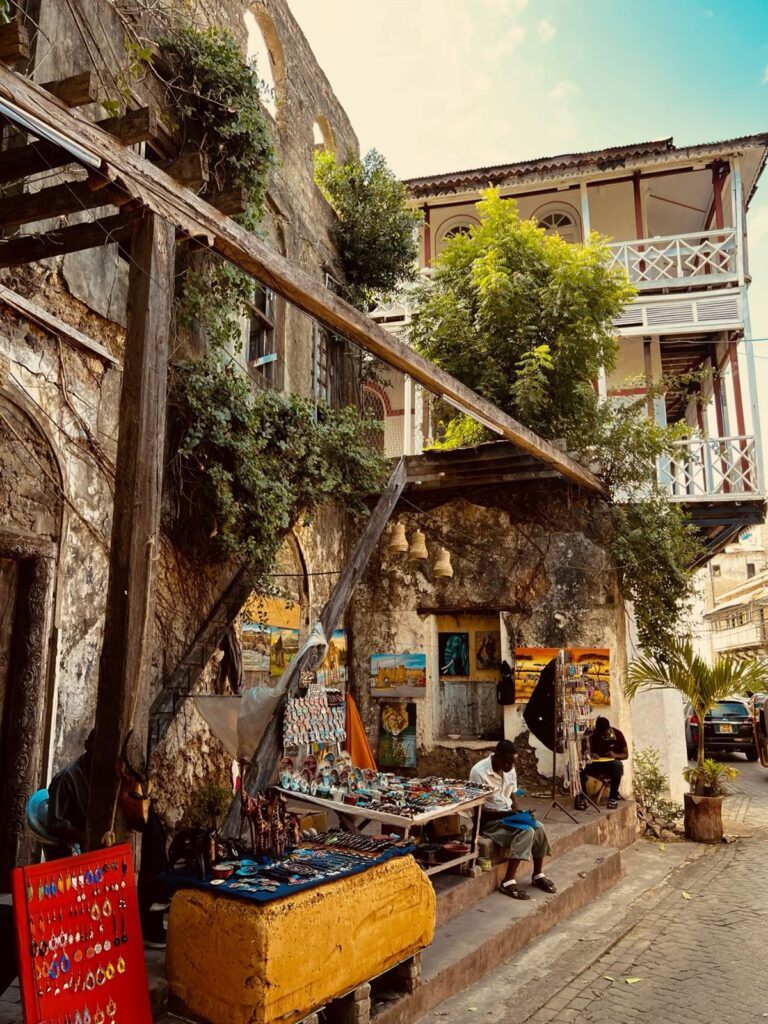
South of the Fort, the Old Town is a maze of narrow streets, beautiful coral-stone buildings, and intricately carved wooden doors (milango) that showcase Arab and Indian architectural styles.
- Tip: The area is best explored on foot. You’ll find spice markets, antique shops, and local cafés.
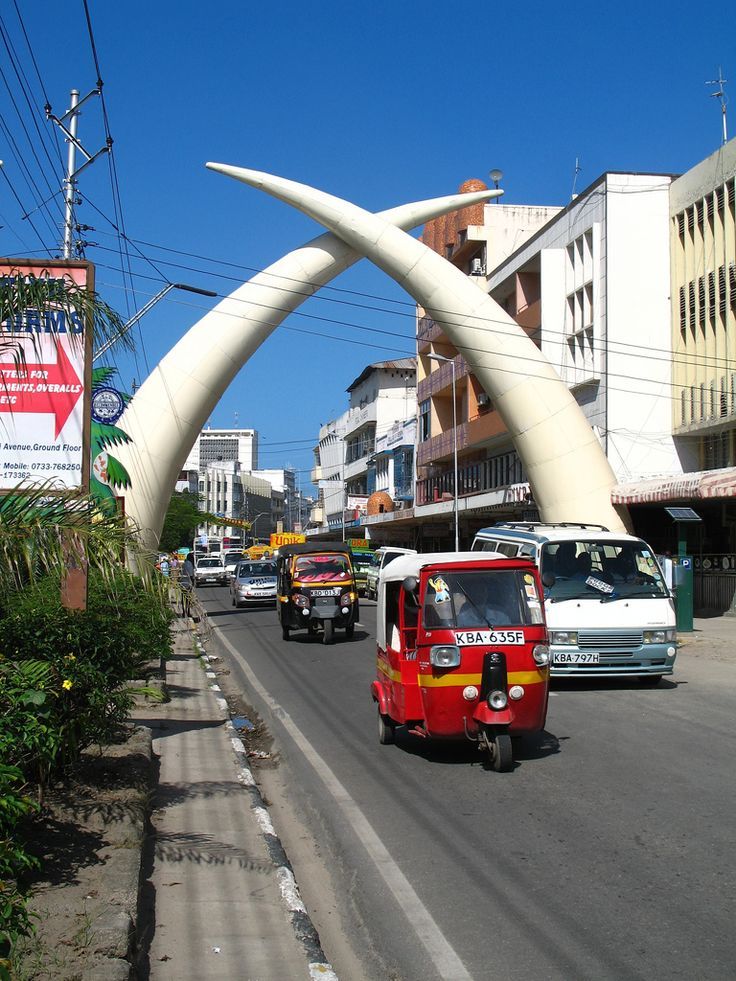
3. Mombasa Tusks
These famous elephant tusk arches span Moi Avenue near the city center. Built in 1952 to commemorate the visit of Queen Elizabeth II, they have become the city’s most recognizable modern symbol and a popular photo spot.
II. 🏖️ Coastal Lifestyle and Beaches
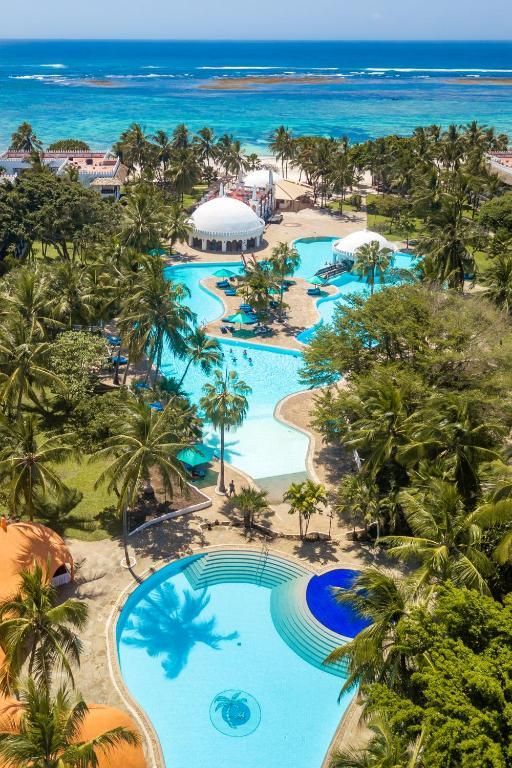
Mombasa is often visited as the gateway to Kenya’s spectacular coastline.
1. North Coast vs. South Coast
The coastline is divided by the main harbor and ferry crossing:
- North Coast (Nyali, Bamburi): Closer to the city, featuring major hotels and resorts that are easily accessible.
- South Coast (Diani Beach): Accessible via the Likoni Ferry, Diani is widely regarded as one of the best beaches in the world, known for its fine sand, turquoise waters, and lush surroundings.
2. Dhow Cruises
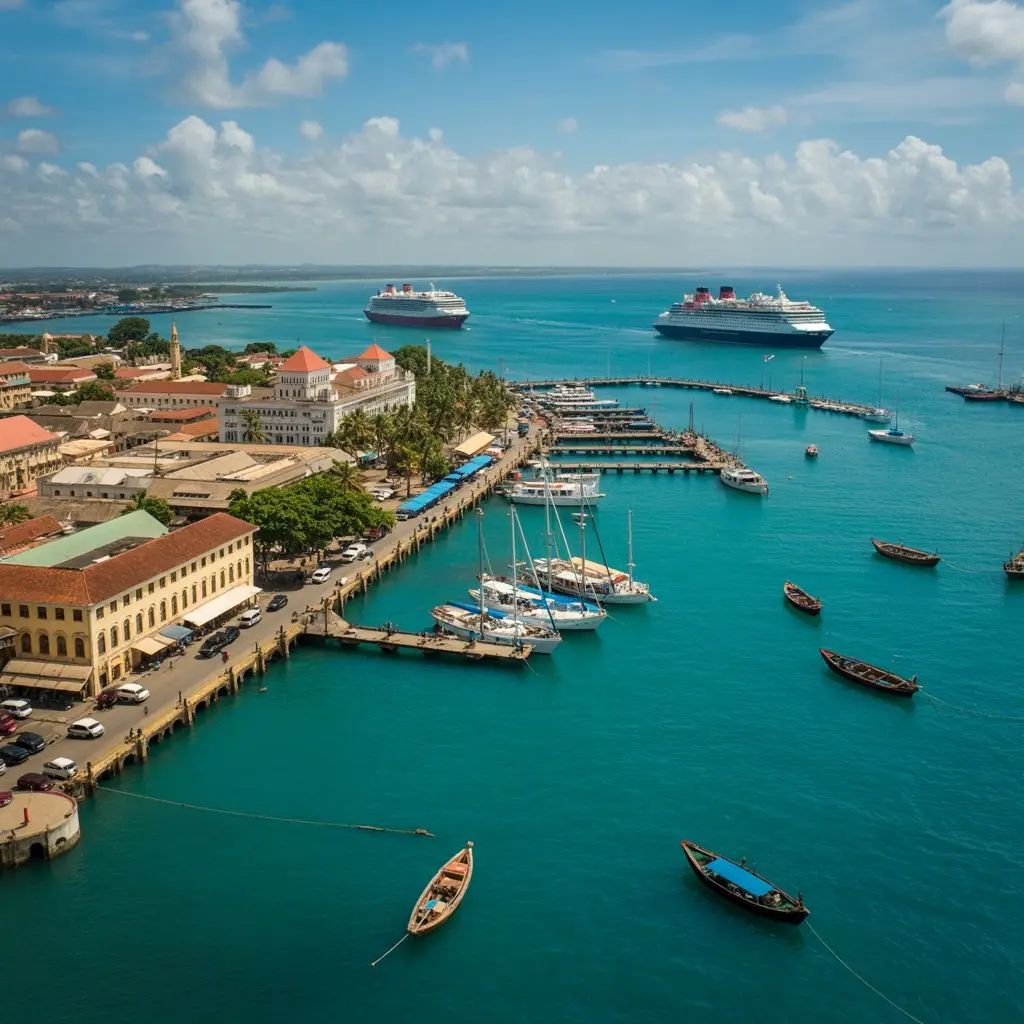
A dhow is a traditional wooden sailing vessel common in the Indian Ocean. Taking a sunset or dinner cruise on a dhow, often departing from the Old Port, is a romantic way to experience the coast and its maritime history.
III. 🍛 Swahili Cuisine and Flavors
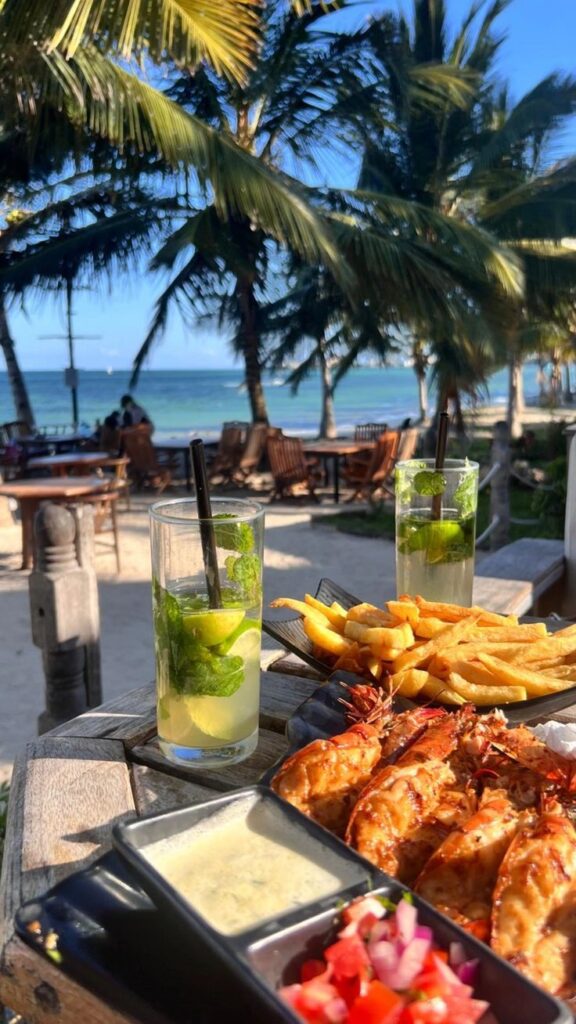
The coastal cuisine is distinct from inland Kenyan food, with strong influences from India, the Middle East, and Portugal.
- Pilau and Biryani: Spiced rice dishes, cooked with meat (chicken or goat) and aromatic spices like cardamom, cumin, and clove.
- Samosas: The East African version of the triangular fried pastry, typically stuffed with spiced meat or vegetables.
- Fresh Seafood: Enjoy freshly caught fish, prawns, and lobsters, often grilled and seasoned simply with coastal spices.
- Madafu: Fresh coconut water, served directly from the chilled young coconut—the ultimate tropical refreshment.
IV. 💡 Practical Tips for Visiting Mombasa
| Category | Advice |
| Currency | Kenyan Shilling (KES). Cash is essential for markets and small shops. |
| Transportation | Tuk-tuks (three-wheeled motorized taxis) and Boda-bodas (motorcycle taxis) are common for short trips. For longer distances, use reliable taxis or ride-share apps. |
| Language | Swahili and English are the official languages. Knowing a few Swahili phrases (Jambo – Hello, Asante – Thank you) is helpful. |
| Climate | Hot and Humid. Mombasa is tropical. The long rainy season is March–May, and the short rainy season is October–December. The best time to visit is during the dry season (January–February and July–September). |
| Health | Malaria: Mombasa is a malaria zone; consult your doctor about antimalarial medication. Drink only bottled water. |
Mombasa is a dynamic, historical city that serves as the perfect entry point for exploring the beautiful, sun-drenched Kenyan coast.
Dear fellow travelers, if my articles have helped you or inspired your journeys, you can support me in a very simple way. If you book your flights, hotels, or tickets through the links below, I will receive a small commission from the sale. This costs you absolutely nothing extra (the prices remain exactly the same for you), but it truly helps me take my children on our next adventure and write the next detailed travel guide.
Here are the services I personally use on our travels and that you can rely on:
-
 Flights: I prefer to compare prices using Kiwi.com : last minute flights : https://kiwi.tpk.lv/8NQF6GkN or through the global search engine Aviasales : https://aviasales.tpk.lv/gKYbo853 .
 -
 Accommodation: 90% of our stays are booked traditionally through Booking.com : https://booking.tpk.lv/cLbuaDaA. If we are traveling to Asia, Agoda : https://agoda.tpk.lv/OwlTkUi6 often offers better prices and deals.
 -
 Experiences & Tickets: To avoid standing for hours in ticket queues for landmarks with my children, I buy them in advance via GetYourGuide : https://getyourguide.tpk.lv/V6GC2pLm or through [Viator : https://viator.tpk.lv/jKVITxSH .
 -
 Car Rental: When we need a car on our journeys, I compare rental prices through QEEQ : Diamond Membership : https://qeeq.tpk.lv/1YoVmDCm ,
 -
 Internet Abroad: To have mobile data immediately upon arrival and avoid hunting for local SIM cards, I use a digital eSIM via Airalo : https://airalo.tpk.lv/YGyayoZj .
Thank you for every single click and booking; I deeply appreciate it!