Dublin, the capital of the Republic of Ireland, is not just a city; it’s an atmosphere. Known for its literary heritage, vibrant pub culture, and the uniquely Irish concept of craic (a convivial good time), Dublin is a welcoming, historically rich city with a youthful, energetic pulse.
Nestled on the east coast at the mouth of the River Liffey, Dublin is compact enough to explore on foot, yet large enough to offer a lifetime of discovery. From medieval castles to Georgian squares, and from ancient manuscripts to freshly poured pints, Dublin is an experience that lingers long after you’ve left.

I. 📚 History, Education, and Ancient Manuscripts
Dublin’s past is etched in stone, but its culture lives on through its profound literary legacy and historic institutions.
1. Trinity College Dublin
The city’s crown jewel, Trinity College (founded in 1592 by Queen Elizabeth I), is Ireland’s most prestigious university. Its cobbled squares and historic buildings offer a quiet retreat from the city hustle.
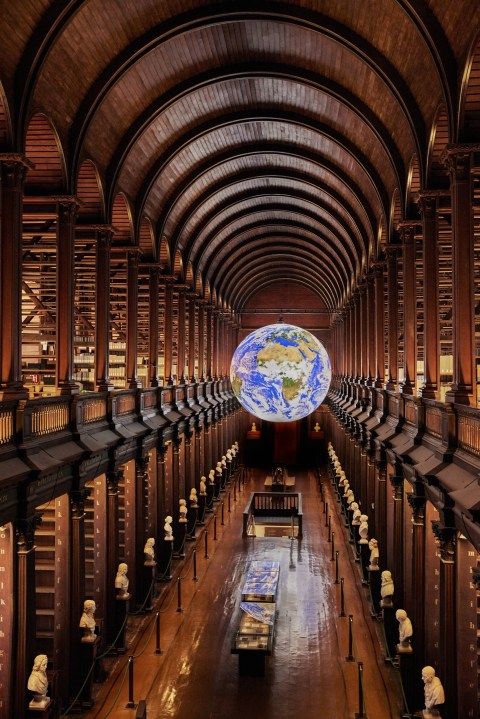
- The Book of Kells: Housed in the college’s Old Library, this illuminated manuscript, created by Celtic monks around 800 AD, contains the four Gospels of the New Testament. The sheer beauty and age of the book, displayed alongside the stunning architecture of the Long Room library (which holds 200,000 of the library’s oldest books), make this a mandatory stop.
2. Dublin Castle and Religious Landmarks
- Dublin Castle: Historically the seat of the British administration in Ireland, the castle complex today hosts government conferences and state receptions. Visitors can explore the state apartments and the medieval remnants beneath the castle complex.
- St. Patrick’s Cathedral: Built in 1191, this is the national cathedral of the Church of Ireland. It is famously linked to Jonathan Swift, the author of Gulliver’s Travels, who served as its dean from 1713 to 1745.
- Christ Church Cathedral: Older than St. Patrick’s, this cathedral is known for its medieval crypt and unique architectural style.
II. 🍺 The Liquid Heart of Dublin: Pub Culture
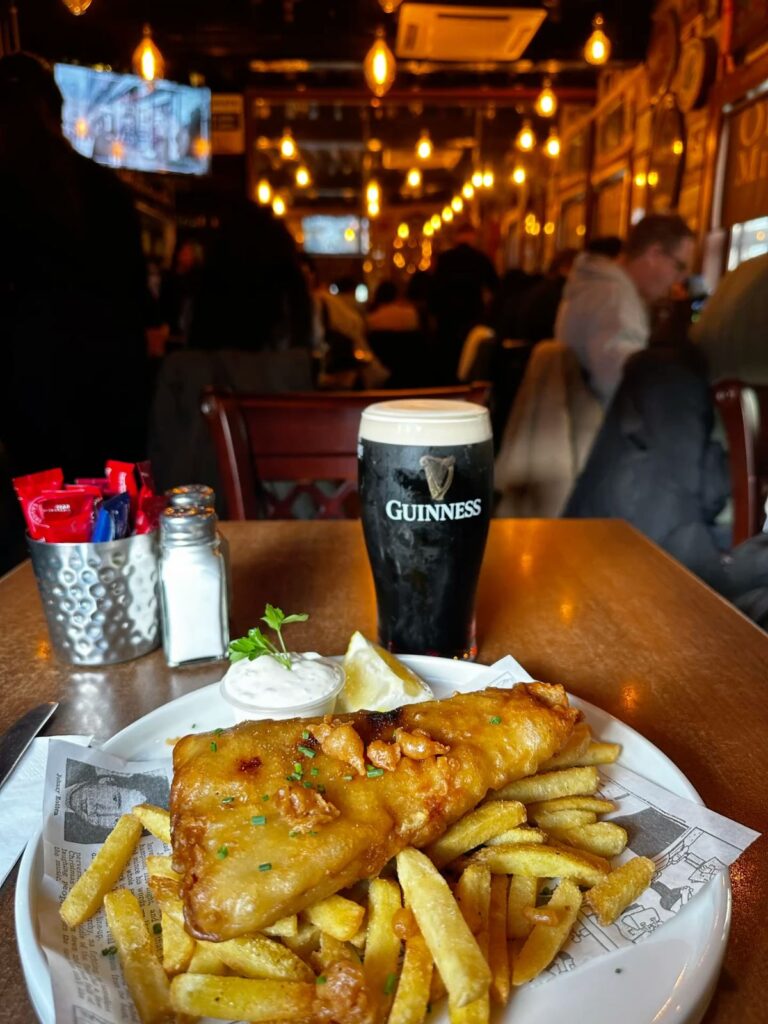
Dublin’s social life revolves around its pubs—they are the living rooms of the city, serving as venues for music, discussion, and, of course, the perfect pint.
1. The Guinness Storehouse
A visit here is essential, even if you don’t drink stout. Located at St. James’s Gate, the Guinness Storehouse is Ireland’s most popular tourist attraction.
- Experience: The seven-story self-guided experience takes you through the history, brewing process, and advertising legacy of the world-famous stout.
- The Gravity Bar: The tour culminates at the $360$-degree panoramic Gravity Bar, where you receive a complimentary pint of Guinness and enjoy spectacular views of the Dublin skyline.
2. Temple Bar
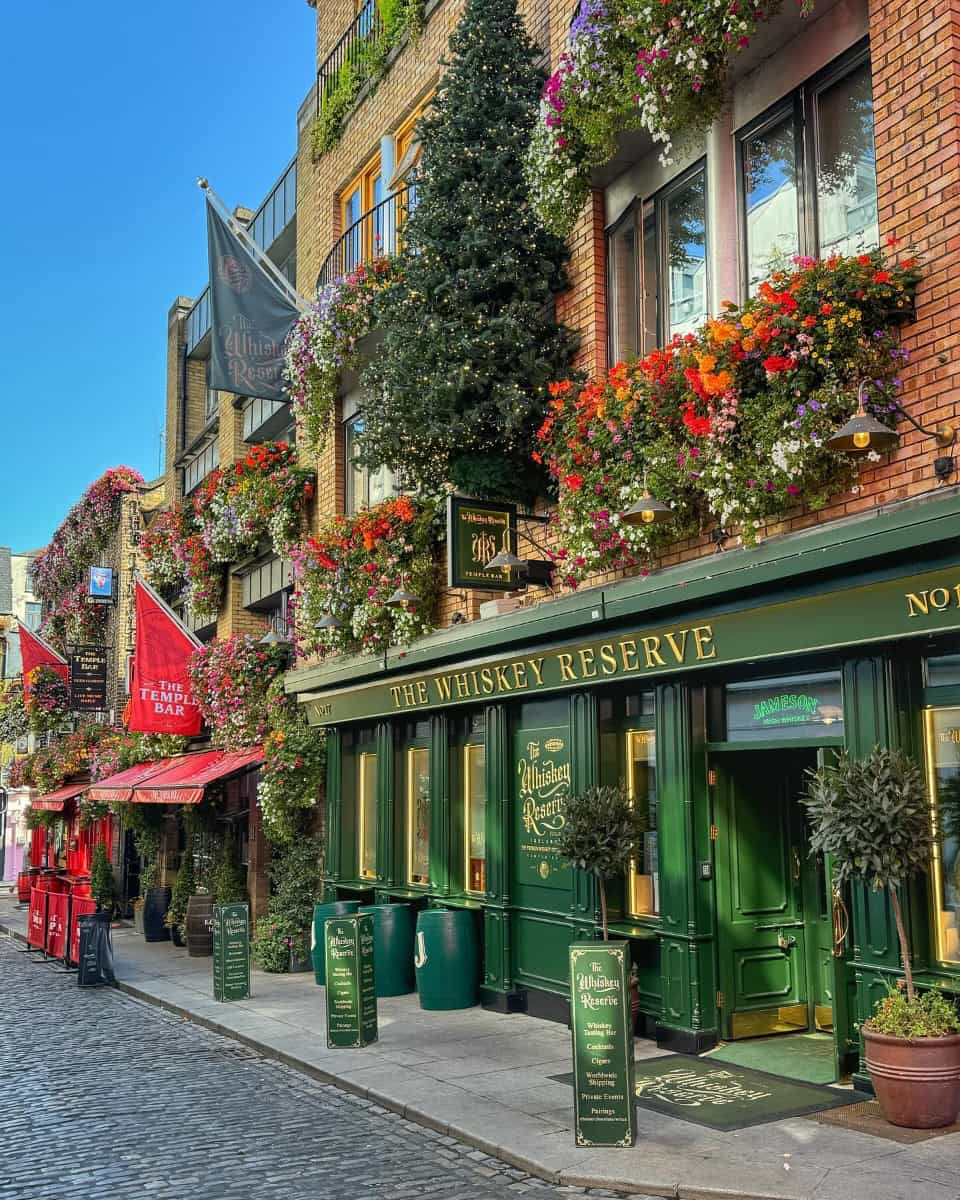
The city’s famous entertainment quarter, Temple Bar, is packed with pubs, restaurants, and cultural institutions. While often crowded and touristy, it remains a lively center for traditional Irish music (trad music), performed live daily in many pubs.
3. The Jameson Distillery Bow St.
Located on the north side of the city, the original site of the Jameson distillery now offers immersive tasting experiences and tours detailing the history of Irish whiskey. It’s a great alternative to the pub scene and an excellent way to learn about another Irish classic.
III. ☘️ Literary Trails and Georgian Charm
Dublin is a UNESCO City of Literature, having produced four Nobel Prize in Literature winners: W.B. Yeats, George Bernard Shaw, Samuel Beckett, and Seamus Heaney.
- Literary Pub Crawl: A popular way to explore the city while learning about its famous writers, led by actors who perform scenes in various pubs.
- Georgian Dublin: Large parts of the city center, particularly south of the Liffey, are defined by beautiful 18th-century Georgian architecture, characterized by their uniform height, red brick facades, and famous colorful Georgian doors (a popular photo spot).
- Phoenix Park: One of the largest enclosed public parks in any capital city in Europe. It is home to the Irish President’s residence, Dublin Zoo, and a large herd of wild fallow deer.
IV. 🍽️ Traditional Irish Fare
Irish food is hearty, comforting, and designed to warm you up after a blustery day.
- Dublin Coddle: A traditional working-class dish, often featuring layers of pork sausages, bacon, potatoes, and onions.
- Irish Stew: A classic made with lamb or mutton, potatoes, carrots, and onions, slowly simmered to perfection.
- Soda Bread: A dense, traditional bread made with baking soda instead of yeast, perfect for soaking up stew gravy.
- Seafood: Being a port city, Dublin offers excellent fresh seafood, particularly oysters and fresh cod.
V. ✈️ Practical Tips for Exploring Dublin
| Category | Advice |
| Currency | Euro (€). Ireland is part of the Eurozone. |
| Getting Around | The city center is highly walkable. For longer distances, use the DART (suburban rail) or Luas (tram system). The Airlink Express bus connects Dublin Airport (DUB) directly to the city center. |
| Best Time | May to September. Temperatures are mildest, and the long daylight hours make exploring easier. Be prepared for rain at any time! |
| Tipping | Not mandatory, but common. Rounding up the bill in a pub is standard. For sit-down meals, 10-15% is appreciated. |
| Language | English and Irish (Gaelic) are the official languages, but English is universally spoken. |
Dublin invites you to slow down, pull up a stool in a cozy corner pub, and immerse yourself in the warm hospitality of the Irish people.

Dear fellow travelers, if my articles have helped you or inspired your journeys, you can support me in a very simple way. If you book your flights, hotels, or tickets through the links below, I will receive a small commission from the sale. This costs you absolutely nothing extra (the prices remain exactly the same for you), but it truly helps me take my children on our next adventure and write the next detailed travel guide.
Here are the services I personally use on our travels and that you can rely on:
-
 Flights: I prefer to compare prices using Kiwi.com : last minute flights : https://kiwi.tpk.lv/8NQF6GkN or through the global search engine Aviasales : https://aviasales.tpk.lv/gKYbo853 .
 -
 Accommodation: 90% of our stays are booked traditionally through Booking.com : https://booking.tpk.lv/cLbuaDaA. If we are traveling to Asia, Agoda : https://agoda.tpk.lv/OwlTkUi6 often offers better prices and deals.
 -
 Experiences & Tickets: To avoid standing for hours in ticket queues for landmarks with my children, I buy them in advance via GetYourGuide : https://getyourguide.tpk.lv/V6GC2pLm or through [Viator : https://viator.tpk.lv/jKVITxSH .
 -
 Car Rental: When we need a car on our journeys, I compare rental prices through QEEQ : Diamond Membership : https://qeeq.tpk.lv/1YoVmDCm ,
 -
 Internet Abroad: To have mobile data immediately upon arrival and avoid hunting for local SIM cards, I use a digital eSIM via Airalo : https://airalo.tpk.lv/YGyayoZj .
Thank you for every single click and booking; I deeply appreciate it!