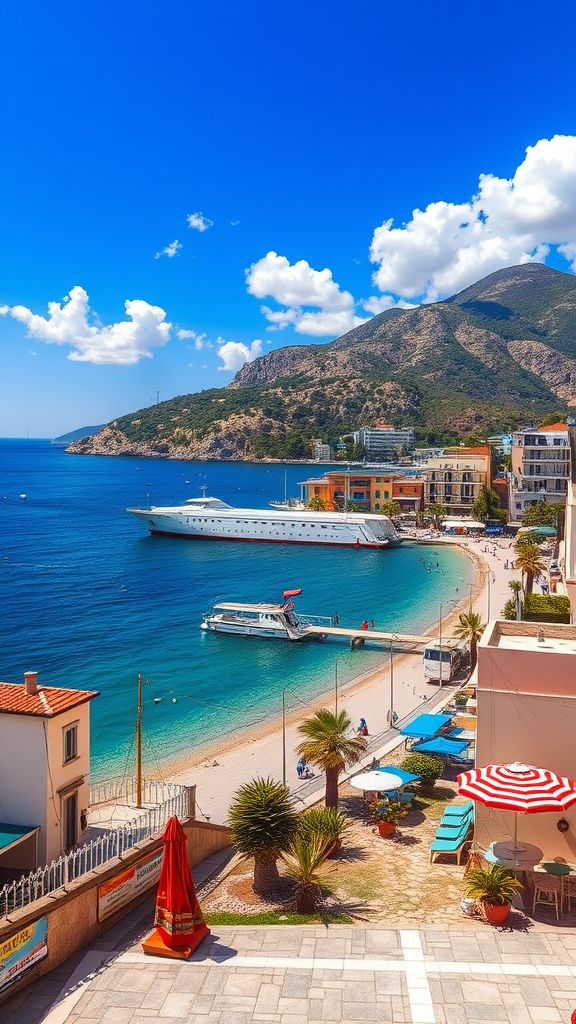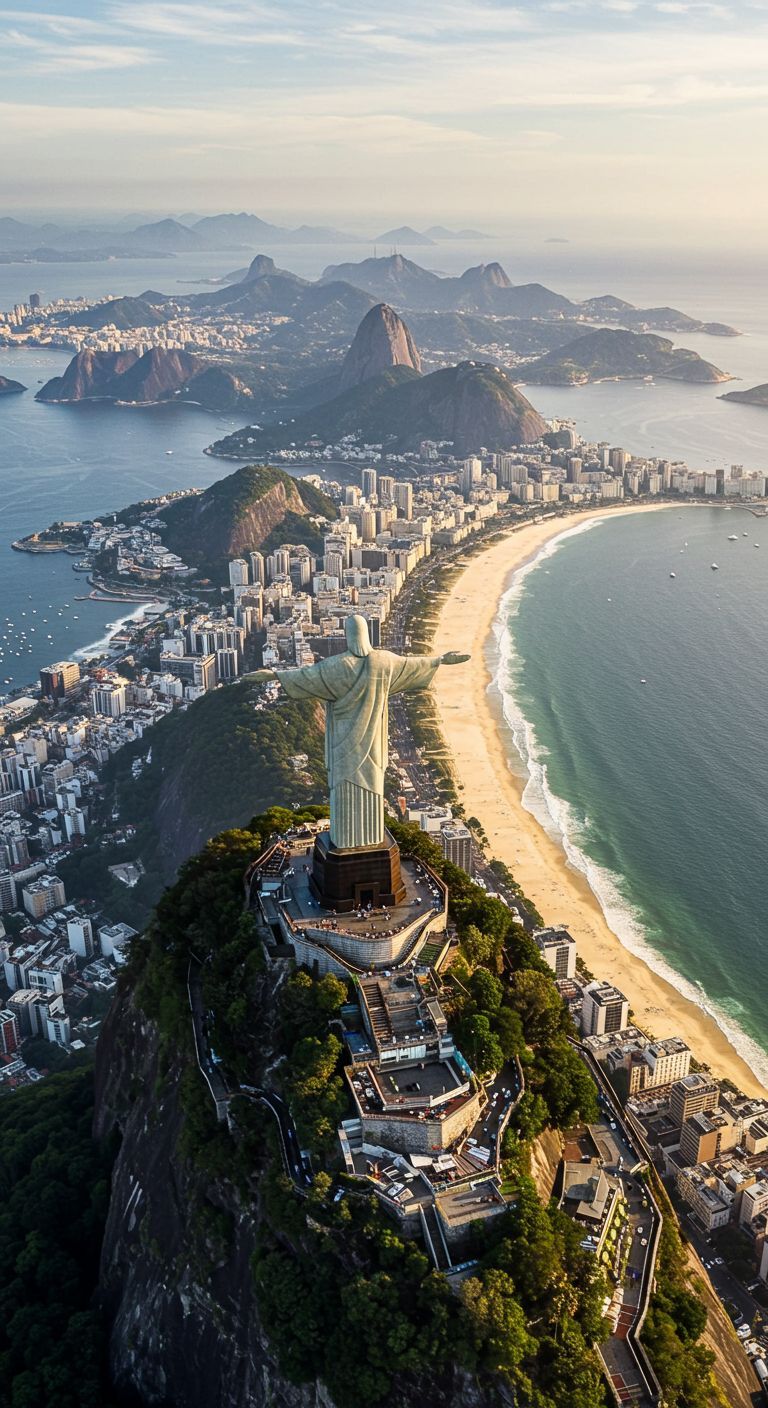
Rio de Janeiro is arguably the most recognizable and visually stunning city in South America. Nestled between a dramatic backdrop of lush green mountains and the sparkling blue Atlantic Ocean, Rio is defined by its natural beauty, its infectious samba rhythms, and the vibrant, open-air lifestyle of its residents, known as Cariocas.
This city is a sensual feast, famous globally for its Carnival celebrations, iconic beaches, and two world-famous granite peaks that frame the metropolis.

I. 🏞️ Rio’s Iconic Peaks and Views
The landscape of Rio is its most profound feature, boasting two essential viewpoints.
1. Christ the Redeemer (Cristo Redentor)
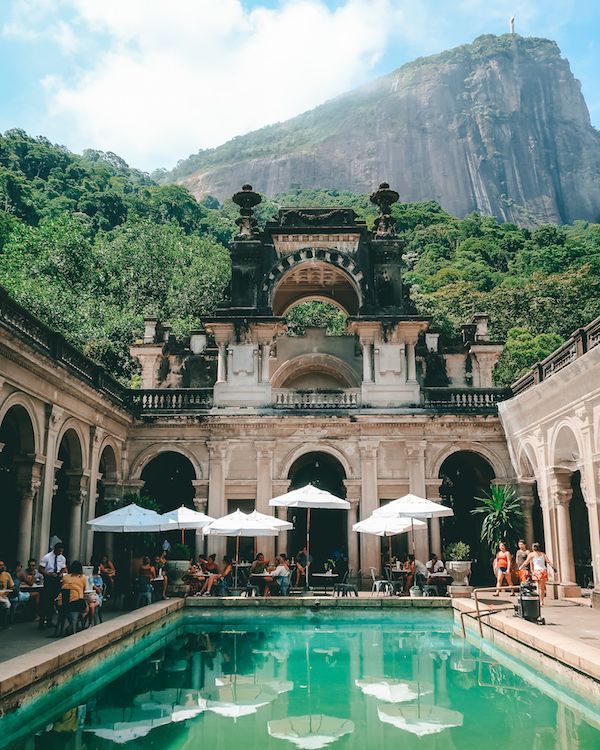
- Location: Perched atop the 700-meter high Corcovado Mountain, this colossal Art Deco statue of Jesus Christ is one of the New Seven Wonders of the World.
- Access: You can reach the summit via a scenic funicular train or specialized vans. The panoramic view of Rio from the top is unparalleled.
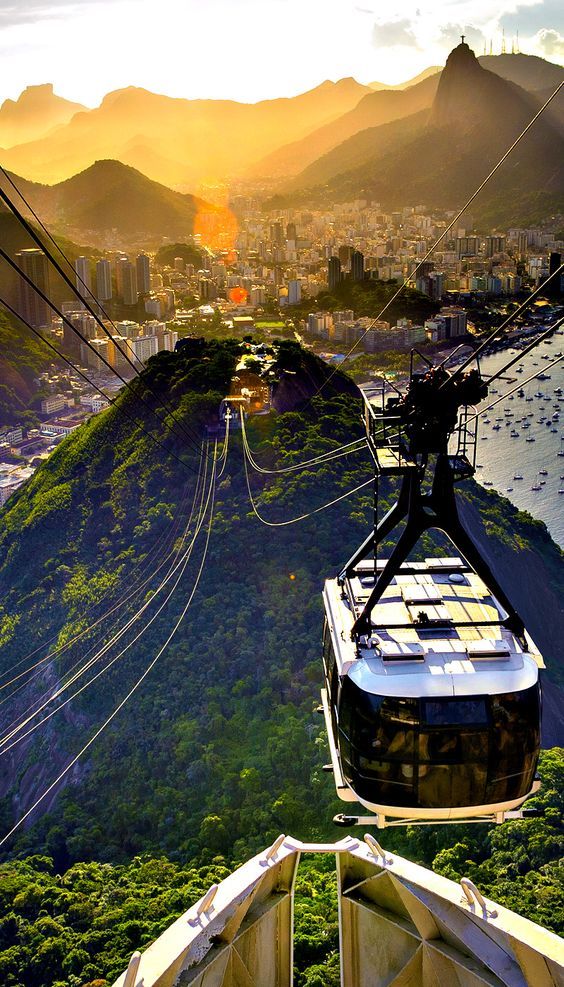
2. Sugarloaf Mountain (Pão de Açúcar)
- Location: A sheer granite peak at the mouth of Guanabara Bay.
- Access: Reached via two stages of glass-walled cable cars. The views of Copacabana, Christ the Redeemer, and the city skyline are spectacular, especially at sunset.
II. 🏖️ The Legendary Beaches
Rio’s beach culture is a lifestyle, not just a leisure activity. The beaches are essentially public stages for exercise, commerce, and socializing.
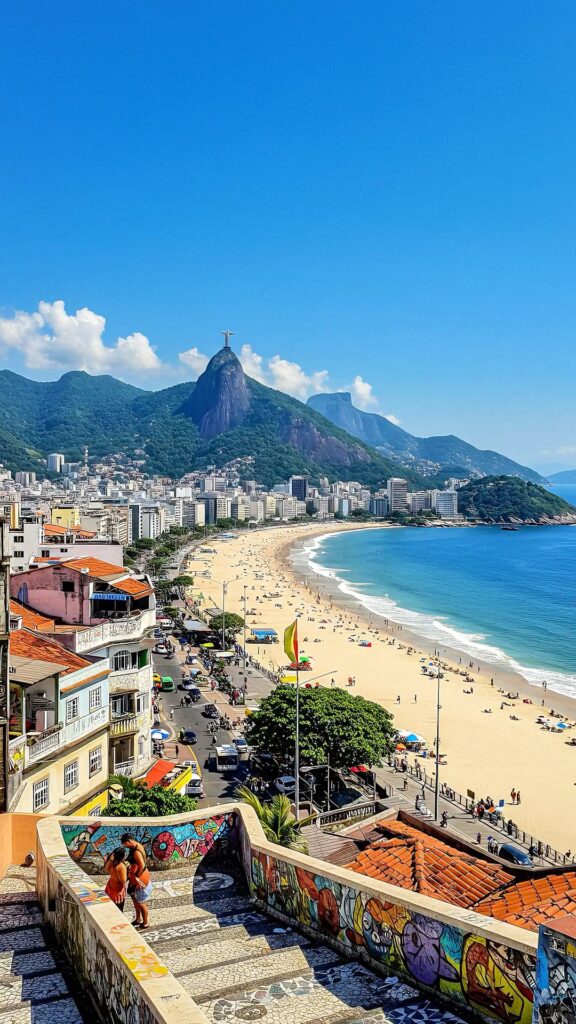
1. Copacabana
- Characteristics: Famous for its sweeping crescent shape, the black-and-white tiled promenade (designed by Roberto Burle Marx), and being the host of massive New Year’s Eve parties.
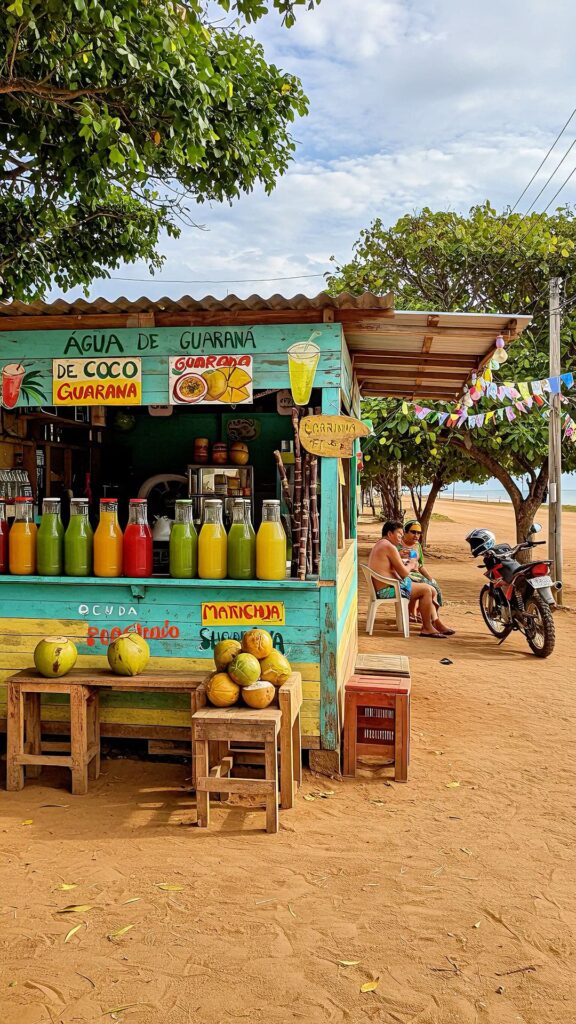
- Activities: Beach volleyball, surfing, and relaxing by the ubiquitous quiosques (kiosks) selling drinks and snacks.
2. Ipanema
- Characteristics: Immortalized by the song “The Girl from Ipanema.” Generally considered more upscale and trendier than Copacabana.
- Postos (Lifeguard Stations): The beach is unofficially divided into sections by lifeguard posts; Posto 9 is famously bohemian.
III. 🎉 Culture, Music, and Rhythm
Rio’s soul is found in its music and passionate communal life.
1. Samba and Carnival
- Carnival: Rio hosts the world’s largest Carnival celebration, a spectacular five-day festival held before Lent. The highlight is the extravagant parade of Samba Schools in the Sambadrome.
- Samba: The heart of Brazilian music. Experience the real deal at a Samba Circle (roda de samba) in neighborhoods like Lapa or Saúde.
2. Lapa and the Selarón Steps
- Lapa: Famous for its distinct 18th-century Roman-style aqueduct (Arcos da Lapa) and its intense weekend street parties and traditional bars.
- Escadaria Selarón: The famous steps in Santa Teresa, tiled vibrantly by Chilean artist Jorge Selarón using tiles collected from around the world.
3. Favela Tourism
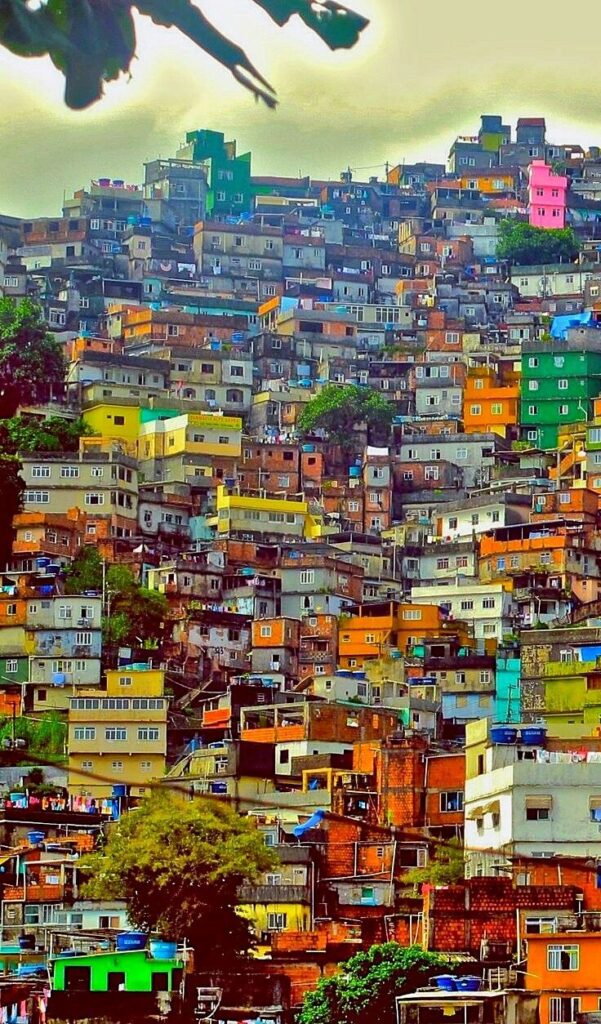
- Respectful Visits: Historically marginalized areas, many favelas are now safer and offer guided tours (often by residents) that provide crucial insight into the community, culture, and social reality of Rio.
IV. 🍽️ Culinary Delights
Brazilian food is hearty, meat-heavy, and full of flavor.
- Feijoada: Brazil’s national dish. A rich stew of black beans, beef, and pork, traditionally served with rice, collard greens, and orange slices (traditionally eaten on Wednesdays and Saturdays).
- Churrasco: Brazilian barbecue. Visit a Churrascaria for the Rodízio experience, where waiters bring various cuts of meat right to your table.
- Caipirinha: Brazil’s national cocktail, made with cachaça (sugar cane liquor), sugar, and lime.
V. 💡 Practical Tips for Rio de Janeiro
| Category | Advice |
| Currency | Brazilian Real (BRL or R$). |
| Transportation | Use the clean and efficient Metro to get between Copacabana, Ipanema, and the city center. Uber is widely available and safer than street taxis. |
| Safety | Be vigilant. Avoid wearing expensive jewelry or flashing large cameras in crowded areas and at night. Use caution on the beaches after dark. |
| Language | Portuguese. English is less common outside of major hotels and tourist attractions, so learn a few basic phrases. |
| Best Time | December to March for the best weather (though it’s also the rainy season and peak season/Carnival). May to September offers cooler, drier, and less crowded conditions. |
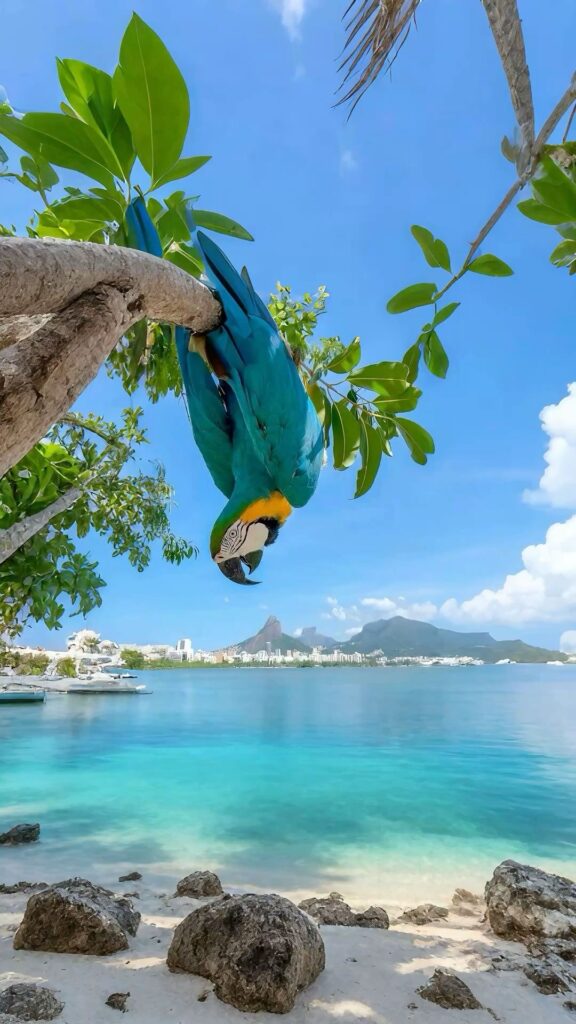
Rio de Janeiro is a city of undeniable energy, where the party never stops and the spectacular natural scenery is always the star of the show.
You can find specific maps, streets, attractions, cafes and hotels here:
Dear fellow travelers, if my articles have helped you or inspired your journeys, you can support me in a very simple way. If you book your flights, hotels, or tickets through the links below, I will receive a small commission from the sale. This costs you absolutely nothing extra (the prices remain exactly the same for you), but it truly helps me take my children on our next adventure and write the next detailed travel guide.
Here are the services I personally use on our travels and that you can rely on:
-
 Flights: I prefer to compare prices using Kiwi.com : last minute flights : https://kiwi.tpk.lv/8NQF6GkN or through the global search engine Aviasales : https://aviasales.tpk.lv/gKYbo853 .
 -
 Accommodation: 90% of our stays are booked traditionally through Booking.com : https://booking.tpk.lv/cLbuaDaA. If we are traveling to Asia, Agoda : https://agoda.tpk.lv/OwlTkUi6 often offers better prices and deals.
 -
 Experiences & Tickets: To avoid standing for hours in ticket queues for landmarks with my children, I buy them in advance via GetYourGuide : https://getyourguide.tpk.lv/V6GC2pLm or through [Viator : https://viator.tpk.lv/jKVITxSH .
 -
 Car Rental: When we need a car on our journeys, I compare rental prices through QEEQ : Diamond Membership : https://qeeq.tpk.lv/1YoVmDCm ,
 -
 Internet Abroad: To have mobile data immediately upon arrival and avoid hunting for local SIM cards, I use a digital eSIM via Airalo : https://airalo.tpk.lv/YGyayoZj .
Thank you for every single click and booking; I deeply appreciate it!