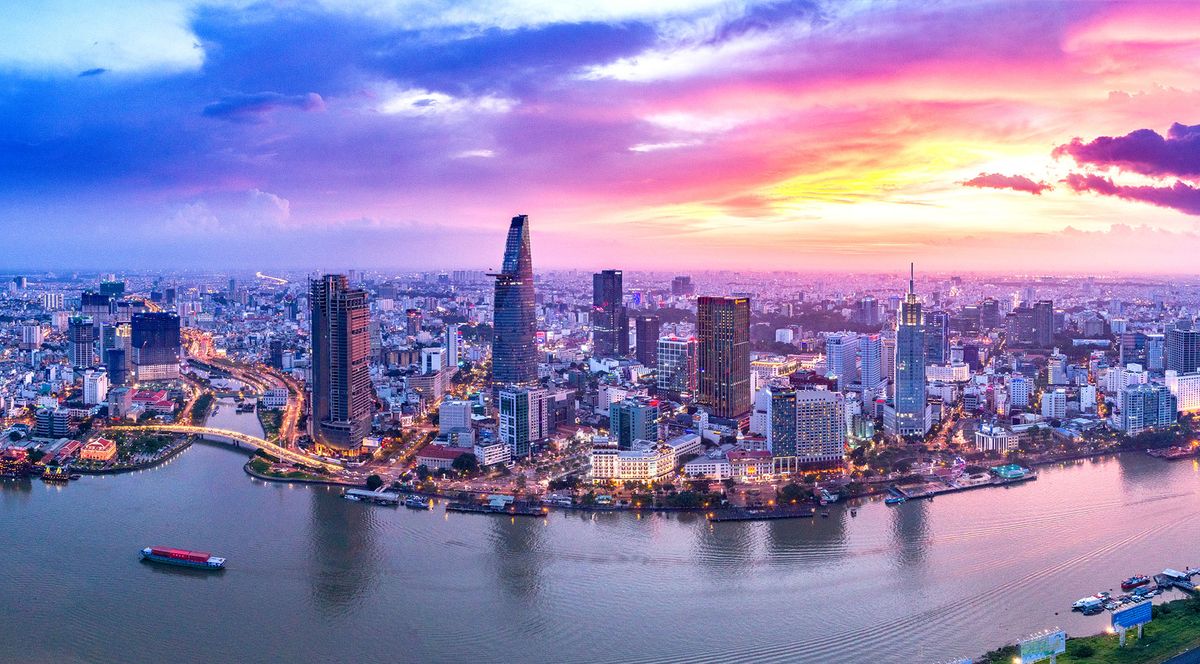
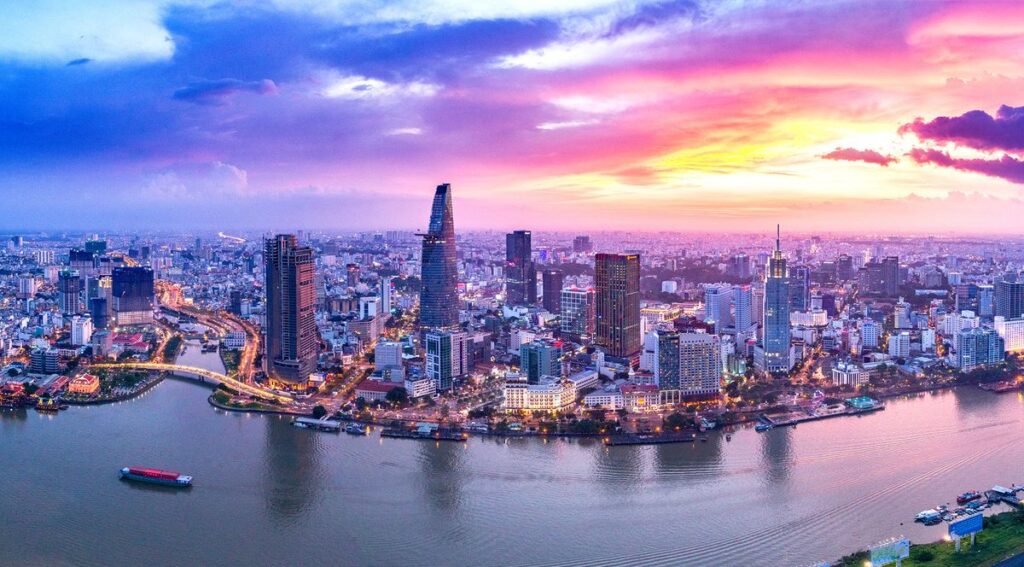
Ho Chi Minh City (Thành phố Hồ Chí Minh), still commonly referred to by its old name Saigon, is the economic heart of Vietnam, pulsating with constant movement and boundless energy. It is a city of extreme contrasts: modern skyscrapers tower over colonial buildings, and millions of motorbikes form a dense, yet fascinating, traffic network.
Saigon has witnessed a turbulent history, from French colonial rule to the dramatic events of the Vietnam War, which is reflected in its museums and architecture. It is a city that never sleeps and where Vietnamese culture is best experienced directly from a plastic stool on the street, with a bowl of phở in hand.
I. ⏳ History and Colonial-Era Landmarks
Saigon has retained a distinct colonial heritage that contrasts sharply with the surrounding Asian hustle.
1. Independence Palace (Dinh Thống Nhất)
Originally the Independence Palace, it served as the home and office of the President of South Vietnam. It is the iconic site where a North Vietnamese tank crashed through the gates in April 1975, symbolically ending the Vietnam War. The interiors have been preserved in the 1960s style of the period.
2. Notre Dame and the Central Post Office
These two colonial-era architectural icons stand close together in the very heart of District 1:
- Notre Dame Cathedral (Nhà thờ Đức Bà Sài Gòn): A Catholic cathedral built by the French using red bricks imported directly from Marseille.
- Central Post Office (Bưu điện Trung tâm Sài Gòn): A beautiful steel-framed building designed by Gustave Eiffel (yes, the one from Paris). The interior is adorned with a map of Vietnam and is still a functioning post office.
3. War Remnants Museum (Bảo tàng Chứng tích Chiến tranh)
The most important and difficult museum in the city. It offers a profound and often graphic view of the horrors of the Vietnam War, focusing on civilian victims and the consequences of Agent Orange.
II. 🛵 The City’s Pulse: Traffic and Streets
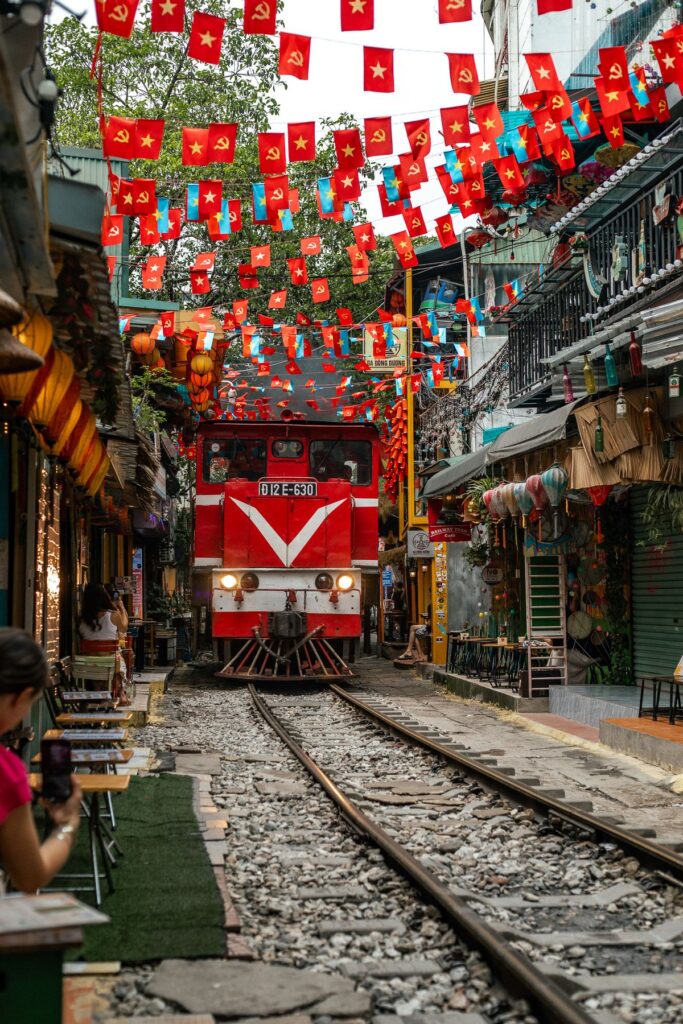
Saigon is unimaginable without motorbikes. It is estimated that more than seven million of them traverse the city.
1. Crossing the Streets
For tourists, navigating the busy roads is a true test of courage and patience. The key is not to run, but to walk slowly and predictably—the flow of traffic will go around you.
2. Bùi Viện (The Pedestrian Zone)
This street in District 1, often dubbed “Backpacker Street,” is the epicenter of nightlife, cheap restaurants, and bars. After dark, it becomes a pedestrian zone filled with music, street vendors, and plastic stools.
III. 🍜 Culinary Paradise and Coffee
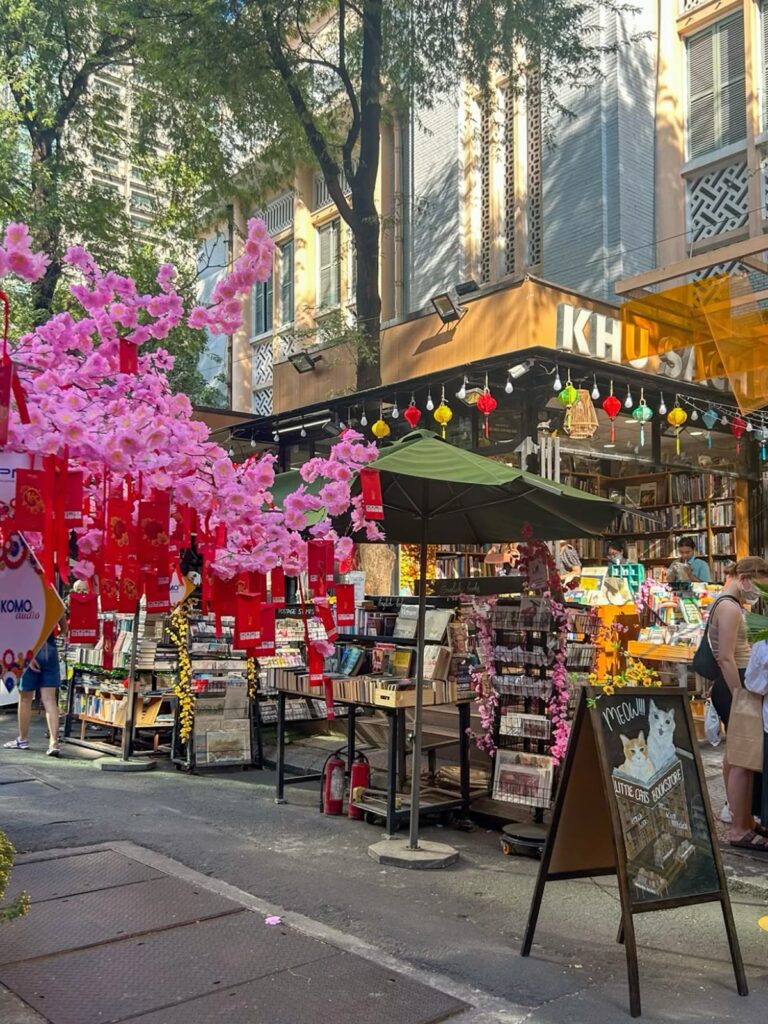
Saigon is a culinary haven. The best food is often found right on the edge of the sidewalk.
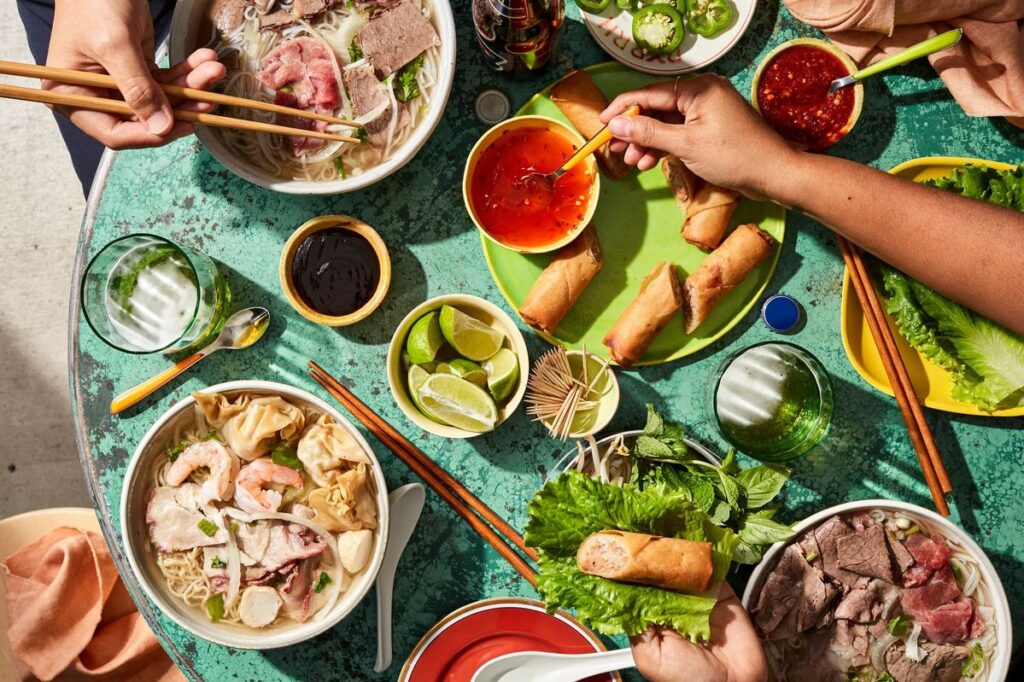
- Phở: Vietnam’s national soup, which is ubiquitous, but in Saigon, it is often served with a slightly sweeter broth than in the North.
- Bánh Mì: The Vietnamese sandwich, served in a crispy baguette (a legacy of the French colonial era), filled with meat, vegetables, herbs, and pâté. It is the perfect street food.
- Vietnamese Coffee (Cà phê): The coffee here is strong, bitter, and often drunk with condensed milk (cà phê sữa đá). It is an integral part of daily life, where coffee shops with plastic stools serve as social centers.
IV. 🏙️ Districts and Areas
The city is divided into districts, with District 1 being the center for tourists.
- District 1 (Quận 1): Contains all the main landmarks (Notre Dame, Post Office, Independence Palace) and most of the luxury hotels.
- District 3 (Quận 3): Offers a pleasant mix of old villas, quieter streets, and great restaurants; it is less crowded than the center.
- Chinatown (Chợ Lớn / District 5): One of the largest Chinese quarters outside of China. It is known for its colorful markets, especially Bình Tây Market, and old temples.
V. 💡 Practical Tips
| Category | Advice |
| Transportation | Grab. The best way to get around. It is the local version of Uber/Taxify, which allows you to book either a car or a cheap motorbike taxi. |
| Currency | Vietnamese Dong (VND). Carry cash for street food and smaller purchases, although cards are accepted in hotels and larger shops. |
| Water | Drink only bottled water. |
| Best Time | December to April. This is the dry season with the lowest humidity. The monsoon season (May – November) brings short, but intense rains. |
| Bargaining | Expected in markets (e.g., Bến Thành Market), but prices are fixed in modern stores. |
Saigon is relentless, noisy, and sometimes exhausting. But it is precisely its unfiltered energy, rich history, and incredibly tasty food that make it one of the most fascinating Asian cities.
Dear fellow travelers, if my articles have helped you or inspired your journeys, you can support me in a very simple way. If you book your flights, hotels, or tickets through the links below, I will receive a small commission from the sale. This costs you absolutely nothing extra (the prices remain exactly the same for you), but it truly helps me take my children on our next adventure and write the next detailed travel guide.
Here are the services I personally use on our travels and that you can rely on:
-
 Flights: I prefer to compare prices using Kiwi.com : last minute flights : https://kiwi.tpk.lv/8NQF6GkN or through the global search engine Aviasales : https://aviasales.tpk.lv/gKYbo853 .
 -
 Accommodation: 90% of our stays are booked traditionally through Booking.com : https://booking.tpk.lv/cLbuaDaA. If we are traveling to Asia, Agoda : https://agoda.tpk.lv/OwlTkUi6 often offers better prices and deals.
 -
 Experiences & Tickets: To avoid standing for hours in ticket queues for landmarks with my children, I buy them in advance via GetYourGuide : https://getyourguide.tpk.lv/V6GC2pLm or through [Viator : https://viator.tpk.lv/jKVITxSH .
 -
 Car Rental: When we need a car on our journeys, I compare rental prices through QEEQ : Diamond Membership : https://qeeq.tpk.lv/1YoVmDCm ,
 -
 Internet Abroad: To have mobile data immediately upon arrival and avoid hunting for local SIM cards, I use a digital eSIM via Airalo : https://airalo.tpk.lv/YGyayoZj .
Thank you for every single click and booking; I deeply appreciate it!