Bangkok (in Thai, Krung Thep Maha Nakhon – “City of Angels”) is not just the capital of Thailand; it is one of the world’s most visited metropolises. It is a place of immense, yet fascinating, chaos, where millennia-old Buddhist traditions intertwine with the neon glow of skyscrapers, and the scent of street food mixes with the exhaust of tuk-tuks.
Bangkok was founded in 1782 by King Rama I as the new capital after the fall of Ayutthaya. Since then, it has evolved from a small river port into a massive, dynamic metropolis that never sleeps.
Prepare for a deep dive that will guide you from the gold-gilded temples, through the intricate canals of the “Venice of the East,” to the best Michelin-starred street food stalls.

I. 👑 The Historic Core and Temples (Rattanakosin)
Bangkok’s most important landmarks are concentrated in the historic Rattanakosin district on the bank of the Chao Phraya River, the heart of old Siam.
1. The Grand Palace and Wat Phra Kaew
The Grand Palace was the official residence of the Thai Kings since the 18th century. Although today it mainly serves ceremonial purposes, it is the most sacred and architecturally stunning site in Thailand.
- Wat Phra Kaew (Temple of the Emerald Buddha): Part of the palace complex, it houses the most revered relic in the country—a small statue of the Emerald Buddha. The statue is dressed in robes that are changed three times a year according to the seasons in a ceremony led by the King himself.
2. Wat Pho (Temple of the Reclining Buddha)
Just a short walk from the Grand Palace is Wat Pho, the second most important temple.
- The Reclining Buddha: The temple’s centerpiece is a massive gilded statue of the Reclining Buddha, 46 meters long and 15 meters high, which depicts the Buddha in the state of Nirvana.
- Massage School: Wat Pho is also regarded as the first center of public education and is still recognized as the national center and school of traditional Thai massage.
3. Wat Arun (Temple of Dawn)
Wat Arun Ratchawararam is perhaps the most photographed temple, particularly due to its location right on the Chao Phraya River bank and its iconic prang (Khmer-style tower), which is covered in intricate mosaics of Chinese porcelain. It offers a breathtaking view at both sunrise and sunset.
II. 🌊 Life on the River: The Royal Artery
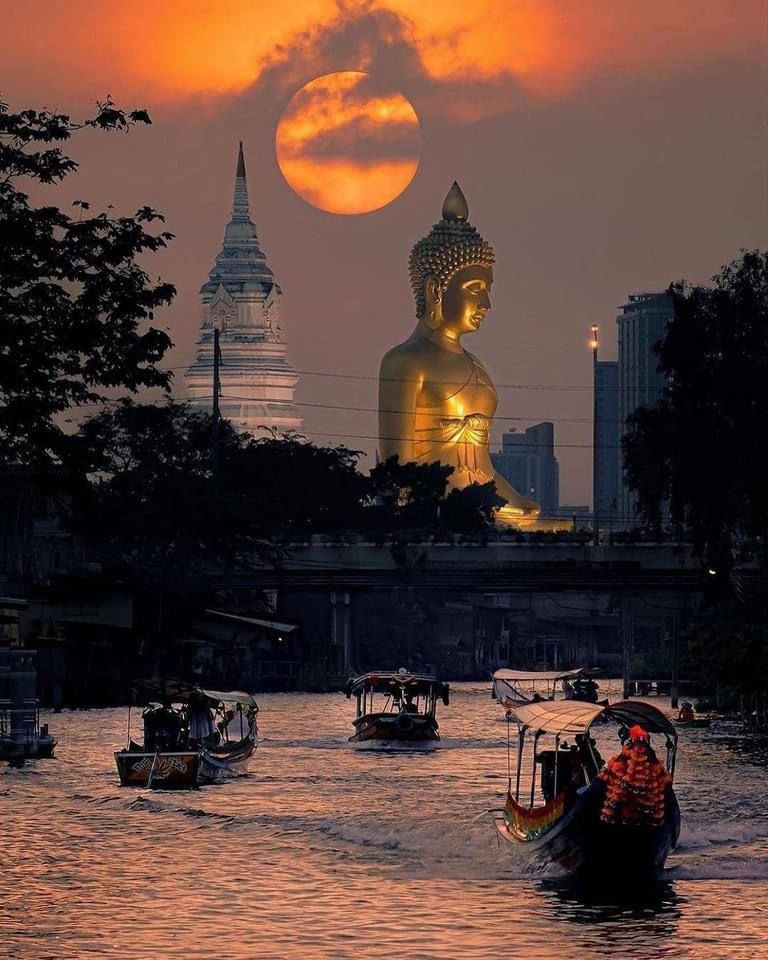
The Chao Phraya River (River of Kings) is the soul of Bangkok. Before the advent of modern roads, Bangkok was crisscrossed with canals (khlongs) and earned the nickname “Venice of the East.”
1. River Transport and Cruises
For tourists, boat transport on the Chao Phraya is the ideal and often fastest way to travel between the temples and the historic center.
- Hop-on, Hop-off Boats: A popular option for touring the main attractions.
- Dinner Cruises: Offer a luxurious view of the illuminated Wat Arun and the Grand Palace at night.
2. Thon Buri Canals (Khlongs) and Floating Markets
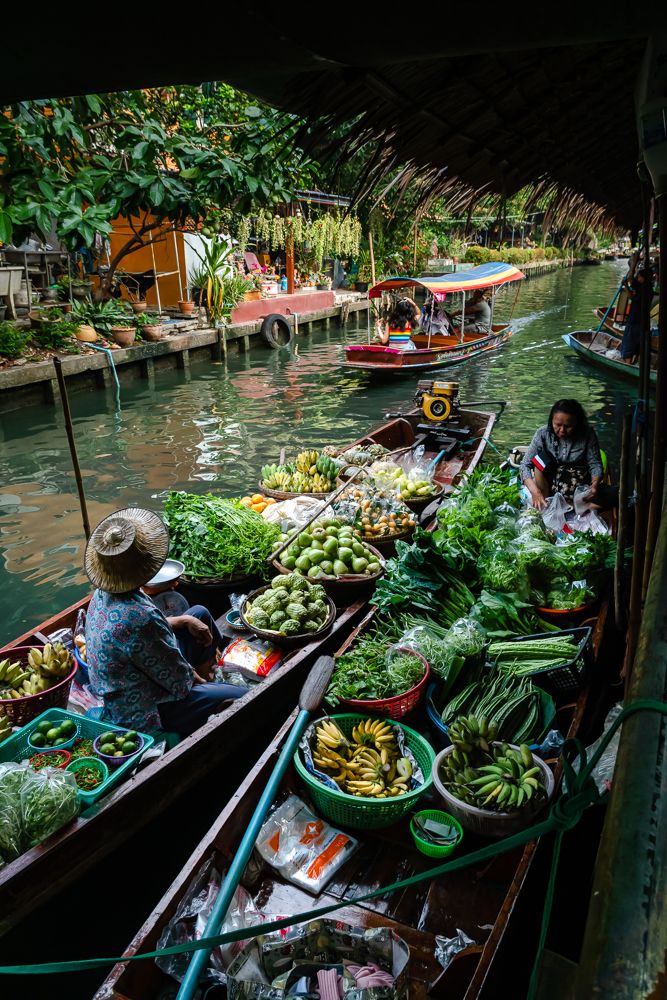
Hire a long-tail boat and venture into the khlongs of the Thon Buri district. You will see old wooden houses built on stilts, contrasting sharply with modern Bangkok.
- Floating Markets: Although many, like Damnoen Saduak, are primarily tourist attractions, they still offer a taste of traditional river trade. A more local, yet smaller market can be found around Khlong Lat Mayom.
- Mae Klong Railway Market (Talad Rom Hub): A popular day trip outside Bangkok, where vendors must swiftly collapse their stalls from the tracks as the train approaches.
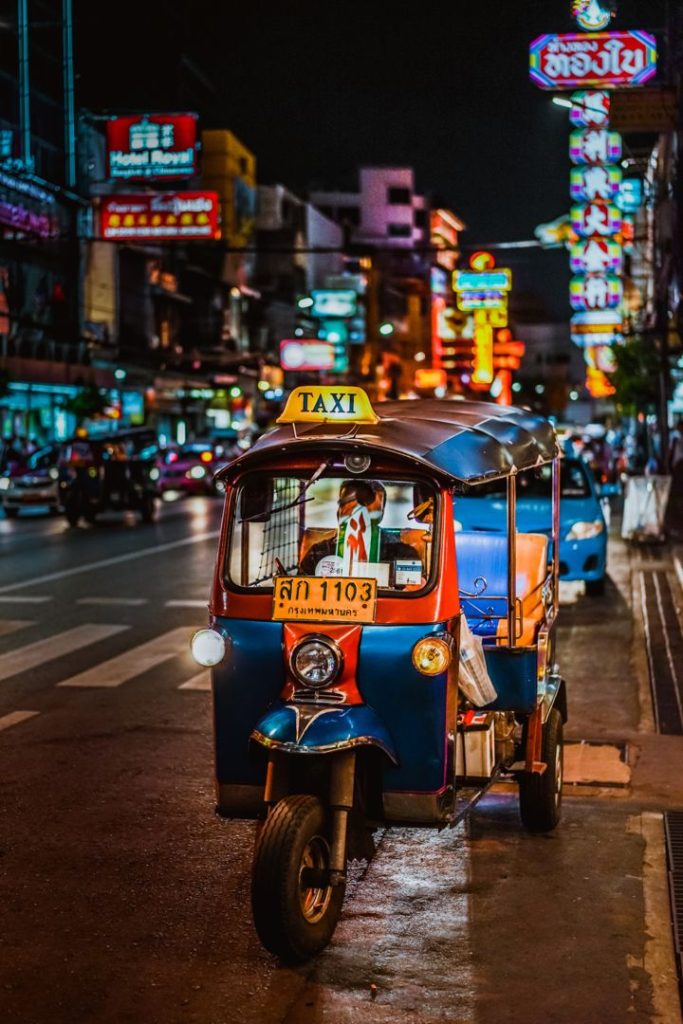
III. 🍜 Culinary Heaven: The Food of Bangkok
Bangkok is globally renowned as the Mecca of Street Food. A culinary adventure here is a must, and street stalls often surpass many luxurious restaurants.
1. Yaowarat (Chinatown)
In the evening, this area transforms into a giant, neon-lit open-air dining hall.
- Michelin-Recommended Stalls: Many of the very best, often featured in the Michelin Street Food guide, can be found right here. You can sample everything from freshly fried Chinese donuts (Pa Tong Go Savoey), to egg noodles with fish balls (Lim Lao Ngow), and slow-braised pork trotters.
- Food Tour: The best approach is to explore the district with a local guide who knows the hidden alleys and legendary establishments.
2. Thai Delicacies
When dining in Bangkok, you must try:
| Dish | Description |
| Pad Thai | Stir-fried rice noodles with shrimp or chicken, peanuts, tofu, and tamarind sauce. |
| Tom Yum | A spicy and sour soup with lemongrass, galangal, kaffir lime leaves, and shrimp. |
| Som Tum | A hot and refreshing green papaya salad, with chili, tomatoes, beans, and peanuts. |
| Mango Sticky Rice | A seasonal dessert: sweet sticky rice with slices of ripe mango, topped with coconut milk. |
| Pad Krapow | Stir-fried meat (most commonly pork or chicken) with basil, chili, served with rice and a fried egg. |
IV. 🗺️ City Districts and Contrasts
1. Sukhumvit and Siam (Modern Bangkok)
These districts are the epicenter of modern Bangkok, home to luxury hotels, high-end shopping centers, and elegant rooftop bars.
- Siam Square: Home to massive malls like the MBK Center, Siam Paragon, and CentralWorld, offering endless shopping and entertainment opportunities.
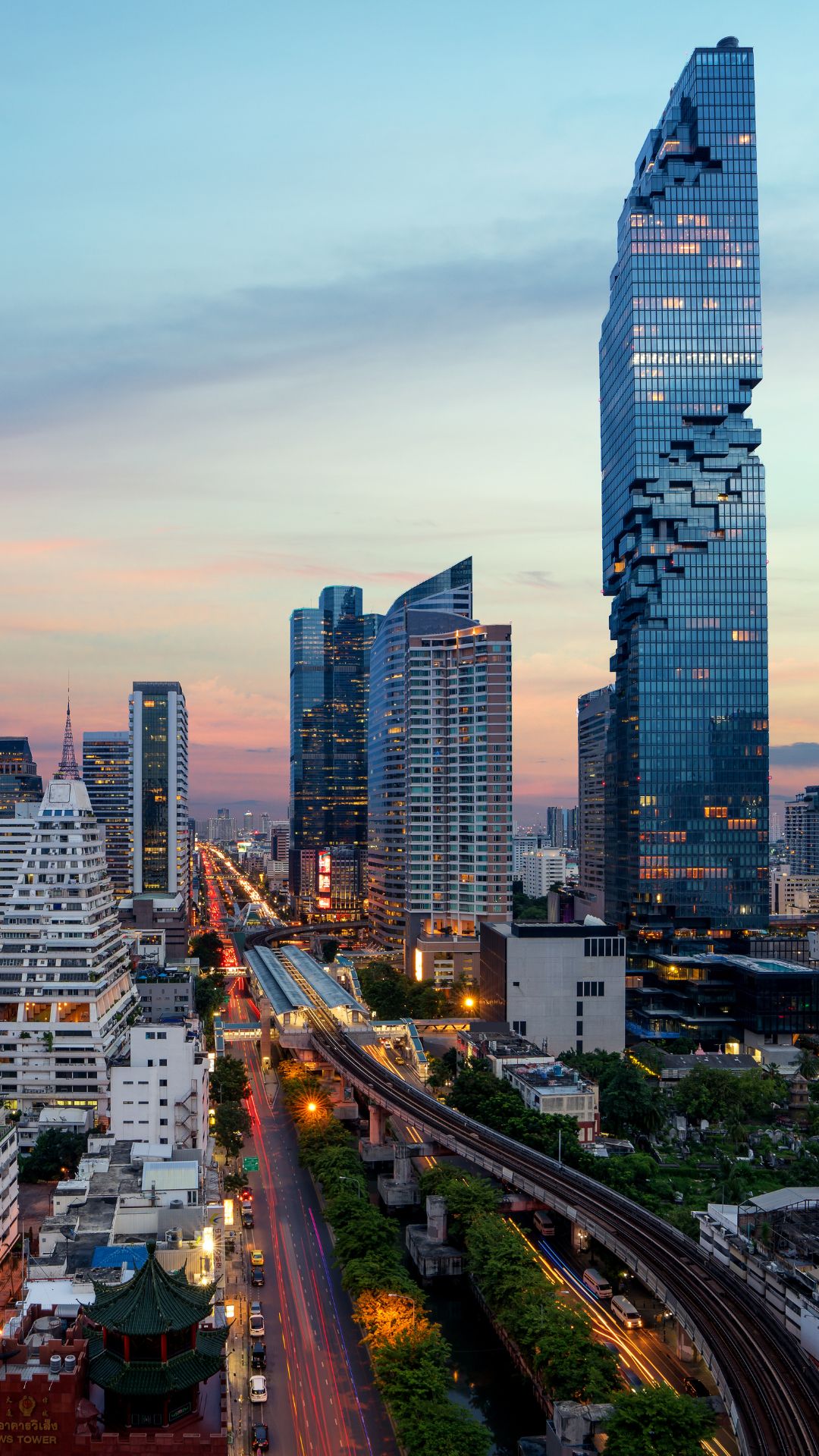
- King Power Mahanakhon: This iconic skyscraper with its distinctive architecture (appearing as if blocks have fallen out of the façade) offers the best panoramic view of the city from its Mahanakhon SkyWalk.
2. Khao San Road and El Raval (The Backpacker Hub)
Khao San Road is the legendary street that has become the main hub for backpackers from around the world. It is filled with cheap accommodation, bars, massage parlors, and stalls where you can sample fried scorpions (though this is more of a tourist novelty). Its parallel, Soi Rambuttri, offers a calmer atmosphere.
3. Chatuchak Weekend Market
If you are looking for a unique shopping experience, visit Chatuchak (open only on weekends). It is one of the world’s largest markets with over 15,000 stalls, where you can find literally everything—from clothes, antiques, and souvenirs, to pets and incredible street food.

V. 💡 Practical Tips for Travelers
| Category | Tip |
| Transport | The BTS Skytrain and MRT Metro are best for traveling through the modern districts. For shorter distances in the old city, use a Tuk-tuk (always agree on the price in advance!) or Grab (the Asian equivalent of Uber/Bolt). |
| Currency | Thai Baht (THB). ATMs are easily accessible. |
| Temple Etiquette | Dress modestly: shoulders and knees must be covered (especially for the Grand Palace). Remove your shoes before entering a temple. Never point your feet at the Buddha. |
| Climate | Bangkok is hot and humid all year round. The best time to visit is November to February (the cool and dry season). The rainy season is from May to October. |
| Health | Drink only bottled water. Street food is generally safe and freshly prepared. |
Bangkok is a city that requires time and patience, but it rewards you with an unforgettable experience. It is a cultural melting pot that stuns with its energy and never ceases to surprise.
Dear fellow travelers, if my articles have helped you or inspired your journeys, you can support me in a very simple way. If you book your flights, hotels, or tickets through the links below, I will receive a small commission from the sale. This costs you absolutely nothing extra (the prices remain exactly the same for you), but it truly helps me take my children on our next adventure and write the next detailed travel guide.
Here are the services I personally use on our travels and that you can rely on:
-
 Flights: I prefer to compare prices using Kiwi.com : last minute flights : https://kiwi.tpk.lv/8NQF6GkN or through the global search engine Aviasales : https://aviasales.tpk.lv/gKYbo853 .
 -
 Accommodation: 90% of our stays are booked traditionally through Booking.com : https://booking.tpk.lv/cLbuaDaA. If we are traveling to Asia, Agoda : https://agoda.tpk.lv/OwlTkUi6 often offers better prices and deals.
 -
 Experiences & Tickets: To avoid standing for hours in ticket queues for landmarks with my children, I buy them in advance via GetYourGuide : https://getyourguide.tpk.lv/V6GC2pLm or through [Viator : https://viator.tpk.lv/jKVITxSH .
 -
 Car Rental: When we need a car on our journeys, I compare rental prices through QEEQ : Diamond Membership : https://qeeq.tpk.lv/1YoVmDCm ,
 -
 Internet Abroad: To have mobile data immediately upon arrival and avoid hunting for local SIM cards, I use a digital eSIM via Airalo : https://airalo.tpk.lv/YGyayoZj .
Thank you for every single click and booking; I deeply appreciate it!