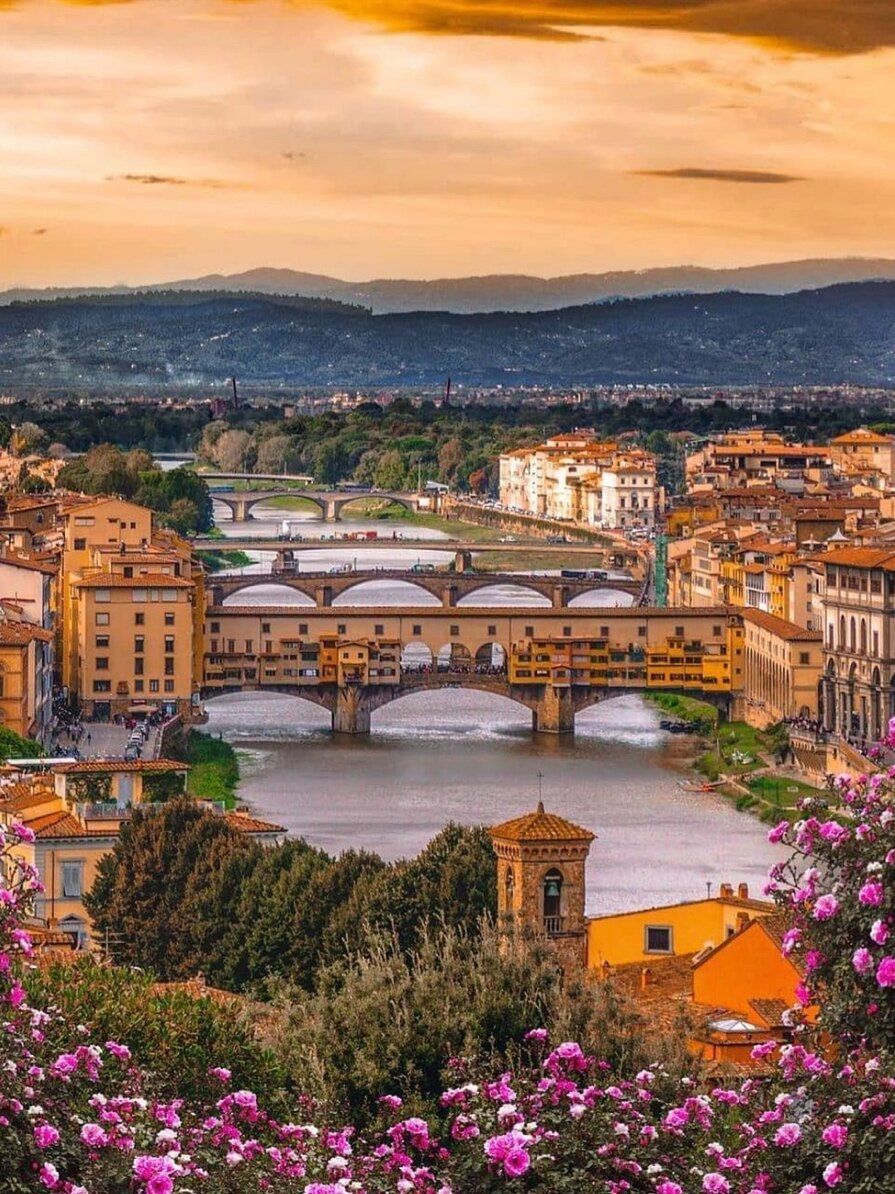
Florence (Firenze), the capital of Italy’s Tuscany region, is arguably the most beautiful and historically significant small city in the world. As the undisputed birthplace of the Renaissance, Florence offers an unparalleled concentration of artistic masterpieces, architectural genius, and cultural heritage, all nestled within its compact medieval walls.
Walking through Florence is like stepping into a living museum. Every piazza, every bridge, and every palace tells the story of the powerful Medici family, the revolutionary minds of Leonardo da Vinci and Michelangelo, and a 14th-century artistic explosion that changed Western civilization forever.
I. ⛪ The Holy Trinity: Duomo, Uffizi, and Ponte Vecchio
Florence’s main attractions are grouped close together, making the city a delight to explore on foot.
1. The Duomo Complex (Cattedrale di Santa Maria del Fiore)
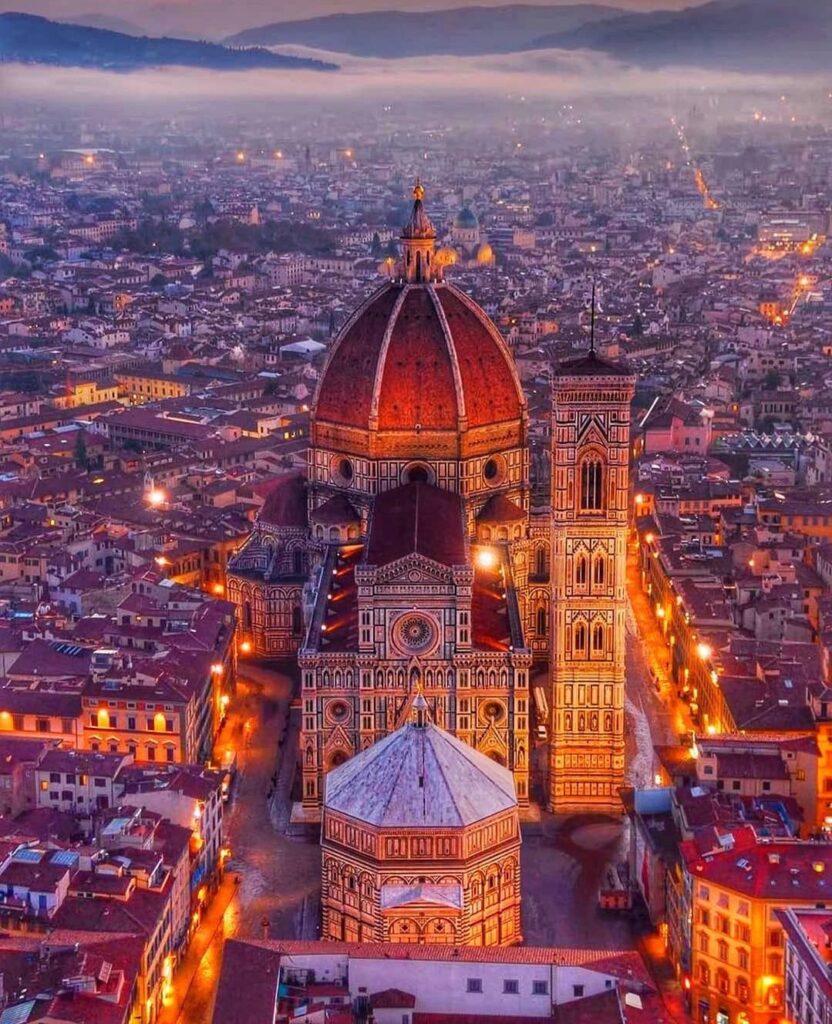
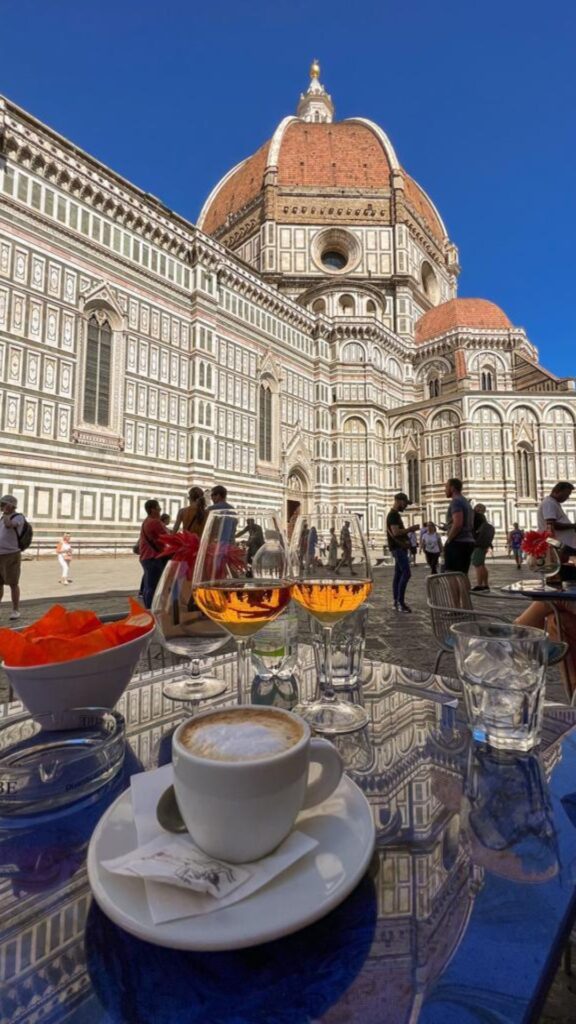
The heart of Florence is dominated by the monumental Duomo, its Campanile (bell tower), and the Baptistery.
- Brunelleschi’s Dome: The cathedral’s vast terracotta dome, designed by Filippo Brunelleschi, was an engineering marvel of the 15th century and remains the defining symbol of the city. Climbing the 463 steps offers breathtaking close-up views of the dome’s interior frescoes and the Florentine skyline.
- Giotto’s Campanile: Climbing the adjacent bell tower provides an equally rewarding climb, with the added benefit of featuring the Dome prominently in your photos.
2. The Uffizi Gallery (Galleria degli Uffizi)
This is one of the world’s most important art museums, housed in a magnificent Renaissance palace built for the Medici family.
- Must-See Masterpieces: The Uffizi houses masterpieces from the Renaissance, including Botticelli’s Birth of Venus and Primavera, Leonardo da Vinci’s Annunciation, and works by Michelangelo and Raphael.
- Booking is Essential: Tickets must be booked weeks or months in advance to avoid extremely long queues.
3. Ponte Vecchio
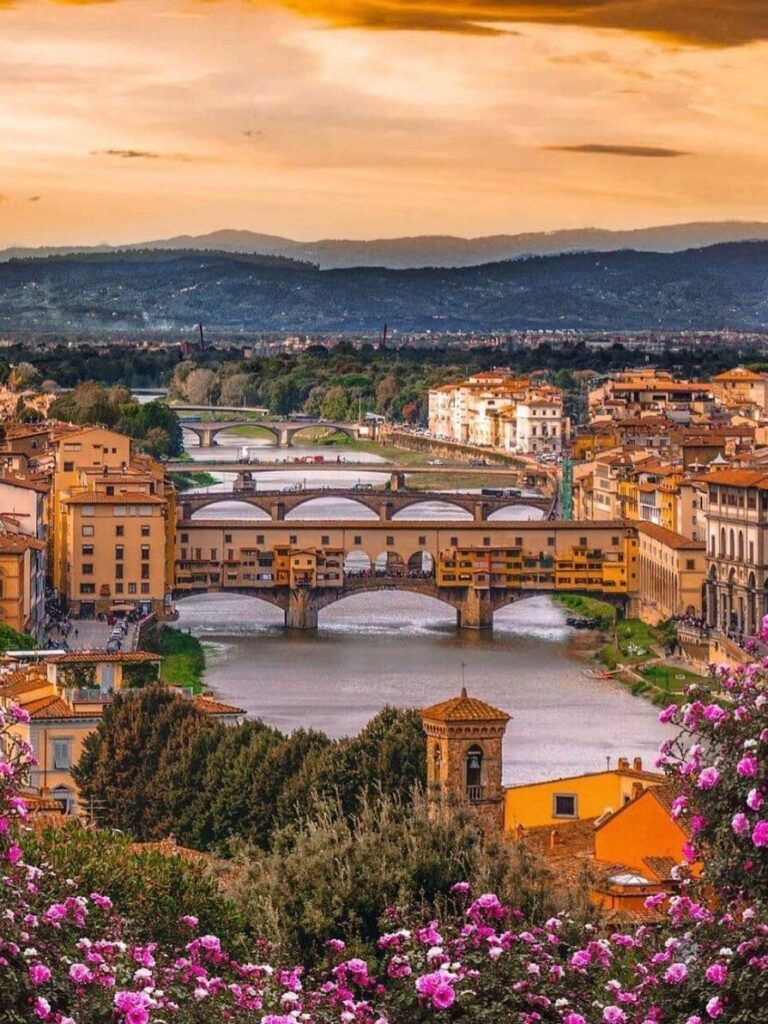
The Ponte Vecchio (Old Bridge) is the city’s most iconic bridge, built over the River Arno. It is unique because it is the only medieval bridge in Florence to have survived World War II, largely because Hitler reportedly found it too beautiful to destroy.
- The Shops: The bridge is famous for the shops built along its edges. Originally home to butchers, they are now exclusively occupied by high-end jewelers and gold sellers.
II. 🖼️ Art, Royalty, and the Medici Legacy
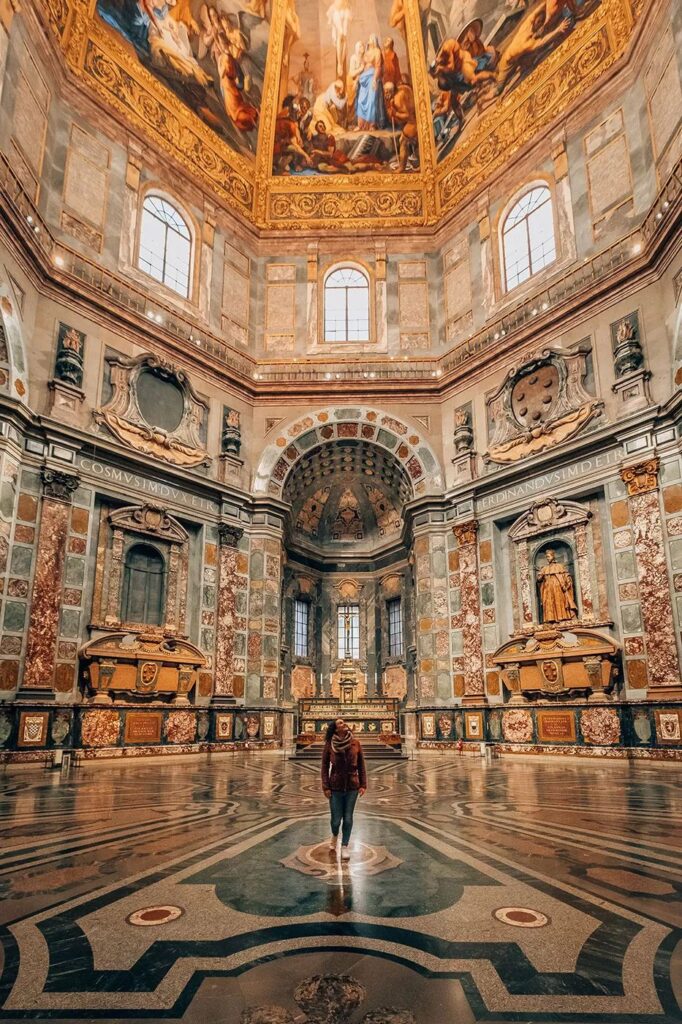
The history of Florence is inextricably linked to the powerful Medici banking family, who sponsored much of the Renaissance art we see today.
1. Galleria dell’Accademia (The Accademia)
While smaller than the Uffizi, this gallery is essential for one reason: it houses Michelangelo’s David. The 17-foot-tall sculpture is a stunning representation of human anatomy and Renaissance idealism.
2. Pitti Palace and the Boboli Gardens
Located across the Ponte Vecchio, the vast Pitti Palace was the main residence of the Medici rulers. Today, it hosts several museums, including the Palatine Gallery. Behind the palace lie the beautiful and sprawling Boboli Gardens, a prime example of the Italian formal garden that later inspired European royal gardens.
3. Oltrarno District
This district (meaning “beyond the Arno”) is often considered the most authentic part of Florence. It is known for its narrow streets and traditional artisan workshops, particularly leather-makers, goldsmiths, and restorers.
III. 🥩 Tuscan Cuisine and Wine
Florentine food is hearty, rustic, and rooted in the fresh, simple ingredients of the surrounding Tuscan countryside.
- Bistecca alla Fiorentina: The definitive local dish. This is a thick-cut, high-quality Chianina T-bone steak, lightly seasoned and traditionally served rare or medium-rare. It is often meant to be shared.
- Lampredotto: The most famous Florentine street food. Made from the fourth stomach of the cow, it is boiled in broth, thinly sliced, and served on a roll soaked in the broth, often topped with salsa verde. Find the best vendors in kiosks throughout the city center.
- Wine: Florence is the gateway to the Chianti Classico wine region. Sampling local reds is an absolute must.
- Gelato: While found everywhere in Italy, Florence is particularly famous for high-quality, artisanal gelato. Avoid the mounds of artificially colored ice cream and look for spots where the gelato is stored in stainless steel containers (pozzetti).
IV. 💡 Practical Tips for the City of Art
| Category | Advice |
| Best View | Piazzale Michelangelo. This hilltop square across the Arno River offers the most iconic panoramic views of Florence, especially at sunset. |
| Getting Around | The historical center is small and best explored on foot. Public transport is useful for longer trips outside the center, but unnecessary downtown. |
| ZTL Restriction | Limited Traffic Zone (Zona a Traffico Limitato). Driving in the historical center is prohibited for non-residents. Automatic cameras fine violators. If staying at a hotel in the center, contact them in advance to register your license plate. |
| Booking | Book Museums in Advance. Tickets for the Uffizi, Accademia, and the Duomo climb should be secured well ahead of your trip. |
| Currency | Euro (€). Cards are widely accepted, but cash is useful for markets and smaller shops. |

Florence is an essential destination for anyone passionate about art, history, and food. Prepare to be immersed in the unparalleled beauty and revolutionary spirit of the Italian Renaissance.
Dear fellow travelers, if my articles have helped you or inspired your journeys, you can support me in a very simple way. If you book your flights, hotels, or tickets through the links below, I will receive a small commission from the sale. This costs you absolutely nothing extra (the prices remain exactly the same for you), but it truly helps me take my children on our next adventure and write the next detailed travel guide.
Here are the services I personally use on our travels and that you can rely on:
-
 Flights: I prefer to compare prices using Kiwi.com : last minute flights : https://kiwi.tpk.lv/8NQF6GkN or through the global search engine Aviasales : https://aviasales.tpk.lv/gKYbo853 .
 -
 Accommodation: 90% of our stays are booked traditionally through Booking.com : https://booking.tpk.lv/cLbuaDaA. If we are traveling to Asia, Agoda : https://agoda.tpk.lv/OwlTkUi6 often offers better prices and deals.
 -
 Experiences & Tickets: To avoid standing for hours in ticket queues for landmarks with my children, I buy them in advance via GetYourGuide : https://getyourguide.tpk.lv/V6GC2pLm or through [Viator : https://viator.tpk.lv/jKVITxSH .
 -
 Car Rental: When we need a car on our journeys, I compare rental prices through QEEQ : Diamond Membership : https://qeeq.tpk.lv/1YoVmDCm ,
 -
 Internet Abroad: To have mobile data immediately upon arrival and avoid hunting for local SIM cards, I use a digital eSIM via Airalo : https://airalo.tpk.lv/YGyayoZj .
Thank you for every single click and booking; I deeply appreciate it!