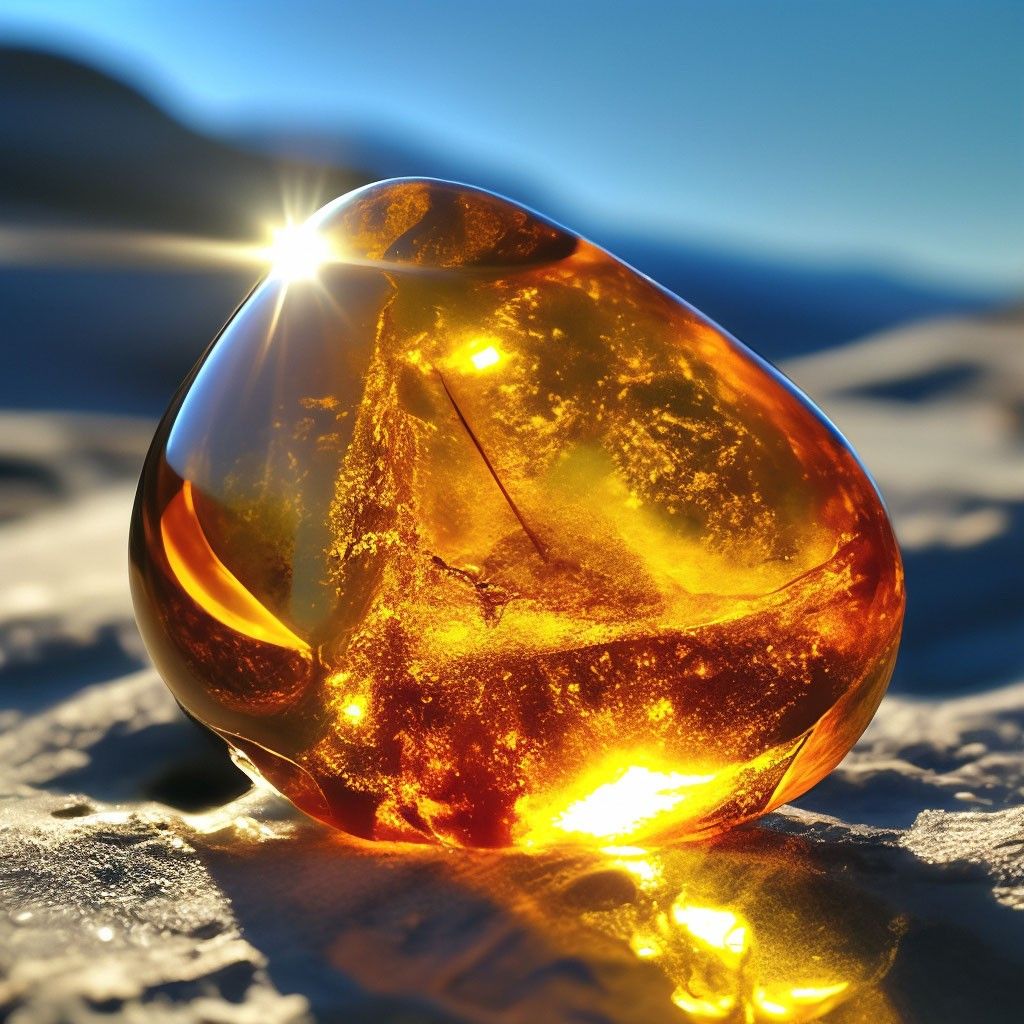
Amber is not a stone; it is time preserved in resin. If you know when and where to look, you can bring home a piece of “Gold” that flowed down the bark of ancient trees millions of years ago. The Baltic amber (succinite) found on these shores is fossilized resin from prehistoric conifers, roughly 40 million years old.

🕒 When to Go? (Timing is Everything)
If you arrive at the beach on a sunny August afternoon at noon, you will likely find nothing but empty seashells. Serious amber hunters follow these rules:
- After the Storm: The best time is immediately after a strong North or North-East wind. These storms stir up the seabed and toss the amber onto the shore.
- The Early Bird: Professional hunters head out with flashlights as early as 4:00 or 5:00 AM to beat the crowds and the beach cleaning crews.
- The Ideal Season: The most successful period is late autumn, winter, and early spring. Cold water has a higher density, which makes amber (which is very light) more buoyant and easier for the waves to wash ashore.
📍 Top Locations on the Baltic Coast
1. Poland (The Global Amber Capital)
- Gdańsk Bay (Jantar, Stegna, Sobieszewo): These villages are world-famous; the town “Jantar” literally means “Amber.”
- Sobieszewo Island: A quieter spot near Gdańsk where large deposits are often washed up.
- Hel Peninsula: A long strip of land where currents frequently push deep-sea debris onto the beaches.
2. Germany
- Usedom and Rügen Islands: Known for their white chalk cliffs. After a storm, the wide sandy beaches are often speckled with small amber pieces.
3. Lithuania & Latvia
- Palanga and the Curonian Spit: Lithuanians consider amber their national symbol. The coastline around Palanga is a prime hunting ground after heavy swells.
🕵️♂️ How to Spot Amber and Where to Look
Do not look for amber in clean, white sand. You must look for it in the “sea wrack” (debris).
- Search through piles of black wood fragments, twigs, seaweed, and peat that the sea has washed up. Amber has a similar density to this organic material, so they are almost always found together.
- UV Light Strategy: If you hunt at night, bring a UV flashlight. Amber fluoresces (glows) a bright yellow-green under UV light, while ordinary stones remain dark.
🧪 Home Authenticity Tests (Don’t Be Fooled)
Many hunters bring home a pretty yellow pebble only to realize it’s just quartz. Try these tests:
- The Saltwater Test: Dissolve about 3 tablespoons of salt in a glass of water. Real amber will float on the surface (because it is very light), while stone or glass will sink to the bottom.
- Static Electricity: Rub the amber against a wool sweater. It will become statically charged and attract tiny bits of paper or hair.
- The Scent: If you prick the amber with a hot needle (in an inconspicuous spot), you should smell the sweet aroma of pine resin, not the chemical stench of burnt plastic.
⚠️ Danger: False Amber (White Phosphorus)!
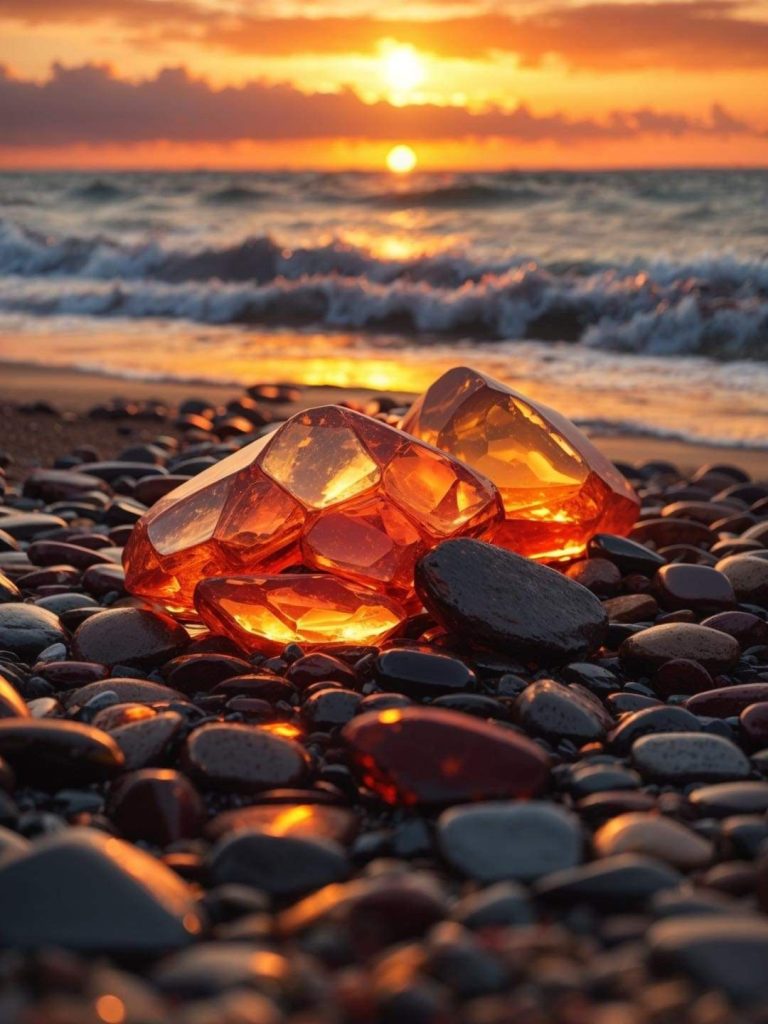
This is the most critical warning for the Baltic coast (especially in Germany and Poland). White phosphorus from incendiary bombs used in WWII remains on the seabed and looks identical to raw amber.
- The Danger: Phosphorus looks like a translucent orange pebble. However, once it dries and warms up (for example, in your pocket), it spontaneously ignites at around 30°C (86°F). It burns at an extremely high temperature and cannot be extinguished with water.
- The Rule: Never put an unidentified “amber” piece directly into your pocket. Use a glass jar or a metal tin until you are certain of what it is.
💡 Viral Pro-Tip:
If you want to find larger pieces, look for the local fishermen. After a storm, their nets are often full of seaweed tangled with amber pieces as large as a fist. Sometimes, for a few euros or a beer, they will let you “sift” through their catch before they clean their nets.
Will you brave the Polish beaches with a UV light, or try your luck in the wild dunes of Lithuania? 🌊🧡
Dear fellow travelers, if my articles have helped you or inspired your journeys, you can support me in a very simple way. If you book your flights, hotels, or tickets through the links below, I will receive a small commission from the sale. This costs you absolutely nothing extra (the prices remain exactly the same for you), but it truly helps me take my children on our next adventure and write the next detailed travel guide.
Here are the services I personally use on our travels and that you can rely on:
-
 Flights: I prefer to compare prices using Kiwi.com : last minute flights : https://kiwi.tpk.lv/8NQF6GkN or through the global search engine Aviasales : https://aviasales.tpk.lv/gKYbo853 .
 -
 Accommodation: 90% of our stays are booked traditionally through Booking.com : https://booking.tpk.lv/cLbuaDaA. If we are traveling to Asia, Agoda : https://agoda.tpk.lv/OwlTkUi6 often offers better prices and deals.
 -
 Experiences & Tickets: To avoid standing for hours in ticket queues for landmarks with my children, I buy them in advance via GetYourGuide : https://getyourguide.tpk.lv/V6GC2pLm or through [Viator : https://viator.tpk.lv/jKVITxSH .
 -
 Car Rental: When we need a car on our journeys, I compare rental prices through QEEQ : Diamond Membership : https://qeeq.tpk.lv/1YoVmDCm ,
 -
 Internet Abroad: To have mobile data immediately upon arrival and avoid hunting for local SIM cards, I use a digital eSIM via Airalo : https://airalo.tpk.lv/YGyayoZj .
Thank you for every single click and booking; I deeply appreciate it!