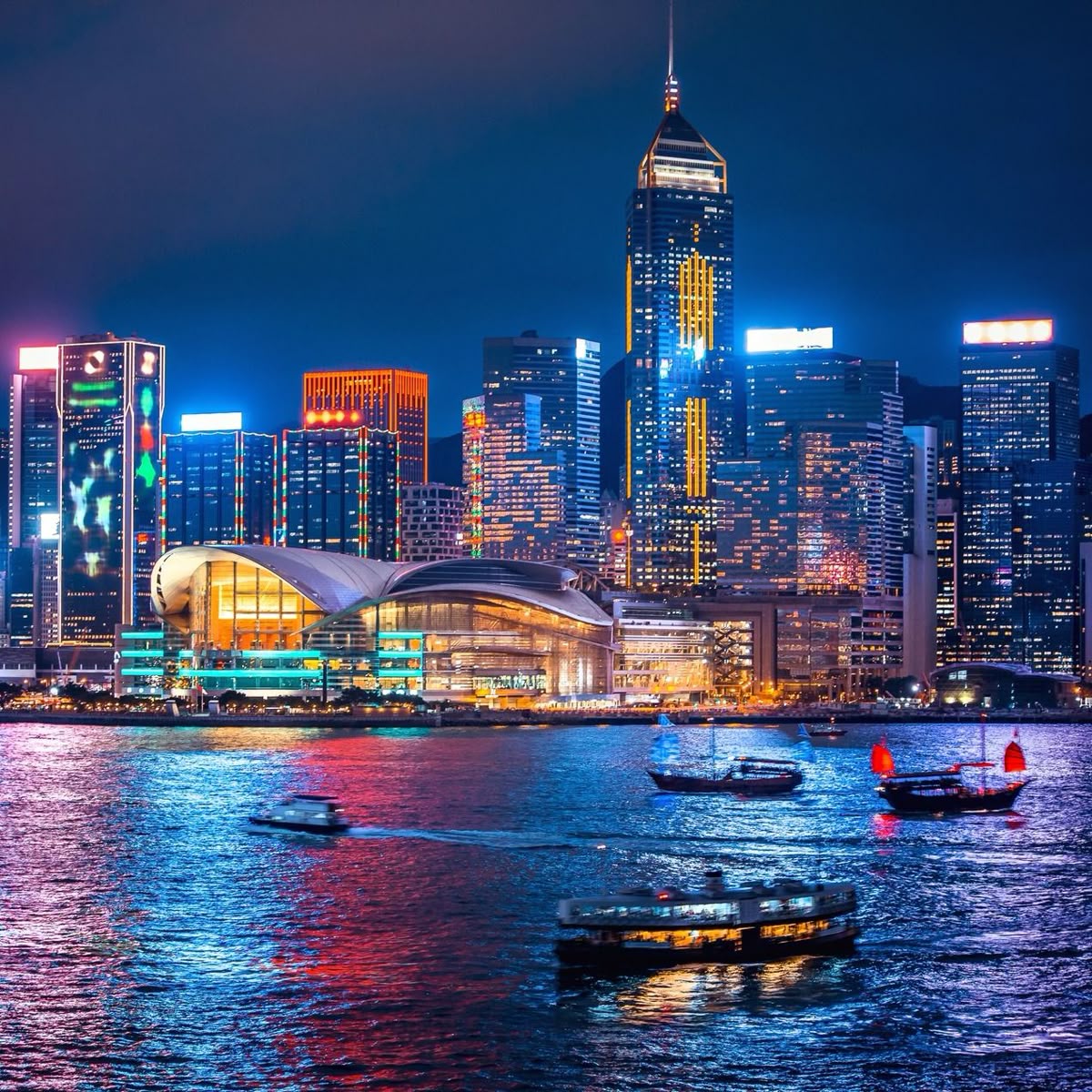
Hong Kong is a city of unparalleled energy, a dazzling spectacle of neon lights, towering skyscrapers, and lush green mountains. As a former British colony and a major global financial center, it possesses a unique cultural identity—a vibrant, dense fusion of ancient Cantonese tradition and modern Western efficiency.
Often referred to as the “Pearl of the Orient,” Hong Kong offers a multifaceted experience: from world-class dining and high-end shopping to quiet hiking trails and historic temples. It is a city that defies its size, packing billions of dollars, deep history, and cinematic views into every square kilometer.

I. 🏙️ The Icons: Skyline, Harbour, and the Peak
Hong Kong’s reputation as a vertical city is defined by its dramatic topography.
1. Victoria Peak (The Peak)
The highest point on Hong Kong Island, Victoria Peak, offers the most famous panoramic view of the city’s concrete jungle, Victoria Harbour, and Kowloon.
- Getting There: Take the historic Peak Tram, a steep funicular railway that provides a thrilling ride up the mountainside.
- Best Time: Visit just before sunset to witness the transition from day to the sparkling neon-lit nightscape.
2. Victoria Harbour and the Star Ferry
The harbor is the lifeblood of Hong Kong. Crossing it is one of the city’s cheapest and most iconic experiences.
- Star Ferry: For over a century, the Star Ferry has connected Hong Kong Island (Central) and Kowloon (Tsim Sha Tsui). The short, inexpensive journey offers unbeatable close-up views of the skyline.
- A Symphony of Lights: Every night at 8:00 PM, the harbour is illuminated by the world’s largest permanent light and sound show, featuring the skyscrapers on both sides.
3. Hong Kong Island vs. Kowloon
The city is often defined by the two halves separated by the harbour:
- Hong Kong Island (Central/Sheung Wan): The financial hub, characterized by luxury shopping, high-rise banking towers, and exclusive bars.
- Kowloon (Tsim Sha Tsui/Mong Kok): Denser, more traditional, and famous for its sprawling markets, street food, and authentic local atmosphere.
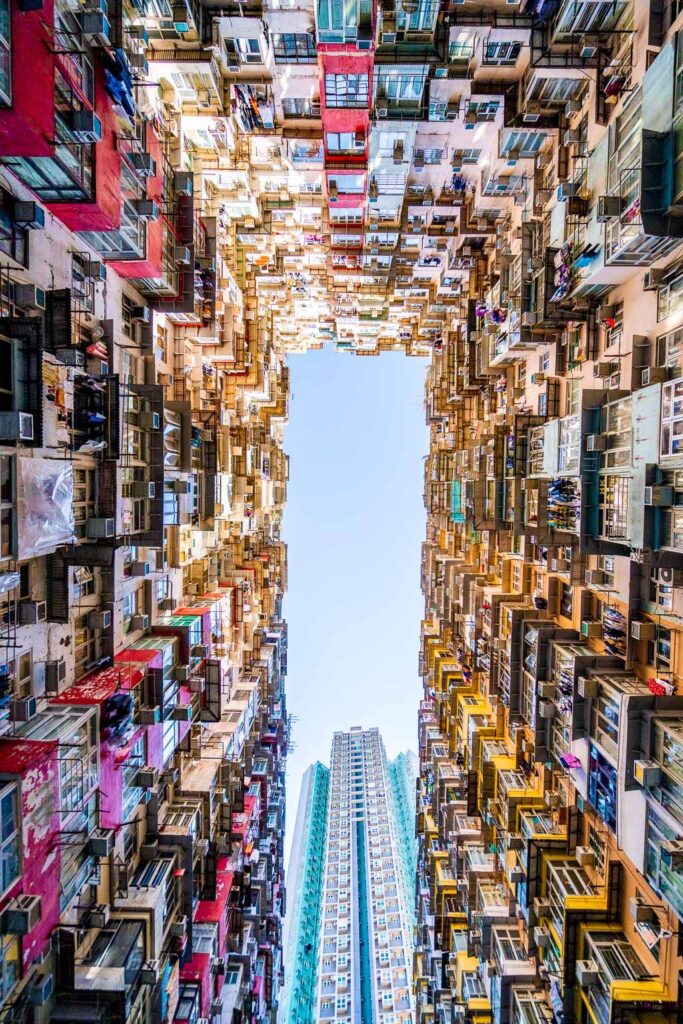
II. 🍜 Culture, Markets, and Cantonese Cuisine
Hong Kong’s culture is rooted in its Cantonese heritage, emphasizing food, family, and commerce.
1. Dim Sum and Food Culture
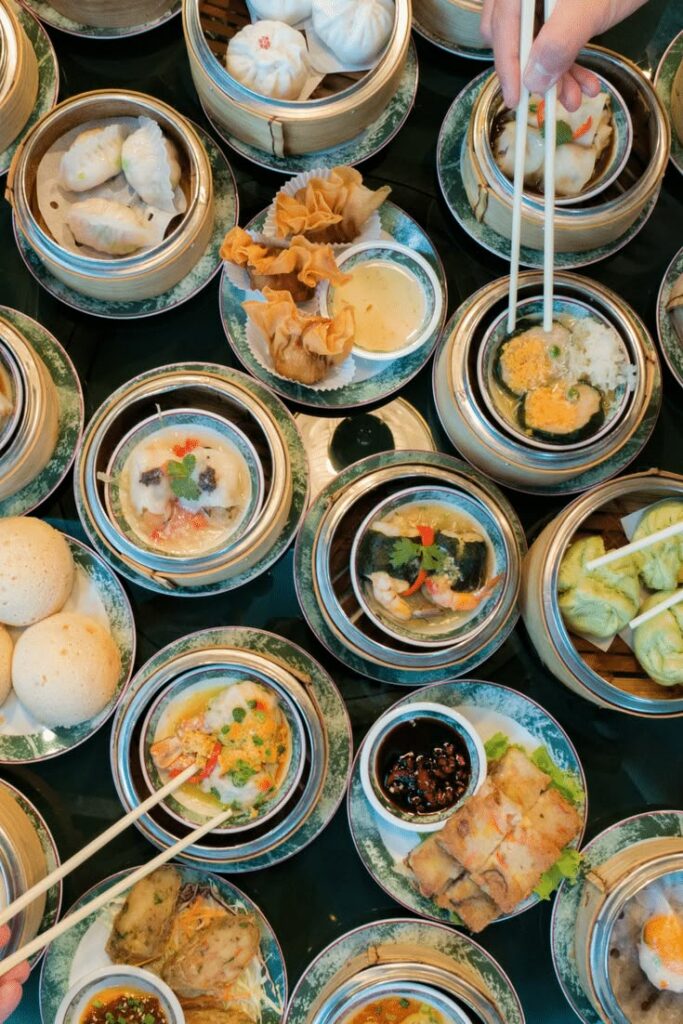
Food is central to the Hong Kong experience. Dim Sum (small, bite-sized portions served in steamer baskets) is a ritual, traditionally eaten for breakfast or lunch.
- Must-Try Dishes: Siu Mai (pork and shrimp dumplings), Har Gow (shrimp dumplings), and Char Siu Bao (barbecue pork buns).
- Dai Pai Dongs: Traditional open-air food stalls, offering stir-fries and seafood in a chaotic but delicious atmosphere.
2. Temple Street Night Market (Kowloon)
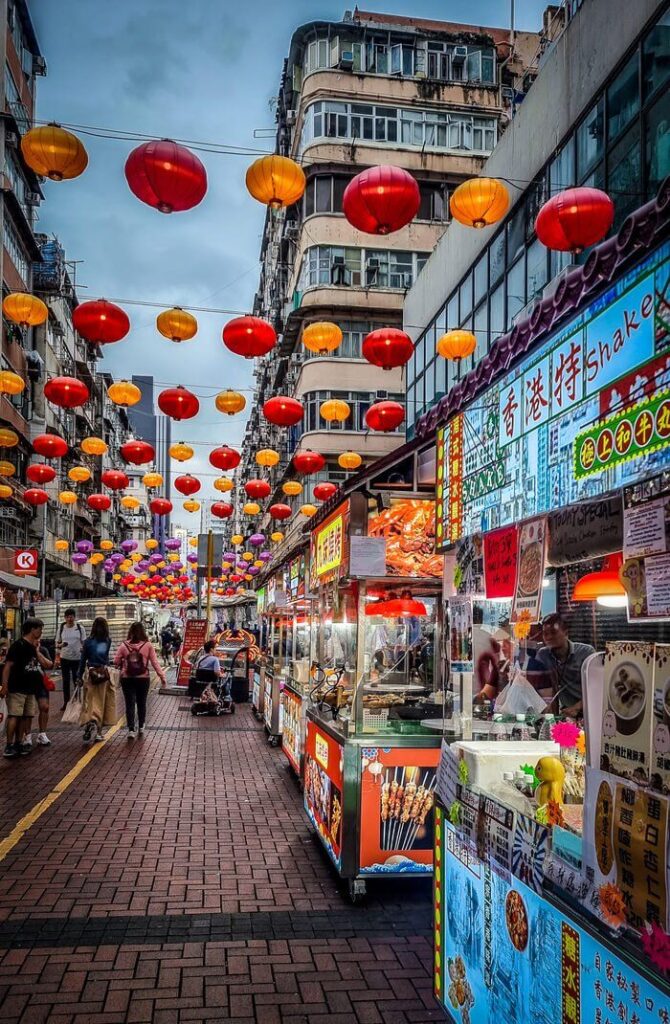
This sprawling night market in Yau Ma Tei is a quintessential Hong Kong experience, offering everything from electronics and clothing to traditional Chinese opera performances and fortune-tellers. It’s also a great spot to try local street food.
3. Man Mo Temple
Located in the Upper Central/Sheung Wan district, this 19th-century temple is dedicated to the God of Literature (Man) and the God of War (Mo). Inside, the air is thick with the smoke of spiral incense coils hanging from the ceiling—a sensory immersion into local spirituality.
III. ⛰️ Nature Beyond the Skyscrapers
Despite its reputation as an urban jungle, 70% of Hong Kong is undeveloped, offering stunning natural escapes.
1. Hiking: Dragon’s Back
Hong Kong is a hiker’s paradise. The Dragon’s Back trail on Hong Kong Island is perhaps the most accessible and famous, offering stunning coastal views and culminating in a walk down to Big Wave Bay beach.
2. Lantau Island and the Big Buddha
Lantau is Hong Kong’s largest island and a popular escape.
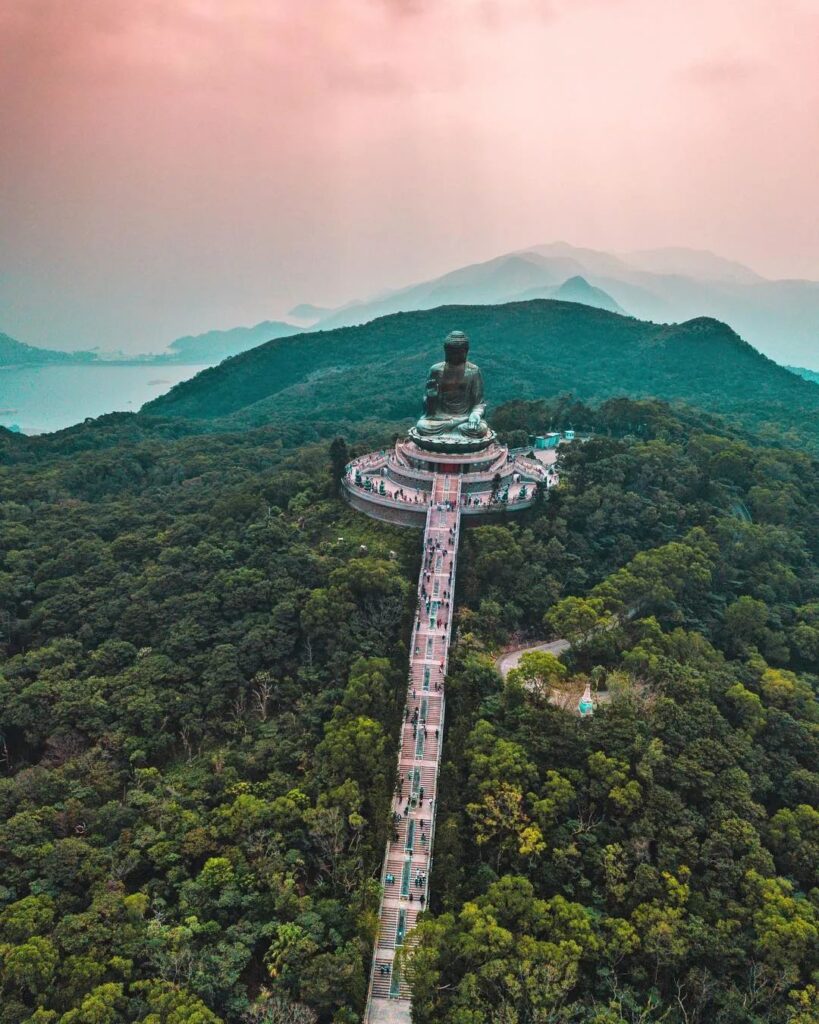
- Tian Tan Buddha (Big Buddha): A massive 34-meter-tall bronze statue seated above the Po Lin Monastery. Take the scenic Ngong Ping 360 cable car for spectacular views on the way up.
3. Lamma Island
A car-free island known for its relaxed, bohemian vibe, seafood restaurants, and gentle hiking paths. It offers a total break from the frenetic pace of the main islands.
IV. 💡 Practical Tips for Navigating the Hub
| Category | Advice |
| Transportation | MTR (Mass Transit Railway). Hong Kong’s subway system is world-class: clean, efficient, and incredibly fast. It is the primary way to get around. |
| The Octopus Card | Essential for visitors. This rechargeable smart card is used for the MTR, buses, Star Ferry, and even convenience stores and fast food shops. Get one immediately at the airport. |
| Currency | Hong Kong Dollar (HKD). |
| Language | Cantonese is the local language, but English is widely spoken in tourist areas, especially on Hong Kong Island, due to the city’s colonial past. |
| Best Time | October to December. The weather is sunny, dry, and cool—ideal for hiking and sightseeing. Avoid the humid summer months (June–August). |
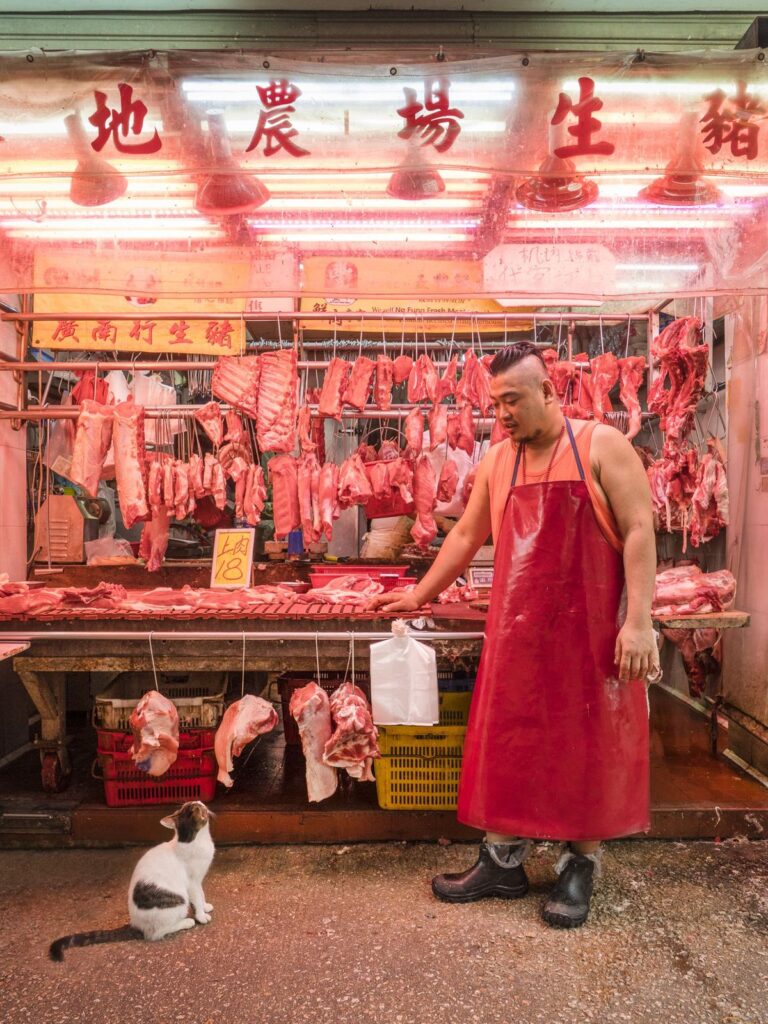
Hong Kong is a city of layers, where you can move seamlessly from a quiet, smoggy temple to a 70th-floor cocktail bar, only to end the day hiking a deserted beach. Its energy is infectious and its diversity is unmatched.
Dear fellow travelers, if my articles have helped you or inspired your journeys, you can support me in a very simple way. If you book your flights, hotels, or tickets through the links below, I will receive a small commission from the sale. This costs you absolutely nothing extra (the prices remain exactly the same for you), but it truly helps me take my children on our next adventure and write the next detailed travel guide.
Here are the services I personally use on our travels and that you can rely on:
-
 Flights: I prefer to compare prices using Kiwi.com : last minute flights : https://kiwi.tpk.lv/8NQF6GkN or through the global search engine Aviasales : https://aviasales.tpk.lv/gKYbo853 .
 -
 Accommodation: 90% of our stays are booked traditionally through Booking.com : https://booking.tpk.lv/cLbuaDaA. If we are traveling to Asia, Agoda : https://agoda.tpk.lv/OwlTkUi6 often offers better prices and deals.
 -
 Experiences & Tickets: To avoid standing for hours in ticket queues for landmarks with my children, I buy them in advance via GetYourGuide : https://getyourguide.tpk.lv/V6GC2pLm or through [Viator : https://viator.tpk.lv/jKVITxSH .
 -
 Car Rental: When we need a car on our journeys, I compare rental prices through QEEQ : Diamond Membership : https://qeeq.tpk.lv/1YoVmDCm ,
 -
 Internet Abroad: To have mobile data immediately upon arrival and avoid hunting for local SIM cards, I use a digital eSIM via Airalo : https://airalo.tpk.lv/YGyayoZj .
Thank you for every single click and booking; I deeply appreciate it!