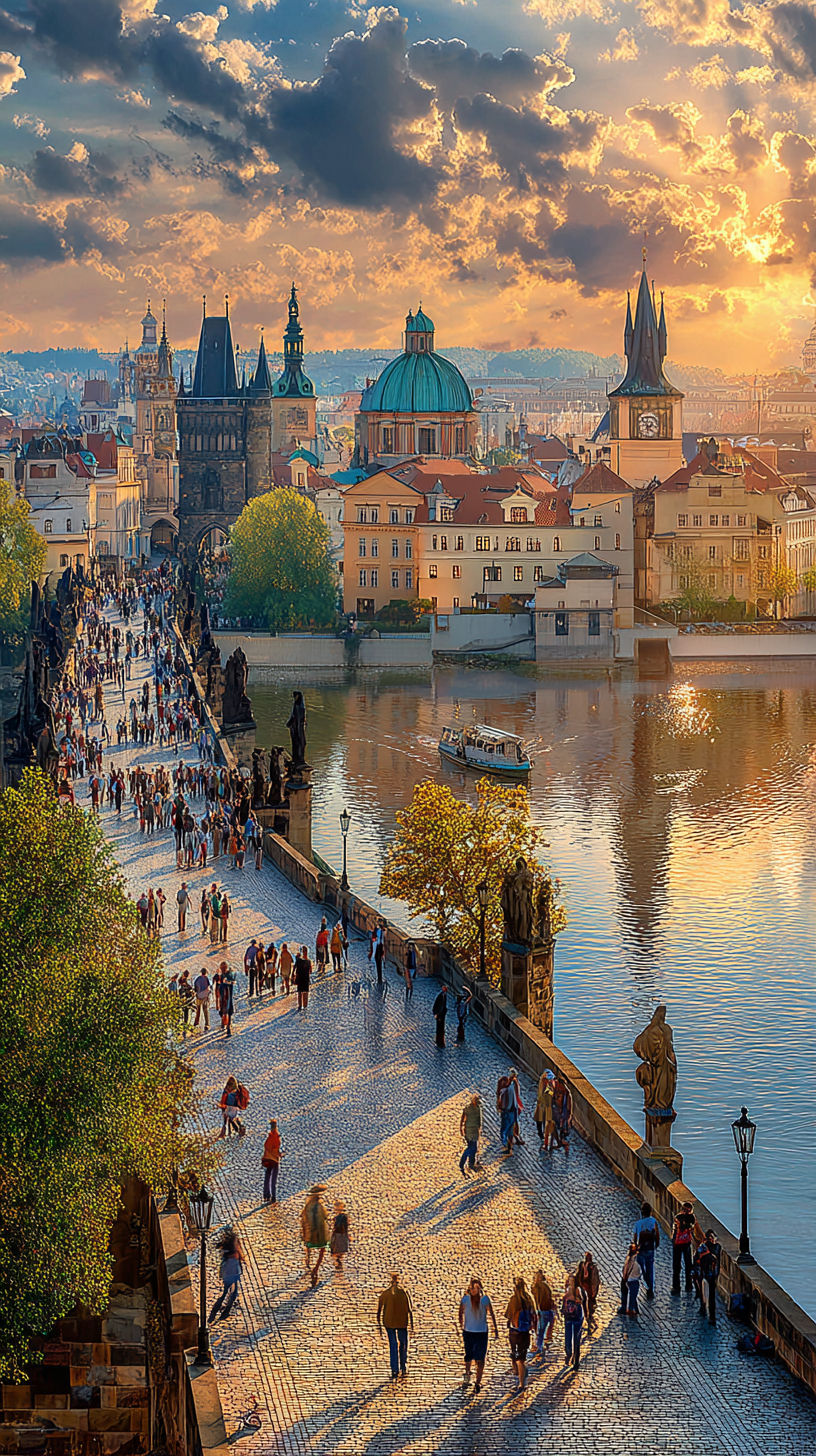
Prague is the capital and largest city of the Czech Republic. Situated on the Vltava River, it is known worldwide for its stunningly preserved historical center, which is a UNESCO World Heritage site. Often called “The Golden City” or “The Mother of Cities,” Prague is a living museum of Gothic, Renaissance, and Baroque architecture, offering a magical blend of history and contemporary European culture.
I. 🌉 The Medieval Heart
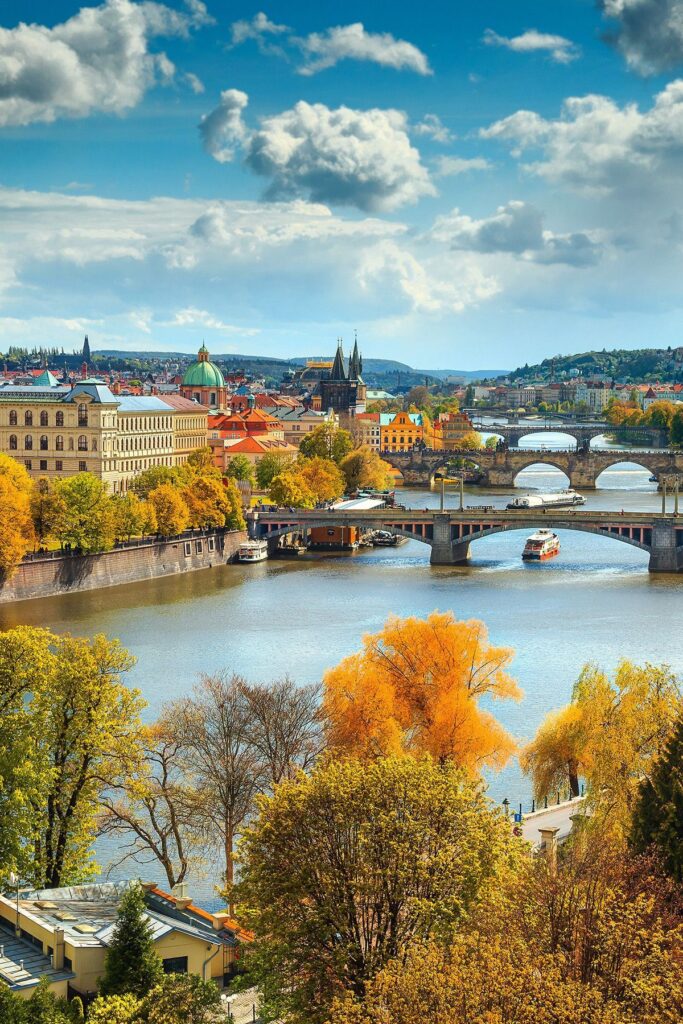
The two banks of the Vltava River are connected by centuries of history, centered around the iconic bridge and its bustling square.
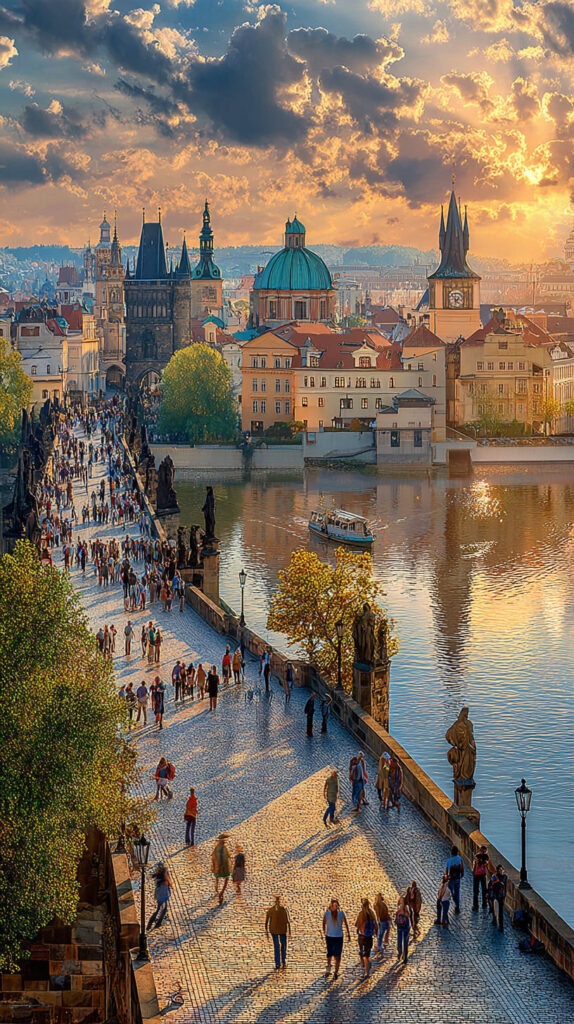
1. Charles Bridge (Karlův most)
- Experience: This world-famous medieval stone bridge connects the Old Town and Lesser Town. It is lined with 30 statues of saints and offers breathtaking views of Prague Castle.
- Tip: Visit at sunrise or late in the evening to avoid the daytime crowds.
2. Old Town Square (Staroměstské náměstí)
- Characteristics: The heart of the city, surrounded by magnificent architecture, including the Church of Our Lady before Týn and the St. Nicholas Church.
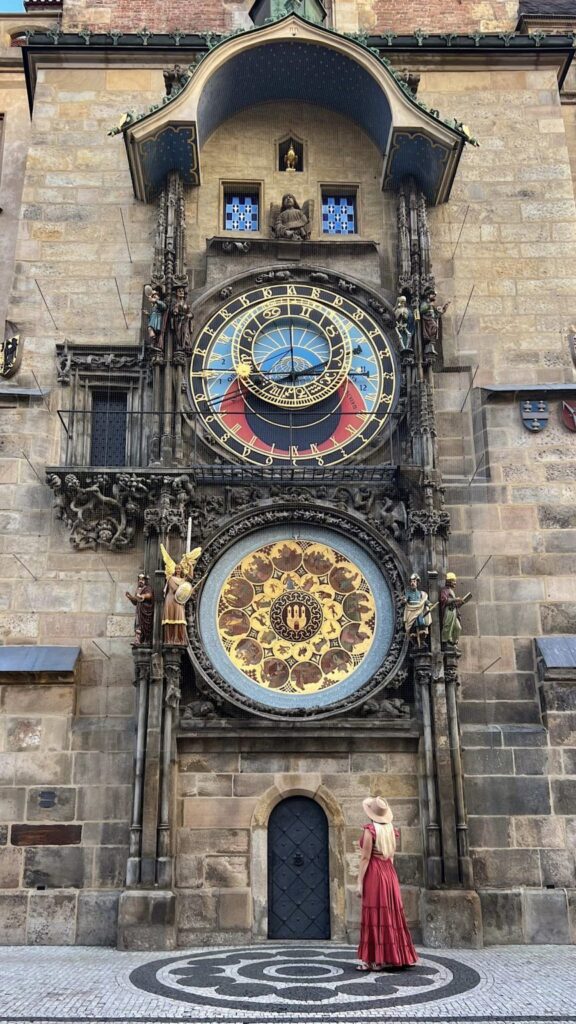
- Prague Astronomical Clock (Pražský orloj): Mounted on the Old Town Hall, this 15th-century marvel puts on a show (“The Walk of the Apostles”) every hour between 9:00 AM and 11:00 PM.
II. 👑 The Royal Seat
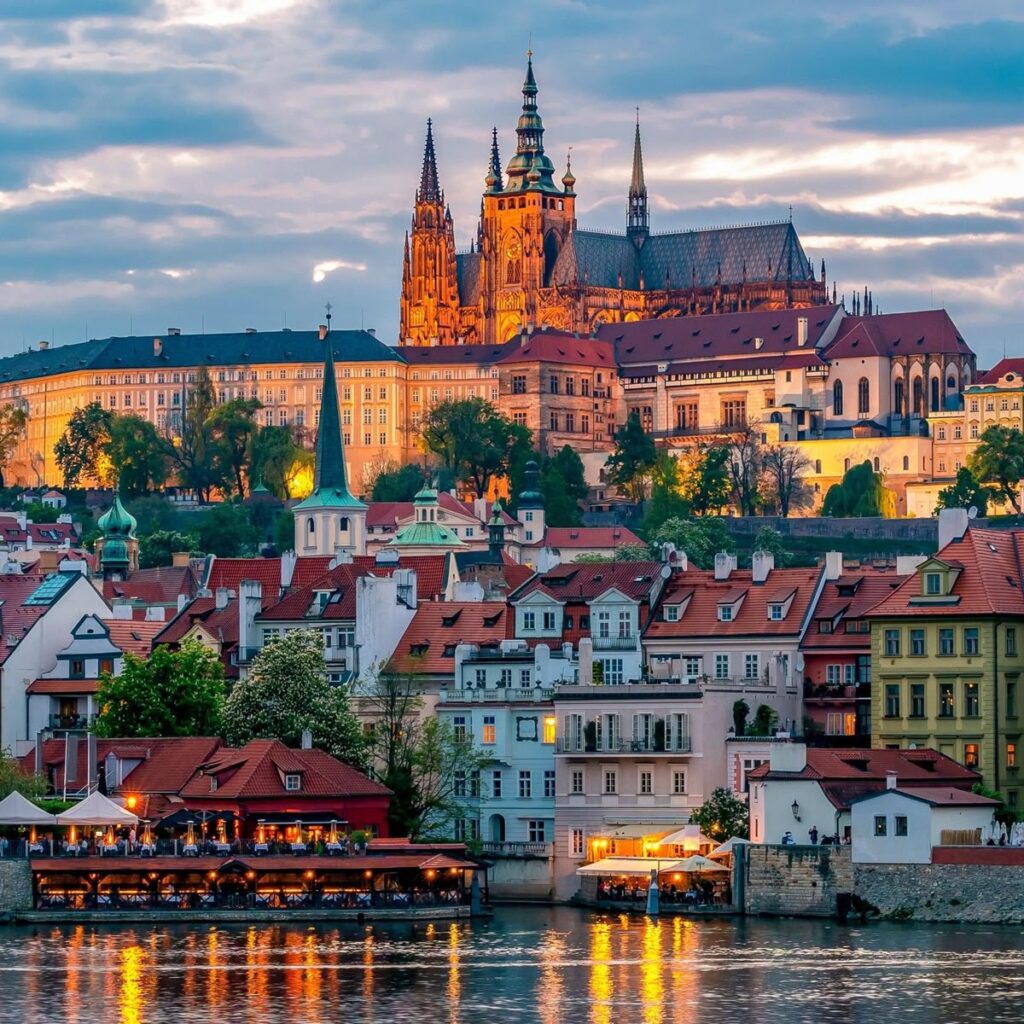
Towering over the city, Prague Castle is the largest ancient castle complex in the world and has been the seat of Bohemian kings, Holy Roman emperors, and presidents of Czechoslovakia and the Czech Republic.
1. Prague Castle (Pražský hrad)
- Complex Highlights: Includes palaces, churches, gardens, and defense towers.
- St. Vitus Cathedral (Katedrála sv. Víta): A magnificent example of Gothic architecture, home to the tombs of many Bohemian kings and the crown jewels.
- Golden Lane (Zlatá ulička): A picturesque street lined with small, colorful houses that once housed alchemists and goldsmiths.
2. Lesser Town (Malá Strana)
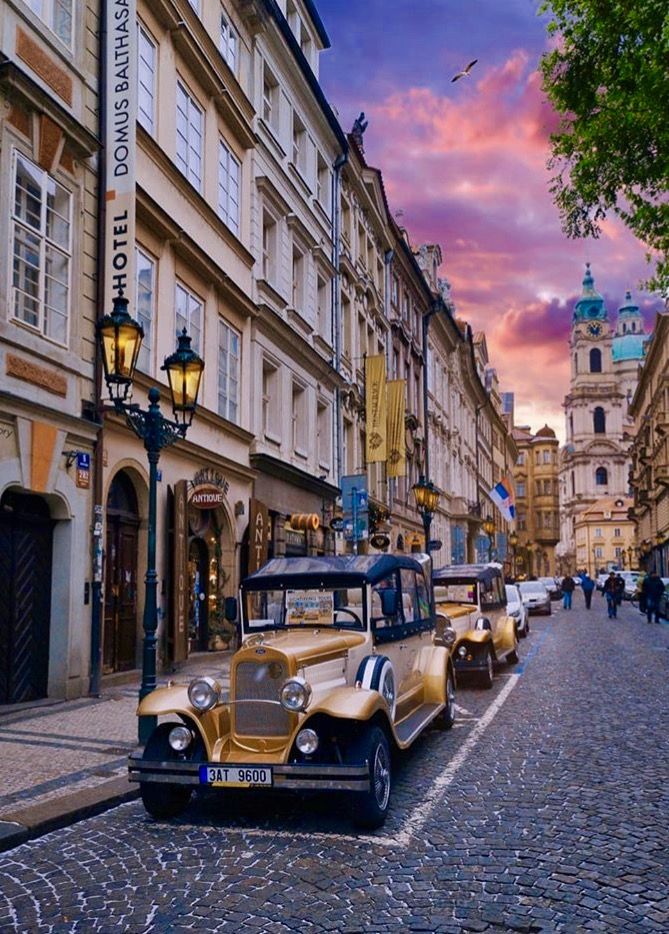
- Characteristics: Located directly below the castle, this district is full of Baroque palaces, quiet gardens, and grand embassies.
- Wallenstein Garden (Valdštejnská zahrada): A beautiful, expansive Baroque garden often open to the public.
III. 🍻 Culture and Cuisine
Prague is renowned for its cultural life, music, and, perhaps most famously, its beer.
1. Czech Beer (Pivo)
- Tradition: The Czech Republic has the highest beer consumption per capita in the world. Beer is often cheaper than water!
- Must-Try: Pilsner Urquell, Staropramen, and Budweiser Budvar are famous, but seek out local microbreweries.
2. Traditional Dishes
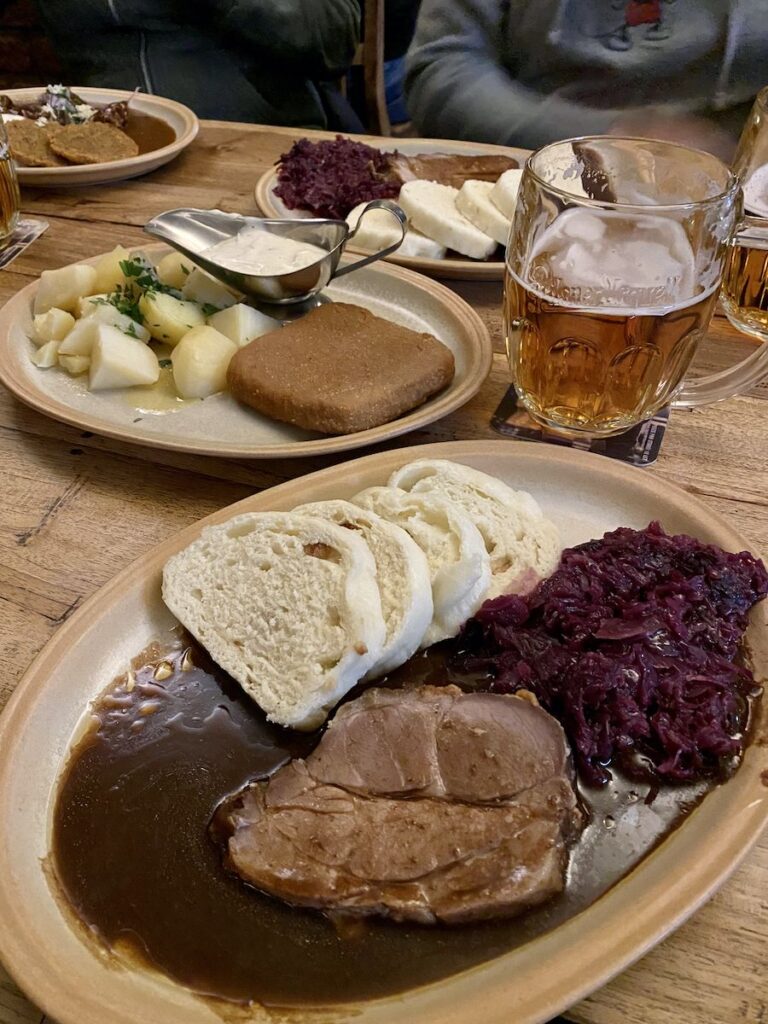
- Svíčková: Beef sirloin in a creamy vegetable sauce, typically served with cranberry sauce and bread dumplings (knedlíky).
- Goulash (Guláš): A hearty stew, thicker and richer than its Hungarian counterpart, often served with dumplings.
- Trdelník: A sweet pastry wrapped around a stick, grilled, and topped with sugar and nuts (though now a popular tourist treat, it’s a must-try).
3. Other Key Areas
- Wenceslas Square (Václavské náměstí): A long, bustling boulevard and the main commercial and administrative center of the city.
- Jewish Quarter (Josefov): Contains one of Europe’s best-preserved complexes of Jewish historical monuments, including the Old Jewish Cemetery and several historical synagogues.
IV. 💡 Practical Tips for Prague
| Category | Advice |
| Currency | Czech Koruna (CZK / Kč). While some places accept Euros, paying in Koruna is always better for the exchange rate. |
| Transportation | Prague’s public transport (metro, trams, buses) is excellent and reliable. Tickets must be purchased and validated before boarding. |
| Best Time | Spring (April–May) and Early Autumn (September–October) offer mild weather and fewer crowds than the summer peak. |
| Walking | Wear comfortable shoes. The city center is largely cobblestoned and best explored on foot. |
You can find specific maps, streets, attractions, cafes and hotels here: