Marrakech, often called the “Red City” due to its distinctive pink-hued walls and buildings, is the beating heart of Morocco. It is a legendary imperial city that has captivated travelers, artists, and merchants for centuries. Located at the foot of the Atlas Mountains, Marrakech is a gateway to the desert and an intense immersion into North African culture.
A visit to Marrakech is a sensory explosion—a dizzying mix of aromatic spices, vibrant colors, the constant buzz of mopeds, and the hypnotic sounds of snake charmers and street performers. Its core is the ancient, walled Medina, a UNESCO World Heritage site that offers an unforgettable adventure into a world seemingly untouched by time.
I. 🔮 The Medina and Jemaa el-Fnaa
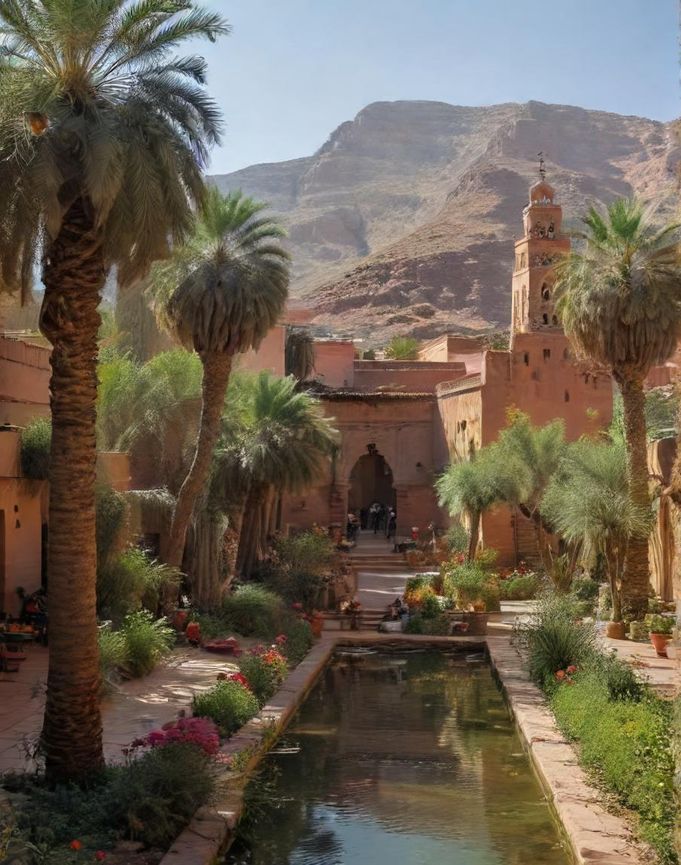
The central square and the maze of markets surrounding it are the essence of Marrakech.
1. Jemaa el-Fnaa Square
This vast, open space is the lifeblood of the city and its most defining feature. By day, it hosts snake charmers, water sellers, and henna artists. As the sun sets, the square transforms into a massive, open-air food court.
- Evening Experience: Hundreds of temporary food stalls erupt, filling the square with smoke and the smell of grilling meat, forming a chaotic but exhilarating dining scene.
- Tip: Find a rooftop cafe overlooking the square to watch the stunning transformation from above.
2. The Souks (Markets)
Radiating out from Jemaa el-Fnaa is a dense network of covered alleys known as the Souks. They are organized by specialty, creating specialized zones for different goods:
- Traditional Crafts: Leather goods, intricately woven carpets, metal lanterns, ceramics, and spices.
- Haggling: Bargaining is expected and essential. Always negotiate the price, typically starting at 50% of the initial offer.
II. 🏛️ Architectural Splendor and Gardens
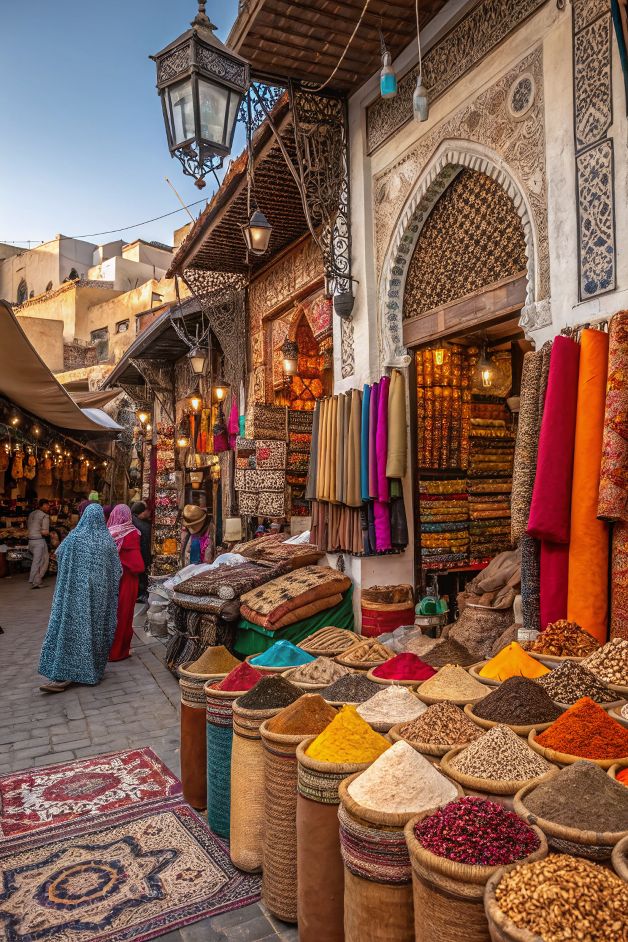
Beyond the markets, Marrakech is home to magnificent palaces and tranquil green spaces.
1. Jardin Majorelle (The Blue Garden)
A striking botanical garden created by French painter Jacques Majorelle and later restored and owned by fashion designer Yves Saint Laurent and Pierre Bergé.
- Iconic Blue: The garden is famous for its intensive, electric cobalt blue color (known as Majorelle Blue) used on the buildings, which contrasts beautifully with the lush cactus collection.
2. Palaces and Saadian Tombs
- Bahia Palace: A 19th-century palace designed to be the greatest palace of its time. It is renowned for its intricate cedarwood ceilings, stunning stucco work, and colorful tile floors.
- Saadian Tombs: A beautifully preserved 16th-century royal necropolis, hidden and forgotten for centuries until its rediscovery in 1917. It features elaborate marble carvings and cedar decorations.
3. Koutoubia Mosque
The largest mosque in Marrakech, distinguished by its impressive 77-meter-tall minaret, which is visible from many parts of the city. The minaret served as the architectural model for the Giralda in Seville.
III. 🏡 Accommodation: The Riad Experience
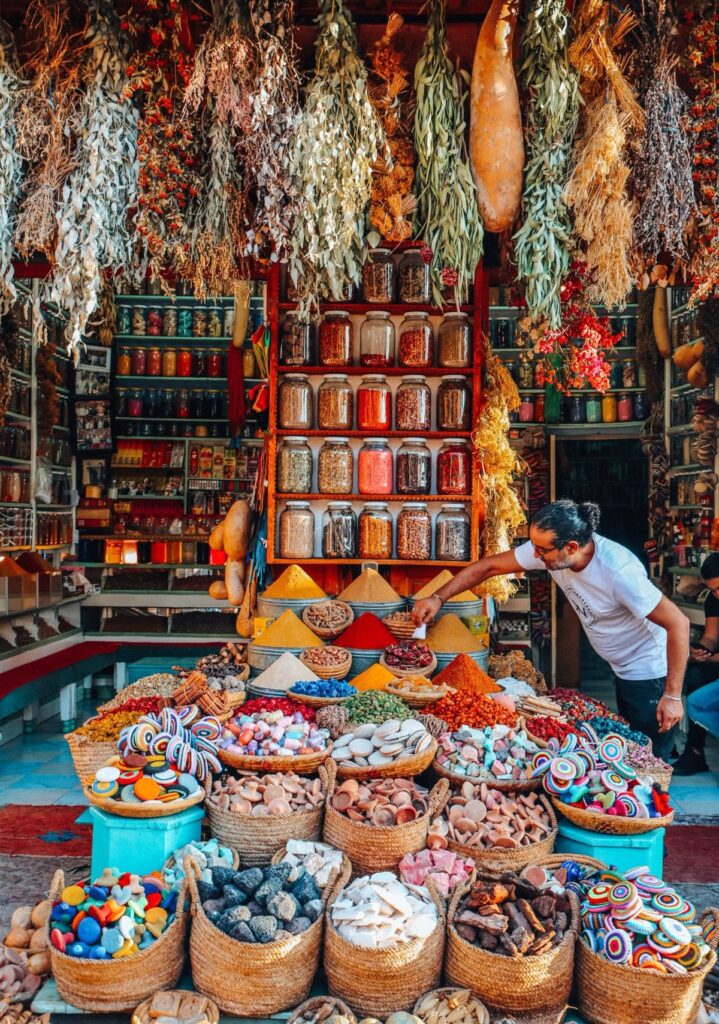
A Riad is a traditional Moroccan house or palace with an interior courtyard or garden. Staying in a Riad is highly recommended for an authentic and peaceful experience.
- Atmosphere: Riads offer quiet, cool sanctuary away from the noise of the Medina walls. They are typically beautifully decorated with zellige (geometric tile work) and fountains.
- Location: Most Riads are located deep within the narrow, confusing alleys of the Medina, offering genuine immersion.

IV. 🍽️ Culinary Adventures
Moroccan food is a rich, aromatic blend of sweet, salty, and savory flavors.
- Tagine: The most famous Moroccan dish, named after the earthenware pot it’s cooked in. It is a slow-cooked stew of meat (lamb, chicken, or beef) with vegetables, spices, and often dried fruits like apricots or prunes.
- Couscous: Traditionally served on Friday, a finely ground semolina dish usually topped with vegetables and meat.
- Mint Tea: The traditional drink of hospitality, often called “Moroccan Whiskey.” It is served sweet and poured from a height for aeration.

V. 💡 Practical Tips for Marrakech
| Category | Advice |
| Currency | Moroccan Dirham (MAD). Dirhams cannot be legally imported or exported, so exchange money locally. |
| Getting Around | The Medina is car-free; you must walk. For travel outside the walls, use petit taxis (small, beige cars). Insist the driver uses the meter (compteur). |
| Haggling | Essential in the Souks. Start low (around 30-40% of the asking price) and negotiate until you reach a price satisfactory to both. |
| Dress Code | Dress modestly out of respect for local culture, especially when leaving the tourist areas. Shoulders and knees covered are advisable for both men and women. |
| Best Time | Spring (March – May) and Autumn (September – November). The weather is warm and sunny, avoiding the intense summer heat. |
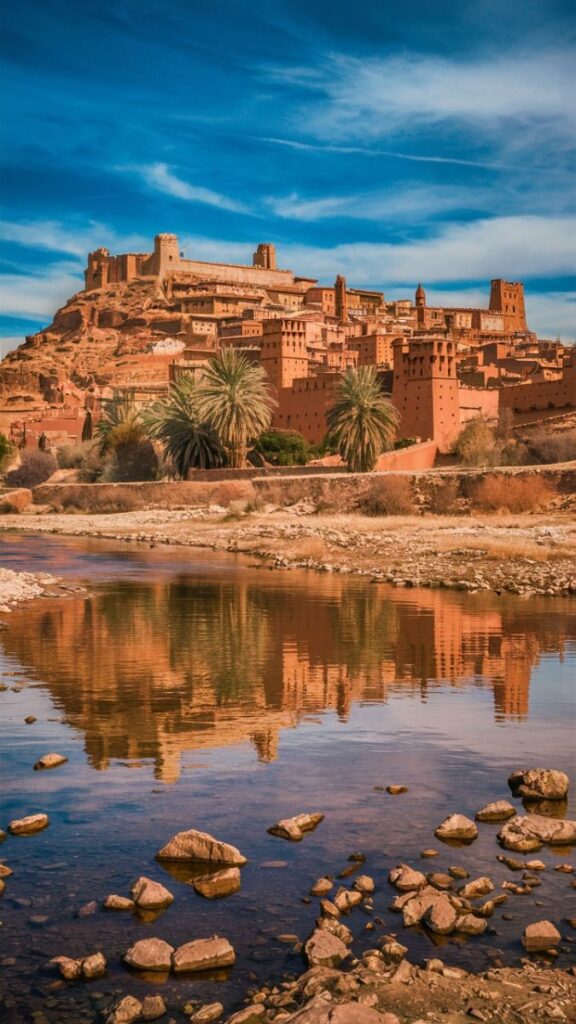
Marrakech is an intoxicating city that challenges and delights in equal measure. Embrace the chaos, savor the scents, and you will find it to be one of the most exciting destinations in North Africa.
Dear fellow travelers, if my articles have helped you or inspired your journeys, you can support me in a very simple way. If you book your flights, hotels, or tickets through the links below, I will receive a small commission from the sale. This costs you absolutely nothing extra (the prices remain exactly the same for you), but it truly helps me take my children on our next adventure and write the next detailed travel guide.
Here are the services I personally use on our travels and that you can rely on:
-
 Flights: I prefer to compare prices using Kiwi.com : last minute flights : https://kiwi.tpk.lv/8NQF6GkN or through the global search engine Aviasales : https://aviasales.tpk.lv/gKYbo853 .
 -
 Accommodation: 90% of our stays are booked traditionally through Booking.com : https://booking.tpk.lv/cLbuaDaA. If we are traveling to Asia, Agoda : https://agoda.tpk.lv/OwlTkUi6 often offers better prices and deals.
 -
 Experiences & Tickets: To avoid standing for hours in ticket queues for landmarks with my children, I buy them in advance via GetYourGuide : https://getyourguide.tpk.lv/V6GC2pLm or through [Viator : https://viator.tpk.lv/jKVITxSH .
 -
 Car Rental: When we need a car on our journeys, I compare rental prices through QEEQ : Diamond Membership : https://qeeq.tpk.lv/1YoVmDCm ,
 -
 Internet Abroad: To have mobile data immediately upon arrival and avoid hunting for local SIM cards, I use a digital eSIM via Airalo : https://airalo.tpk.lv/YGyayoZj .
Thank you for every single click and booking; I deeply appreciate it!