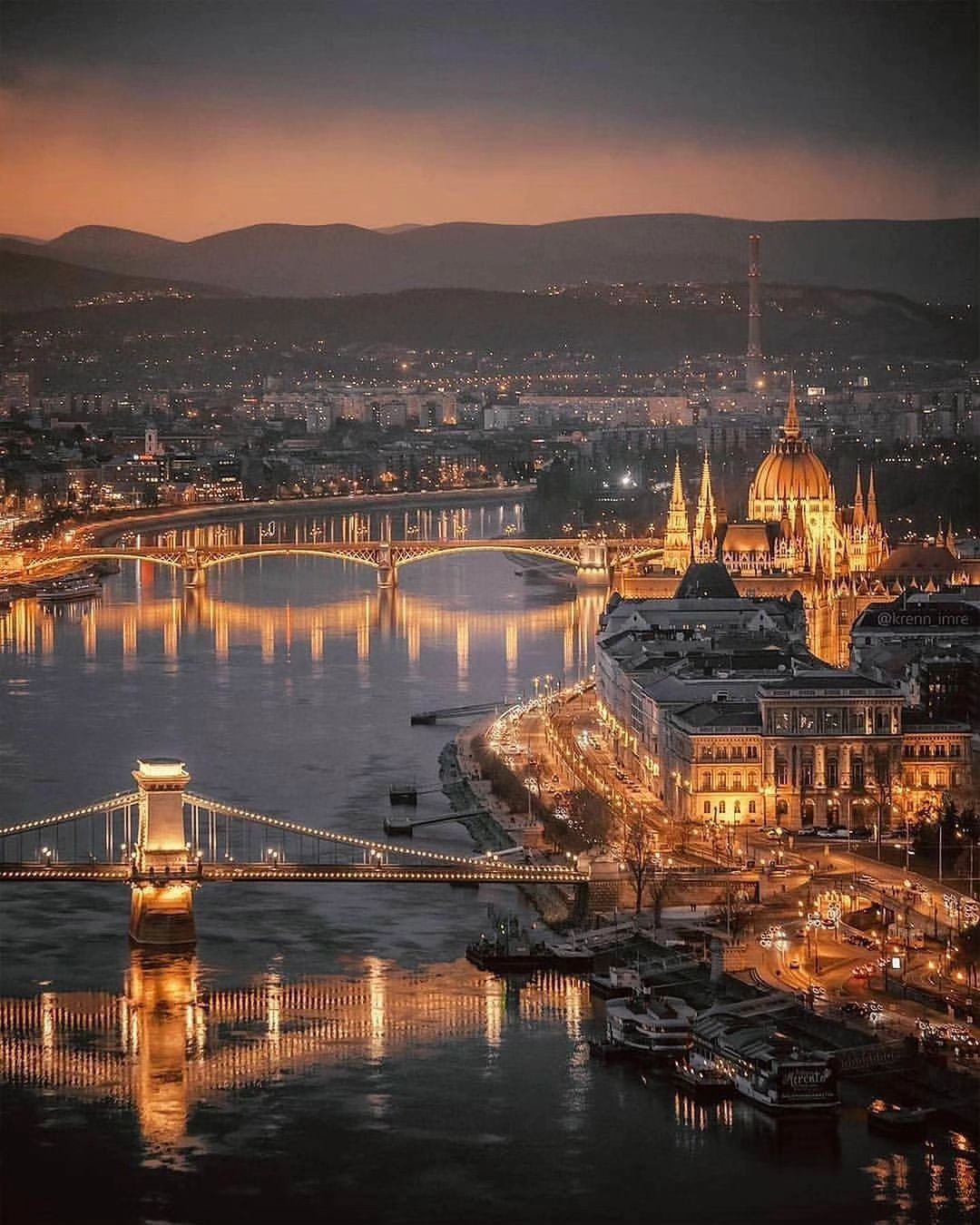
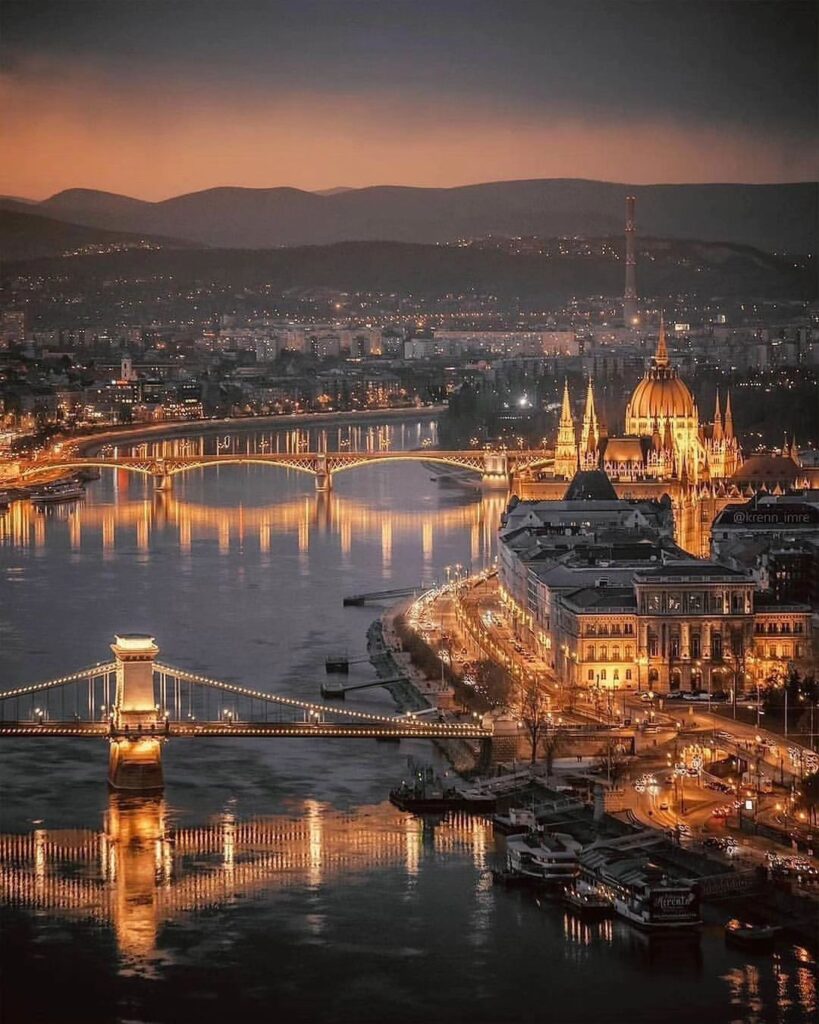
Budapest, the majestic capital of Hungary, is a jewel of Central Europe, formed in 1873 by the unification of the historic cities of Buda, Pest, and Óbuda. The Danube River, winding through the city, not only separates them but also joins them, offering breathtaking nighttime scenery when the palaces, bridges, and Parliament are illuminated by thousands of lights.
While Buda on the right bank is hilly and elegant, home to royal landmarks, Pest on the left bank is flatter, busier, and represents the city’s cultural, commercial, and nightlife center. This dynamic tension between historical grandeur and bohemian energy makes Budapest one of the most fascinating destinations.
Prepare for a detailed journey that will take you from the depths of historic Turkish baths to the vibrant heart of legendary ruin bars.
I. 👑 Architectural Jewels and the City’s Division
The Danube is the city’s artery, spanned by several iconic bridges.
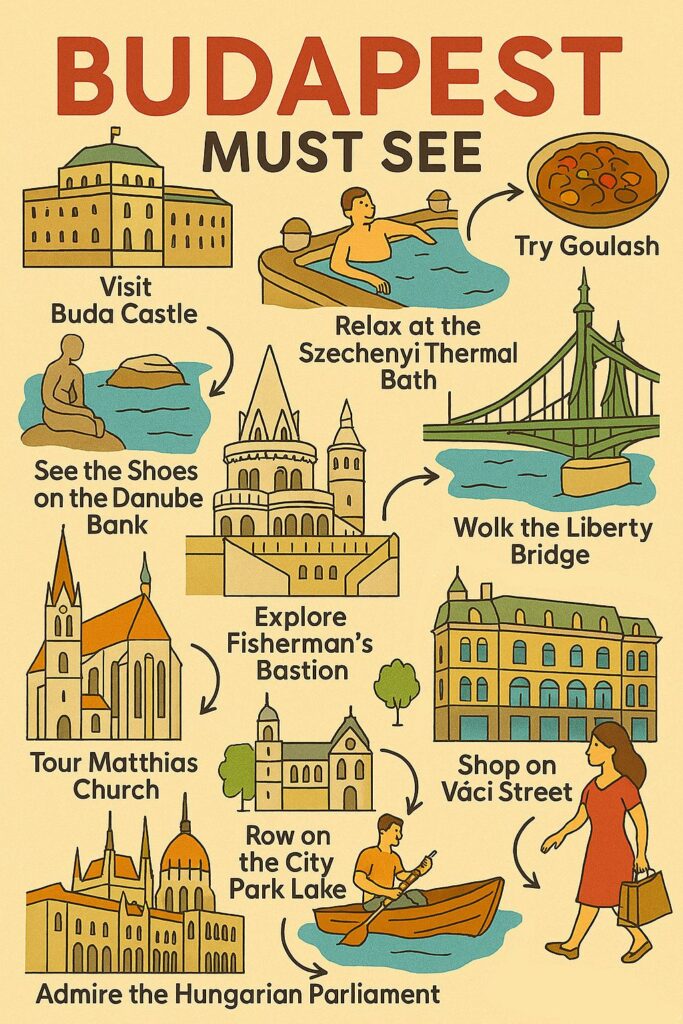
1. Buda Castle Hill (Buda)
The Castle District on Buda Hill is a symbol of the Hungarian kings and offers the best views of Pest. You can reach it by the funicular (Budavári Sikló) or on foot.
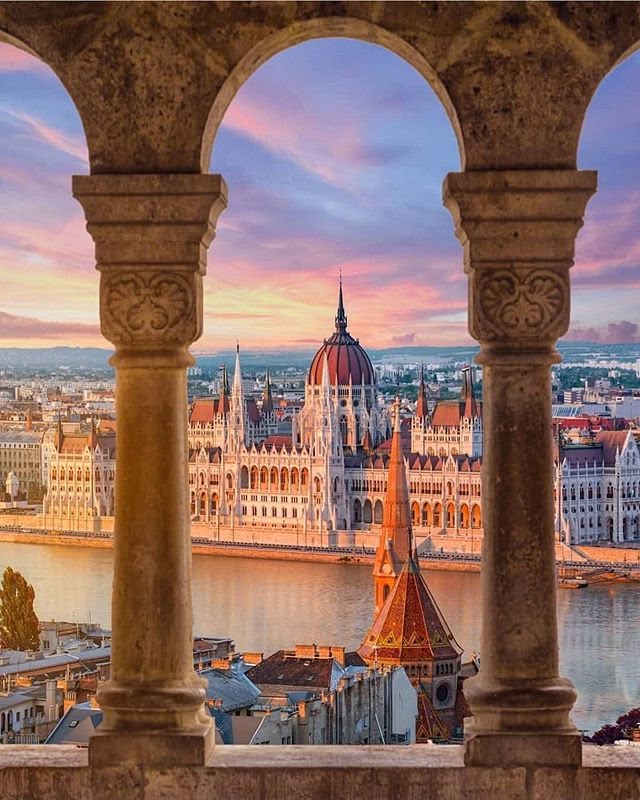
- Fishermen’s Bastion (Halászbástya): A Neo-Gothic and Neo-Romanesque viewing terrace that looks like something out of a fairy tale. Its seven turrets symbolize the seven Hungarian tribes that settled in the Carpathian Basin. It is an ideal spot for romantic photos and watching the panorama of the Danube, the Parliament, and Pest.
- Matthias Church (Mátyás-templom): A Gothic church with a distinctive colorful roof and stained glass windows, where coronations and royal weddings took place.
- Buda Castle (Budai Vár): The Royal Palace, which today houses the Hungarian National Gallery.
2. Pest: The Parliament and Andrássy Avenue
Pest is the political and cultural center with wide boulevards and lavish 19th-century architecture.
- The Parliament Building (Országház): The third-largest parliament building in the world is a stunning example of Neo-Gothic style. The most beautiful view is at night when it is illuminated, ideally from Buda Castle or a boat on the Danube.
- St. Stephen’s Basilica (Szent István-bazilika): One of the most important religious buildings, named after the first Hungarian King. It is worth climbing to its dome for the best views of the center.
- Andrássy Avenue: An elegant boulevard, lined with Neo-Renaissance palaces, leading to Heroes’ Square (Hősök tere) and the City Park. The second oldest metro in the world (Line M1, opened in 1896) runs beneath the avenue.
3. Memorial on the Danube Embankment
- Shoes on the Danube Bank: A chilling and powerful memorial to the victims of the Holocaust. This monument, consisting of sixty pairs of iron shoes, commemorates the Jews who were ordered to remove their shoes before execution, when they were shot and allowed to fall into the river.
II. 💧 Thermal Baths: The Healing Soul of Budapest
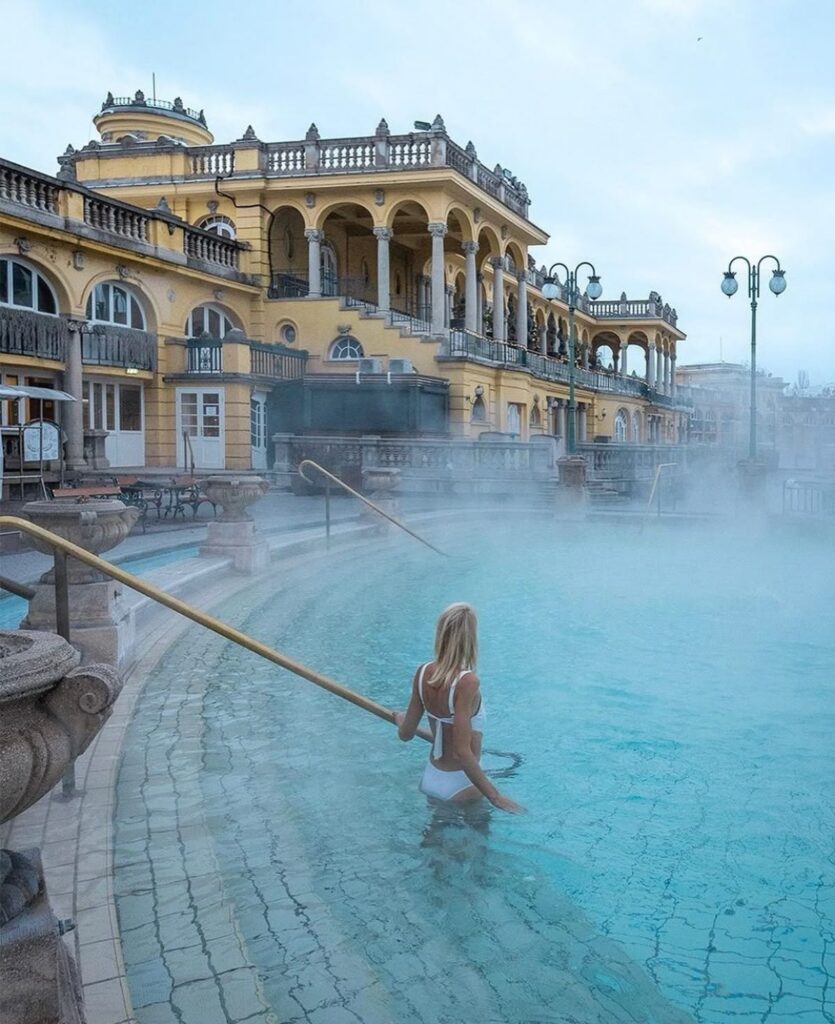
Budapest has earned the nickname “City of Spas” because more than 100 thermal springs with healing properties lie beneath its surface. A visit to the baths is as essential as visiting the castle.
- Széchenyi Baths (Széchenyi Gyógyfürdő): The largest and most famous spa complex in Europe, with extensive outdoor pools. Located in the City Park, they are known for their magnificent Neo-Baroque architecture. In winter, you can relax in the hot water while the air is freezing around you.
- Gellért Baths (Gellért Gyógyfürdő): Famous for their Art Nouveau architecture, mosaics, and stained glass, which create a luxurious and historic atmosphere.
- Rudas Baths (Rudas Gyógyfürdő): Historic 16th century Turkish baths with an iconic octagonal pool under a dome and a modern rooftop pool offering a beautiful view of the Danube.
- Spa Parties (Sparties): During summer weekends, the Széchenyi Baths sometimes transform into huge nighttime techno pool parties.
III. 🍻 The Jewish Quarter and the Ruin Bar Phenomenon
The Jewish Quarter (VII District) is the center of culture, art, street food, and especially ruin bars (romkocsma). These bars originated from the transformation of abandoned, dilapidated buildings and courtyards into creative, eclectic, and artistic centers of nightlife.
- Szimpla Kert: Considered the pioneer of ruin bars (opened in 2002). It is a maze of rooms filled with random, bizarre decorations, installations, and a cut-up Trabant car that serves as seating. It also offers live music, and Sundays feature a farmer’s market.
- Instant-Fogas Complex: The largest ruin bar complex, combining multiple spaces, bars, and dance floors with various musical genres.
- Mazel Tov: A more sophisticated and elegant ruin bar with a courtyard full of lights, operating as a restaurant with Mediterranean and Israeli cuisine.
- The Great Synagogue (Dohány utcai Zsinagóga): The largest synagogue in Europe and the second-largest in the world, a testament to Budapest’s rich Jewish history.
IV. 🌶️ Gourmet Experiences and Hungarian Flavors
Hungarian cuisine is known for its richness, the use of paprika (both sweet and spicy), pork, and sour cream.
- Goulash (Gulyás): In Hungary, goulash is a thick soup with beef, potatoes, onions, and carrots, served as an appetizer or a main course.
- Paprikash (Paprikás): Meat (often chicken) stewed in a rich, creamy paprika sauce, served with Nokedli (small dumplings similar to Spätzle).
- Fisherman’s Soup (Halászlé): A traditional, spicy, thick fish soup.
- Lángos: A fried flatbread made from yeast dough, typically served with garlic, sour cream, and cheese. A typical street food, found especially at market stalls.
- Kürtőskalács (Chimney Cake): Sweet pastry wrapped around a spit, baked over an open fire, and sprinkled with cinnamon or nuts.
- The World of Hungarian Drinks: Don’t forget to try the herbal liqueur Unicum, grape brandy Pálinka, and the famous white wines from Tokaj.
The Great Market Hall (Nagy Vásárcsarnok)
This Neo-Gothic market from 1897 is the ideal place to buy spices (paprika!), salami, and souvenirs. On the first floor, you can find inexpensive and quick Hungarian lunches (such as Lángos or Halászlé).

V. 💡 Practical Tips and Transportation
| Category | Tip |
| Transport | Budapest has an efficient public transport system (metro, trams, and buses). The M1 metro (yellow line) is a historical landmark. For longer stays, the Budapest Card is worthwhile (public transport + discounts on attractions). |
| Currency | Hungarian Forint (HUF). Although cards are accepted throughout Pest, cash is useful in markets and Lángos stalls. |
| Accommodation | The ideal location is in Pest (V, VI, or VII Districts) – close to landmarks, restaurants, and ruin bars. |
| Climate | Summers are hot. The best time to visit is spring (April – June) or autumn (September – October). |
| Safety | Budapest is a safe city, but as in any metropolis, beware of pickpockets on public transport and avoid unlit streets in outer districts (e.g., Magdolnanegyed). |
Budapest is a city with a majestic aura, where historical drama intertwines with relentless creativity. It is a place where you can indulge in a royal thermal bath and a few hours later dance in the crazy courtyard of a ruin bar.
Dear fellow travelers, if my articles have helped you or inspired your journeys, you can support me in a very simple way. If you book your flights, hotels, or tickets through the links below, I will receive a small commission from the sale. This costs you absolutely nothing extra (the prices remain exactly the same for you), but it truly helps me take my children on our next adventure and write the next detailed travel guide.
Here are the services I personally use on our travels and that you can rely on:
-
 Flights: I prefer to compare prices using Kiwi.com : last minute flights : https://kiwi.tpk.lv/8NQF6GkN or through the global search engine Aviasales : https://aviasales.tpk.lv/gKYbo853 .
 -
 Accommodation: 90% of our stays are booked traditionally through Booking.com : https://booking.tpk.lv/cLbuaDaA. If we are traveling to Asia, Agoda : https://agoda.tpk.lv/OwlTkUi6 often offers better prices and deals.
 -
 Experiences & Tickets: To avoid standing for hours in ticket queues for landmarks with my children, I buy them in advance via GetYourGuide : https://getyourguide.tpk.lv/V6GC2pLm or through [Viator : https://viator.tpk.lv/jKVITxSH .
 -
 Car Rental: When we need a car on our journeys, I compare rental prices through QEEQ : Diamond Membership : https://qeeq.tpk.lv/1YoVmDCm ,
 -
 Internet Abroad: To have mobile data immediately upon arrival and avoid hunting for local SIM cards, I use a digital eSIM via Airalo : https://airalo.tpk.lv/YGyayoZj .
Thank you for every single click and booking; I deeply appreciate it!