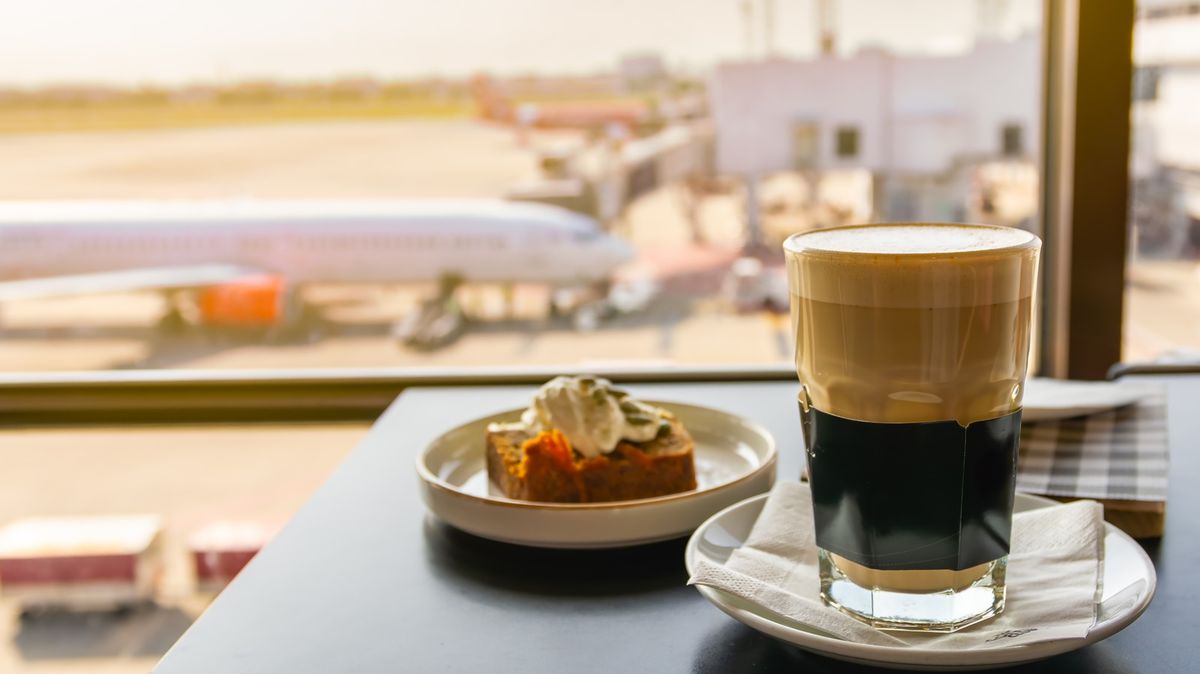
The airport is a bubble outside the real world, where prices disregard normal rules. A coffee for 6 euros, a sandwich for 12 euros, and ridiculously poor exchange rates are the norm. For the budget traveler, popping this bubble is crucial.
Here is how to keep your money safe until you leave the airport terminal.
1. 🍽️ Food and Drinks: How to Eat and Drink at a Reasonable Price
Overpriced food and drinks are the most common airport trick. The strategy is to arrive at the airport already fed and stocked up.
A. Food: Never Eat Inside the Terminal
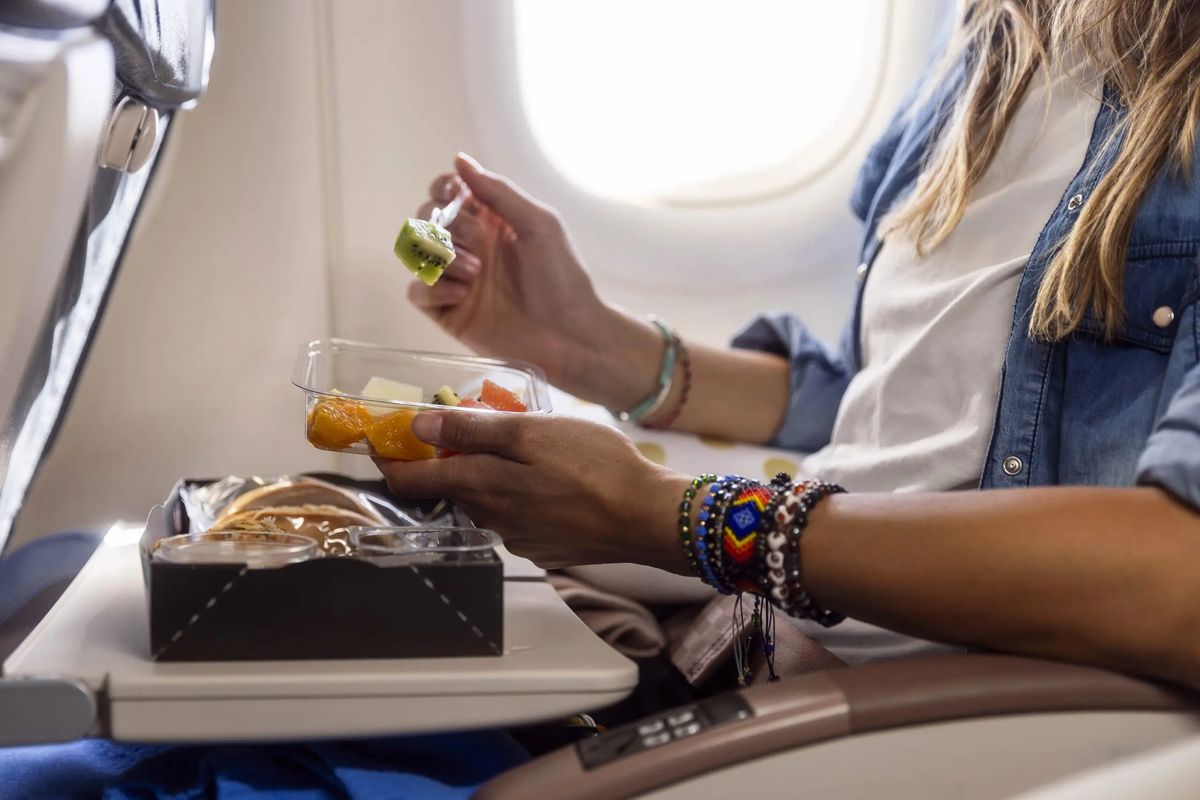
- Rule 1: Always bring food from home or a local supermarket. Anything dry (sandwiches, biscuits, nuts, fruit) can be carried through security without any issue.
- Rule 2: If you have enough time, eat at restaurants outside the airport or in its immediate vicinity, where airport prices have not yet taken hold.
- Rule 3 (The Local Search): Always look for airports that have a supermarket (like a regional chain) within the arrivals hall or underground area (e.g., near the train station). Prices there will be standard.
B. Drinks: Fighting the Overpriced Water
- Your Bottle is Your Friend: Never buy bottled water in the terminal (where it costs $3 – $6). Always bring an empty, reusable bottle with you.
- Refill for Free: After passing through security, fill your bottle:
- From Water Fountains: Many modern airports have freely available drinking fountains.
- From Restrooms: Tap water is safe to drink at most international airports.
- In a Restaurant/Café: Politely ask staff in a restaurant for a glass of tap water.
2. 💱 Exchange Kiosks and ATMs: The “NEVER AT THE AIRPORT” Trick
Airport exchange kiosks and ATMs are literal money traps because their rates are set to profit from your unavoidable need for cash.
A. Currency Exchange Bureaus
- Fact: Exchange rates at airport kiosks are usually the worst in the entire country. Their high commission fee or disadvantageous exchange rate can steal 10–15% of your money.
- Solution:
- Exchange only a minimum (if any) before you travel.
- If you absolutely need cash, find an exchange office outside the airport in the city center.
B. ATMs (Cash Machines)
- Fact: Airport ATMs are often run by companies that charge extremely high withdrawal fees (the “ATM Fee”). Furthermore, they will offer you Dynamic Currency Conversion (DCC)—this is the moment the machine asks if you want to process the transaction in your home currency (USD/EUR) or the local currency.
- Solution:
- ALWAYS choose the local currency (e.g., Thai Baht), not your home currency (USD/EUR). Processing the transaction in your home currency is extremely unfavorable.
- Use international digital banks (which we won’t name) that have minimal or no foreign withdrawal fees.
- If possible, wait and withdraw cash from an ATM in the city center that belongs to a large, reputable bank (and not a tourist ATM brand).
3. 🔌 Wi-Fi and Charging: Don’t Pay for Electricity!
- Wi-Fi: Most airports already offer free Wi-Fi. If you are in a country with a time-limited connection, search for the code and password in Google reviews, on information boards, or simply sign up for the airport’s newsletter to gain unlimited access.
- Charging: Never use unknown and freely accessible USB ports (risk of data theft). Always use a standard wall socket with your own adapter and, ideally, your power bank.
Conclusion: Airports are designed to extract the maximum amount of money from you while you are “trapped” between security checkpoints. By preparing your food, carrying an empty water bottle, and knowing the banking tricks, you can fly through the terminal without overpaying a single cent.