To visit Cairo, the capital of Egypt, is to experience a vibrant, overwhelming, and utterly unforgettable megacity that effortlessly blends 5,000 years of history with the constant, chaotic energy of modern life. Often called Umm al-Dunya (The Mother of the World), Cairo is the Middle East’s largest urban center and a place where every corner tells a tale of Pharaohs, Roman emperors, Caliphs, and Sultans.
Founded in 969 AD by the Fatimid dynasty, Cairo is formally known as Al-Qāhirah—”The Victorious City.” While the Giza Pyramids sit on the city’s outskirts, the true heart of Cairo lies along the life-giving Nile River, where the sheer scale of its ancient past meets the relentless 24/7 rhythm of its 20 -million strong population.
This guide will navigate you through the monumental wonders, the dense spice-scented alleyways, and the essential practicalities of conquering this immense and captivating metropolis.
I. ⏳ The Pharaonic Wonders: Cairo’s Immortal Legacy
No journey to Cairo is complete without confronting the structures that have defined human history for millennia.
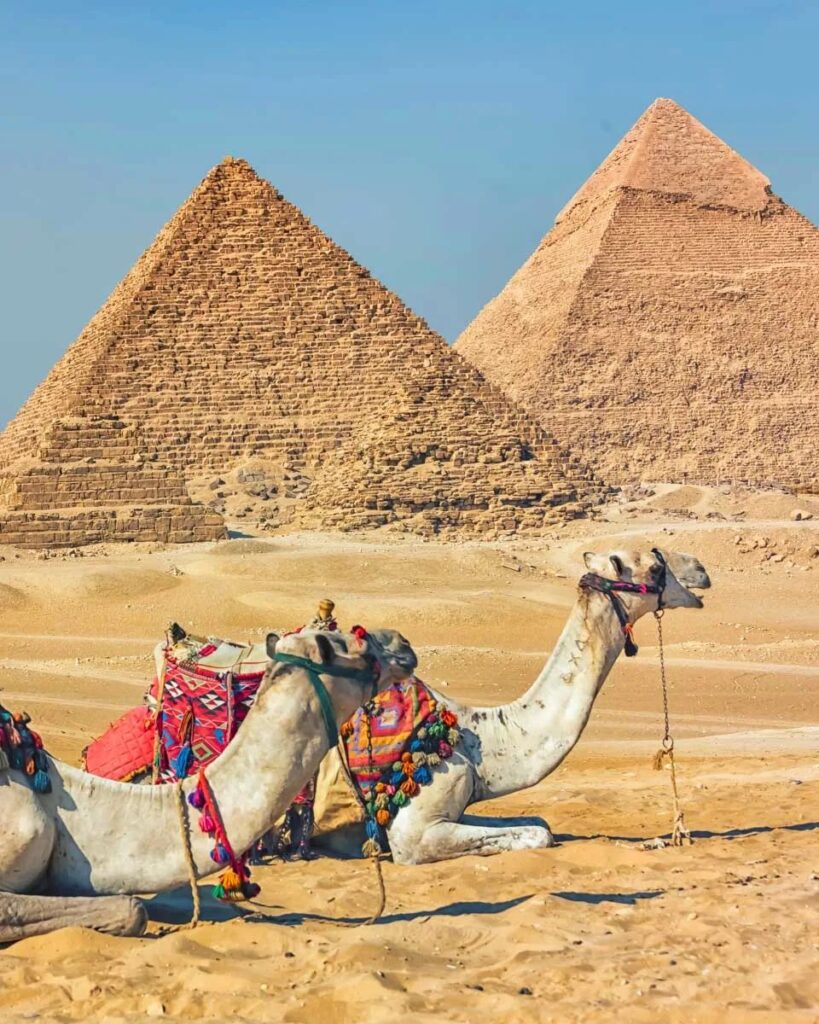
1. The Giza Plateau: Pyramids and Sphinx
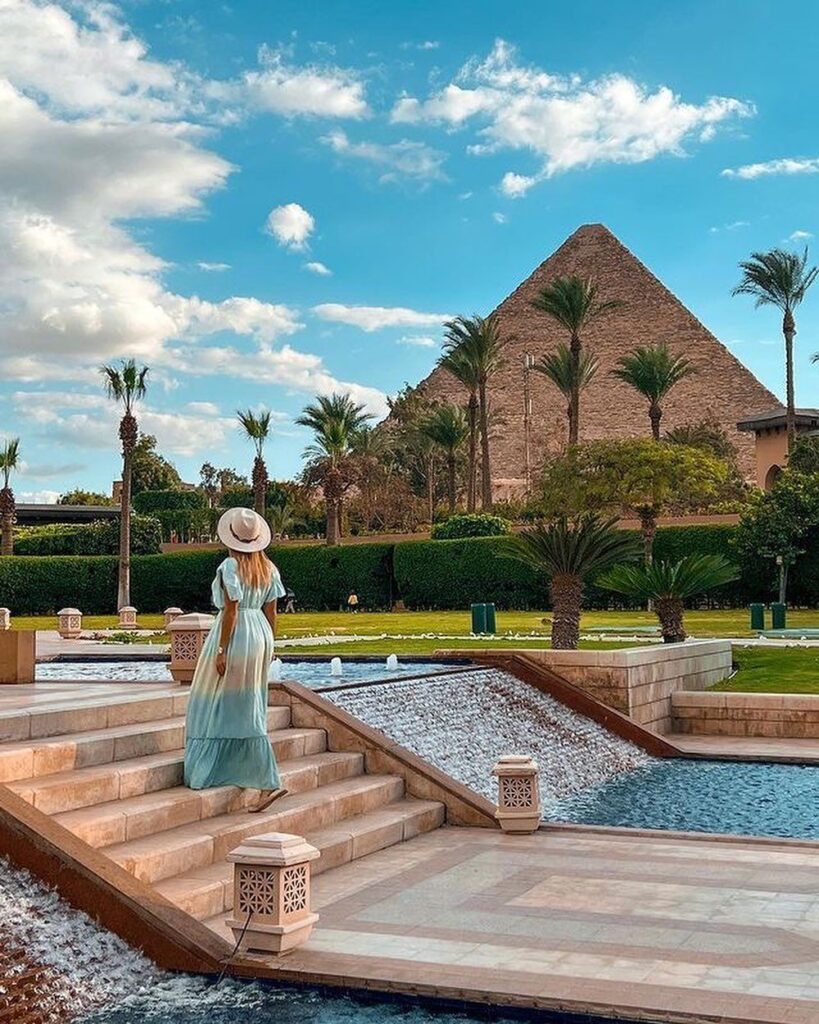
Located on the western edge of the city, the Pyramids of Giza are the only remaining wonder of the ancient world. They are a testament to the organizational power, mathematical precision, and sheer will of the Pharaohs of the Fourth Dynasty (around 2550 BC).
- The Great Pyramid (Khufu/Cheops): The largest pyramid, originally standing at over 146 meters tall. Visitors can pay extra to enter the interior, but spaces are limited.
- The Sphinx (Great Sphinx of Giza): The massive limestone statue, with the body of a lion and the head of a man, guards the Giza Plateau and remains one of Egypt’s most enduring mysteries.
Travel Tip: Visit early in the morning, right at opening time, to avoid both the intense heat and the heaviest crowds. Be prepared to negotiate firmly with camel and horse operators in the area.
2. The Grand Egyptian Museum (GEM)
For decades, the treasures of ancient Egypt were housed in the congested Egyptian Museum on Tahrir Square. However, the world’s largest archaeological museum, the Grand Egyptian Museum (GEM), is opening adjacent to the Giza Plateau.
- King Tutankhamun: The museum’s centerpiece will be the complete 5,000+ collection of artifacts from the tomb of the Golden Pharaoh, Tutankhamun, including his famous death mask.
- Significance: GEM represents a monumental shift, providing a modern, climate-controlled home for ancient artifacts, linking them geographically to the pyramids themselves.
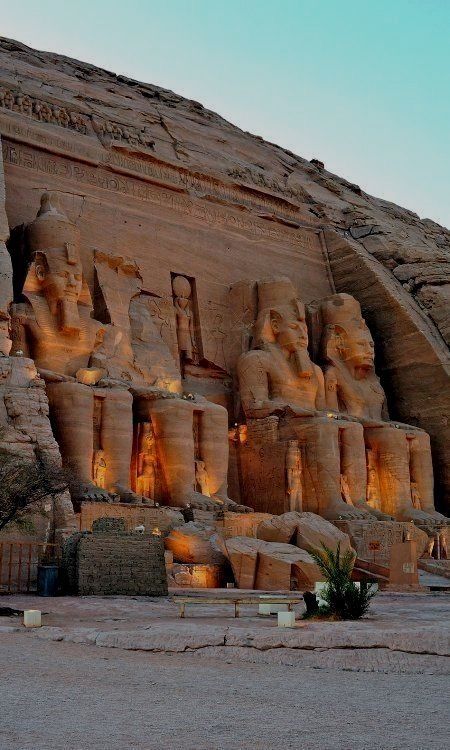
II. 🕌 The Soul of the City: Islamic and Coptic Cairo
Away from the pharaonic past, the true cultural depth of the city lies in its historic religious centers—a UNESCO World Heritage site known as Islamic Cairo and the older Coptic Cairo.
1. Islamic Cairo and Khan el-Khalili
This dense, labyrinthine area is defined by its hundreds of mosques, madrasas (schools), and monumental gates, many dating from the 10th to the 19th centuries.
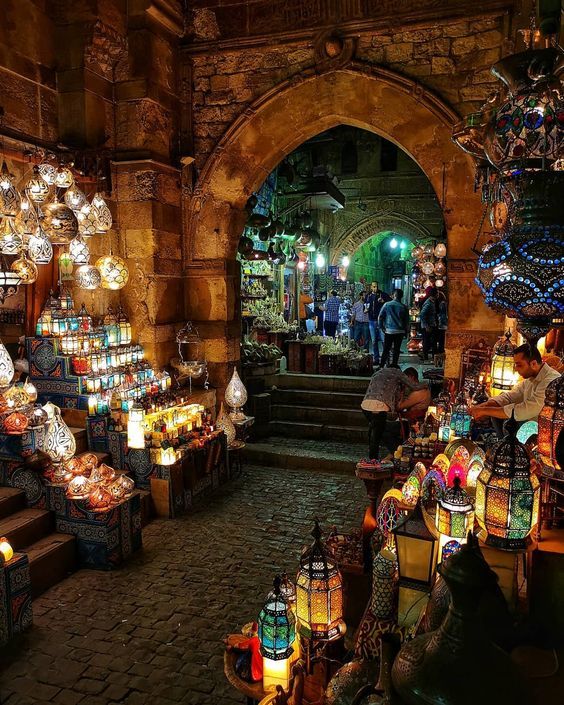
- Khan el-Khalili: This is Cairo’s most famous bazaar, a sensory overload of spices, perfumes, copperware, gold, and vibrant textiles. It is the perfect place to practice your bargaining skills. Take a break at El Fishawi’s, one of Cairo’s oldest and most atmospheric coffeehouses, open 24 hours.
- The Citadel (Saladin’s Citadel): Built by the Ayyubid ruler Saladin in the 12th century to defend the city against the Crusaders. It offers a commanding view of Cairo, including the distant Pyramids.
- Mosque of Muhammad Ali (Alabaster Mosque): Located within the Citadel, this 19th -century mosque is easily identifiable by its large dome and tall minarets, and its interior is lined with beautiful alabaster.
- Al-Azhar Mosque: Dating back to 972 AD, it is one of the world’s oldest continuously operating universities and a major center of Islamic jurisprudence.
2. Coptic Cairo (Old Cairo)
Built on the remnants of the Roman Fortress of Babylon, Coptic Cairo is the oldest part of the city and the historical heart of Egypt’s Christian community.
- The Hanging Church (Al-Muallaqa): Named because it was built atop the ancient Roman gatehouse, its nave appears to hang suspended. It is one of the most beautiful Coptic churches.
- Ben Ezra Synagogue: According to local tradition, the synagogue is built on the site where the infant Moses was found.
III. 🏙️ The Heart of the Modern City: Nile and Urban Life
The Nile River is not just a geographical feature; it is the rhythm of Cairo’s daily life.
1. The Nile River and Zamalek
- Felucca Rides: Taking a traditional wooden sailing boat (felucca) at sunset is a quintessential Cairo experience, offering a peaceful escape from the city noise.
- Zamalek: Located on the northern part of Gezira Island in the middle of the Nile, Zamalek is an upscale, leafy, and relatively quiet district. It is known for its art galleries, boutique shops, sophisticated cafes, and expatriate community. It offers a stark contrast to the dust and noise of the mainland.
2. Downtown and Tahrir Square
- Tahrir Square: The physical and political heart of the modern city, historically significant as the focal point of the 2011 Egyptian Revolution. It is a bustling, chaotic transport hub and the gateway to the (old) Egyptian Museum.
IV. 🍽️ A Culinary Labyrinth: Cairo’s Taste
Egyptian food is hearty, often vegetarian-friendly, and perfect for street-side grazing.
- Koshari: The National Dish: A mandatory experience. Koshari is a powerful mix of macaroni, rice, and lentils, topped with chickpeas, a spicy tomato sauce, and fried crispy onions. It is a cheap, fulfilling, and ubiquitous street food staple.
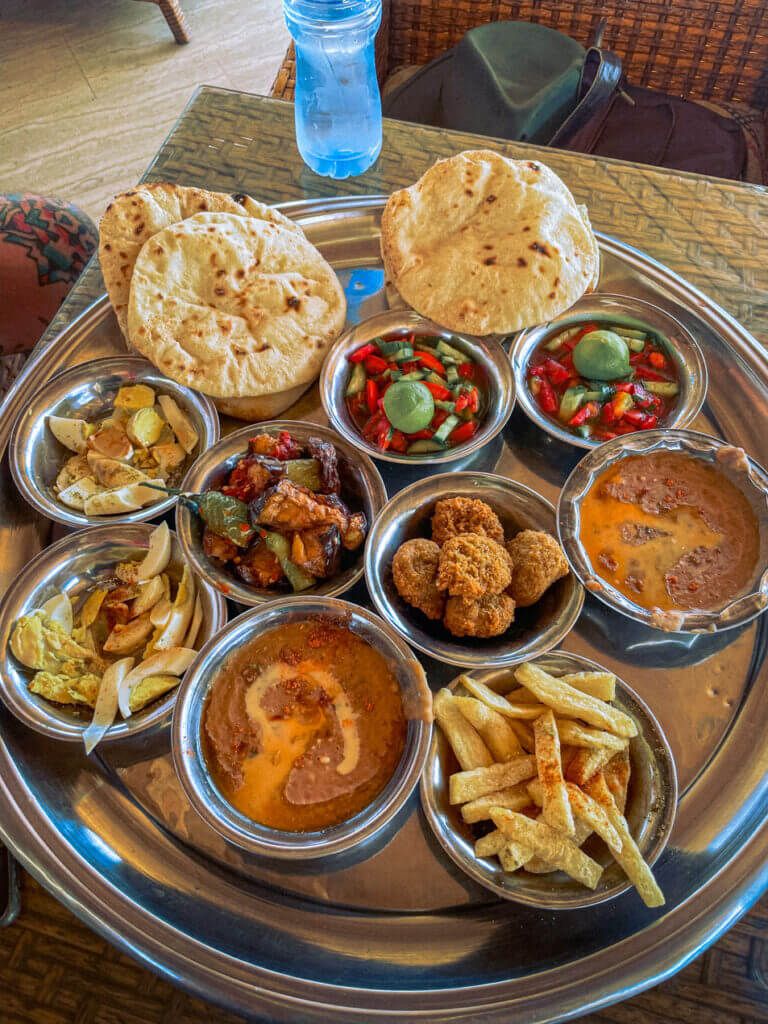
- Ful wa Ta’ameya: The ultimate Cairo breakfast. Ful (cooked fava beans, seasoned and mashed) and Ta’ameya (Egyptian falafel, typically made from fava beans instead of chickpeas, giving it a green interior).
- Mahshi: Vegetables (zucchini, bell peppers, eggplant) or vine leaves stuffed with spiced rice.
- Umm Ali: The classic Egyptian dessert—a rich, creamy bread pudding baked with nuts and cream.
Street Food Culture: Don’t be afraid to try street food from popular stalls (where locals are lining up). The turnover is high, and the freshness is usually guaranteed. A tip is to look for dedicated koshari shops, not restaurants that serve everything.
V. 💡 Practical Tips and Navigating the Megacity
Navigating Cairo requires patience, a sense of humor, and preparedness.
| Category | Advice | Detail |
| Transport | Traffic and Taxis | Traffic is notoriously severe. Avoid self-driving. Uber and Careem (the regional equivalent) are essential for reliable, air-conditioned transport at fixed prices. |
| Metro | Limited, but useful for avoiding surface traffic. The system is segregated during peak hours (first two carriages for women only). | |
| Climate | When to Visit | The best time is the cooler, drier season from October to April. Avoid the height of summer (June–August), when temperatures routinely exceed 40C |
| Etiquette | Dress Code | Dress modestly, especially in Islamic and Coptic Cairo (shoulders and knees covered). This applies to both men and women. |
| Cash/Bargaining | Currency | Egyptian Pound (EGP). Carry small denominations for tipping (baksheesh), small purchases, and negotiating. Bargaining is expected in the markets (Khan el-Khalili). |
| Health | Water | Drink only bottled water. Be cautious with fresh, unpeeled fruit, and ice outside of reputable hotels. |
Cairo is a city that never stops moving and never lets go of its past. It is an intense experience that forces you to engage with history on an epic scale, all while living in the frenetic present. Prepare to be amazed, exasperated, and completely captivated by the Mother of the World.
Dear fellow travelers, if my articles have helped you or inspired your journeys, you can support me in a very simple way. If you book your flights, hotels, or tickets through the links below, I will receive a small commission from the sale. This costs you absolutely nothing extra (the prices remain exactly the same for you), but it truly helps me take my children on our next adventure and write the next detailed travel guide.
Here are the services I personally use on our travels and that you can rely on:
-
 Flights: I prefer to compare prices using Kiwi.com : last minute flights : https://kiwi.tpk.lv/8NQF6GkN or through the global search engine Aviasales : https://aviasales.tpk.lv/gKYbo853 .
 -
 Accommodation: 90% of our stays are booked traditionally through Booking.com : https://booking.tpk.lv/cLbuaDaA. If we are traveling to Asia, Agoda : https://agoda.tpk.lv/OwlTkUi6 often offers better prices and deals.
 -
 Experiences & Tickets: To avoid standing for hours in ticket queues for landmarks with my children, I buy them in advance via GetYourGuide : https://getyourguide.tpk.lv/V6GC2pLm or through [Viator : https://viator.tpk.lv/jKVITxSH .
 -
 Car Rental: When we need a car on our journeys, I compare rental prices through QEEQ : Diamond Membership : https://qeeq.tpk.lv/1YoVmDCm ,
 -
 Internet Abroad: To have mobile data immediately upon arrival and avoid hunting for local SIM cards, I use a digital eSIM via Airalo : https://airalo.tpk.lv/YGyayoZj .
Thank you for every single click and booking; I deeply appreciate it!